How-to
The garage door safety test
Test once a month that the garage door reverses when it hits something, that the sensors sit at the right height, and that the door is balanced.
Satisfy+ Editorial · Published July 16, 2026 · 2 min read · 15 min to do · Free
At a glance
- Reverse test
- A 2x4 laid flat in the door's path
- Sensor height
- 4 to 6 inches above the floor
- How often
- Every 30 days
- Time
- About 15 minutes
A garage door that doesn't stop and reverse can trap and kill a child. Since 1982, about 73 children aged 2 to 14 have died this way in the United States. Openers made since 1991 have a reversing system, and those made since 1993 also have an electric eye or an edge sensor. A monthly test shows whether yours still works.
What you need
- A 2x4 board
- A tape measure
- The opener's manual
Steps
- 1
Lay the board down
Lay a 2x4 flat on the floor where the door will come down.
1 min
- 2
Close the door on it
Close the door with the remote or the wall button. When the door touches the board, it should stop and go back up.
1 min
- 3
If it doesn't reverse
Pull the release cord to disconnect the opener, and use the door by hand until the opener is adjusted, repaired or replaced. The manual covers the adjustment.
1 min
- 4
Check the sensors
Most openers have an electric eye: two small sensors, one on each side of the door opening. Each should be 4 to 6 inches off the floor. Measure both.
2 min
- 5
Check the balance
Close the door and pull the release cord. Lift the door by its handle to about halfway and let go. A balanced door stays where you leave it.
5 min
- 6
Reconnect and run it
Reconnect the opener as the manual shows, then open and close the door once. It should run smoothly from top to bottom.
2 min
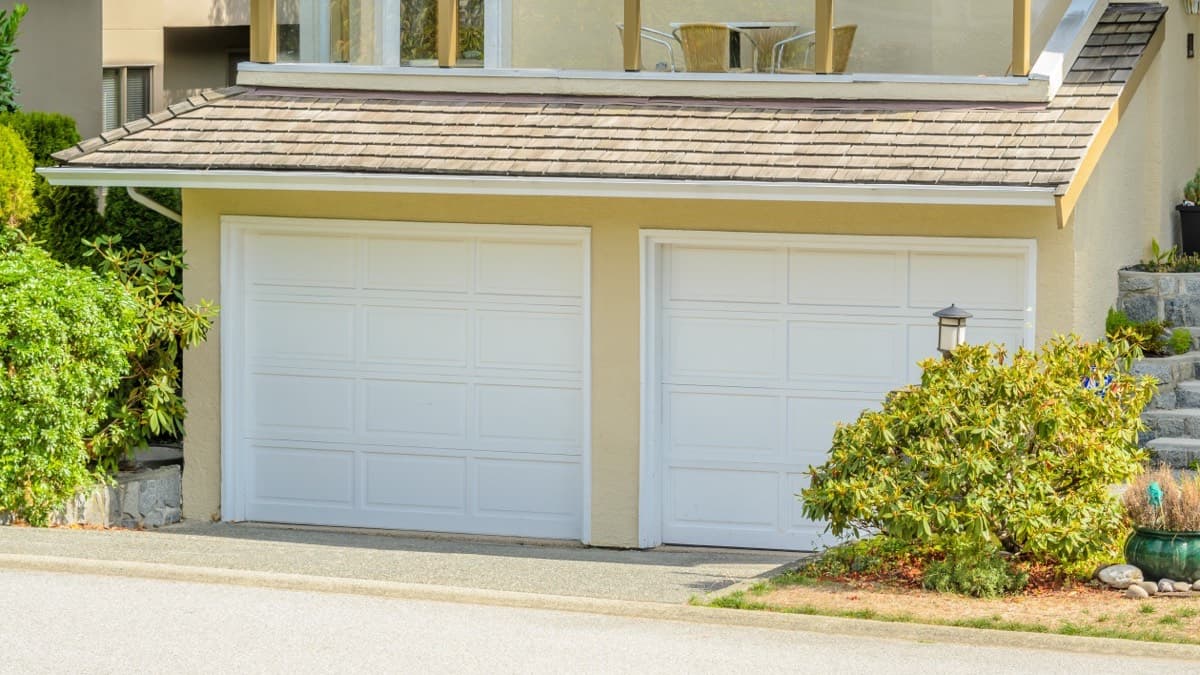
Test the garage door
- Run the 2x4 reverse test on the garage door
- Check the garage door stays put when stopped halfway
When to call a professional
A door that drifts up or down when you let go is out of balance, and a badly unbalanced door can fall on someone. The same goes for a door that binds or sticks on its tracks. Look over the springs, cables and brackets while you're there, but leave any adjustment to a garage door technician.
An opener made before 1991
An opener made before 1991 may have no reversing system at all. If yours fails the board test and can't be adjusted, stop using the opener until it's repaired or replaced with one that reverses.
Keeping kids away from it
Have the wall button mounted high enough that children can't reach it. Keep the remote out of their hands, and teach them never to run under a closing door.
FAQ
How do I test a garage door's auto-reverse?
Lay a 2x4 flat in the door's path and close the door on it. It should reverse as soon as it touches the board. If it doesn't, disconnect the opener and use the door by hand until it's fixed.
How high should the garage door sensors be?
4 to 6 inches above the floor.
Sources
Checked October 19, 2026
- U.S. Consumer Product Safety Commission. Non-reversing automatic garage door openers are a hazard (Publication 523) (2011)
- Owner
- Beginner
- Garage
- Free
- DIY