Guide
Trench and excavation safety for a small crew
Plan a trench for a drain, footing or utility line so the walls can't fall in on the crew, with a protective system, a way out and the spoil kept back.
Satisfy+ Editorial · Published August 18, 2026 · 3 min read
At a glance
- Deaths from 2003 to 2017
- 373
- A square yard of soil
- More than 3,000 pounds
- Protective system
- From 5 feet deep
- Before you dig
- Call 811
Trench walls collapse suddenly and without warning, and workers rarely survive a cave-in. There were 373 trenching deaths in the United States from 2003 to 2017, and more than 80 percent of them were in construction. A single square yard of soil can weigh more than 3,000 pounds, about as much as a compact car. That's enough to crush and suffocate a worker. A drain line, a footing or a sewer lateral on a residential job can put a small crew in a trench deep enough to kill.
Slope it, shore it or shield it
Never send anyone into a trench without a protective system in place. Use one in any trench 5 feet deep or more, and an engineered system from 20 feet deep. The three kinds:
- Sloping or benching cuts the trench walls back at an angle, or in steps, away from the trench.
- Shoring braces the walls with supports, such as hydraulic jacks or planking, so the soil can't move.
- Shielding puts a trench box in the trench, so the walls can't fall on the people inside.
A competent person, trained to spot the hazards and correct them, designs and installs the system. Insurers, trade associations, unions and safety equipment companies offer the training.
Before the digging starts
Call 811 to have the underground utility lines marked, and dig at least 5 feet away from them. Check how stable the soil is. Decide where the spoil pile and the heavy equipment will go, and keep both back from the edge. If the trench is near a street, plan the traffic control. Write down what the crew does if a wall collapses or someone is hurt in the trench.
Before anyone goes in
The competent person inspects the trench and its protective system before anyone goes in. Nobody goes in until the protective system is in place. There has to be a safe way in and out, such as a ladder. Keep tools, materials and equipment away from the edge. Look for standing water and for bad air before anyone climbs down.
Skipping the trench
Some jobs don't need anyone at the bottom of a trench. Directional boring, relining an old pipe, pipe ramming and tunneling can lay or repair a line without an open cut a worker has to stand in.
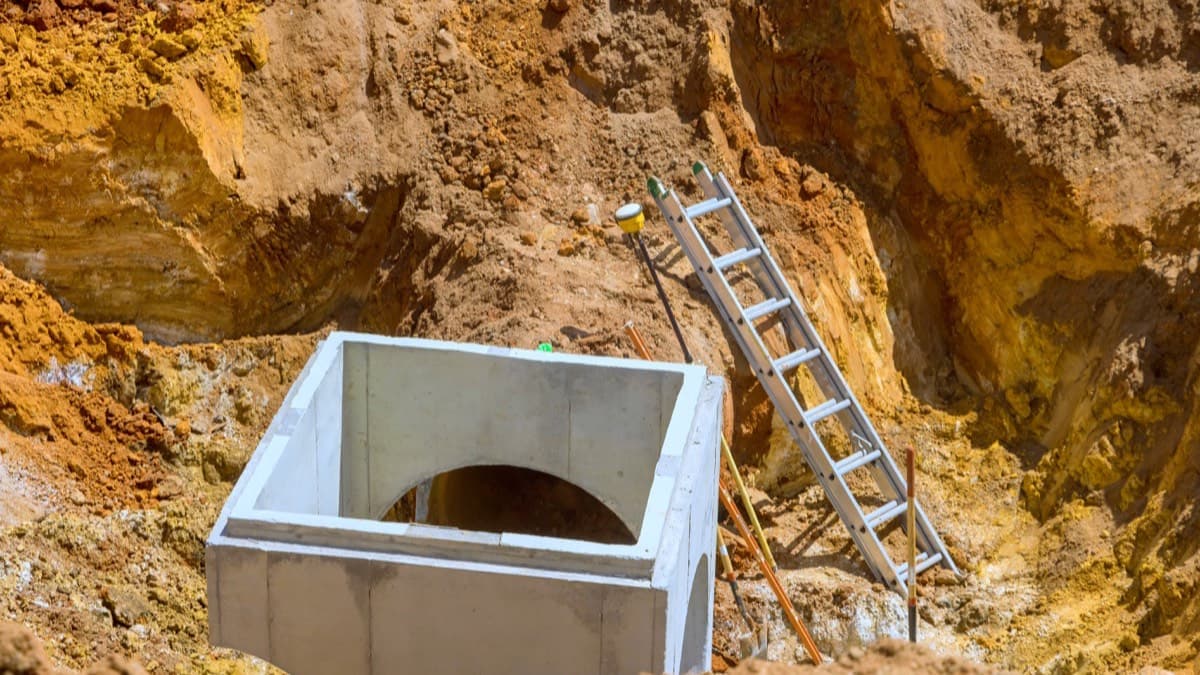
An annotated example
What to do next
Call 811 before the next dig, pick the protective system before the trench is opened, and name the competent person who inspects it. Keep the ladder in the trench and the spoil back from the edge.
Plan the next trench
- Call 811 to have the utility lines marked
- Choose the protective system for the trench
- Mark where the spoil pile and equipment go
FAQ
How deep can a trench be before it needs protection?
From 5 feet deep. Use sloping, shoring or a trench box.
How heavy is the soil in a cave-in?
One square yard can weigh more than 3,000 pounds, about the weight of a compact car.
Who inspects the trench?
A competent person, before anyone goes in.
Sources
Checked October 20, 2026
- National Institute for Occupational Safety and Health. Trenching and excavation safety (2026)
- Occupational Safety and Health Administration. Trenching and excavation (2026)
- $100 to $1,000
- Professional