Checklist
Keeping children safe around dogs
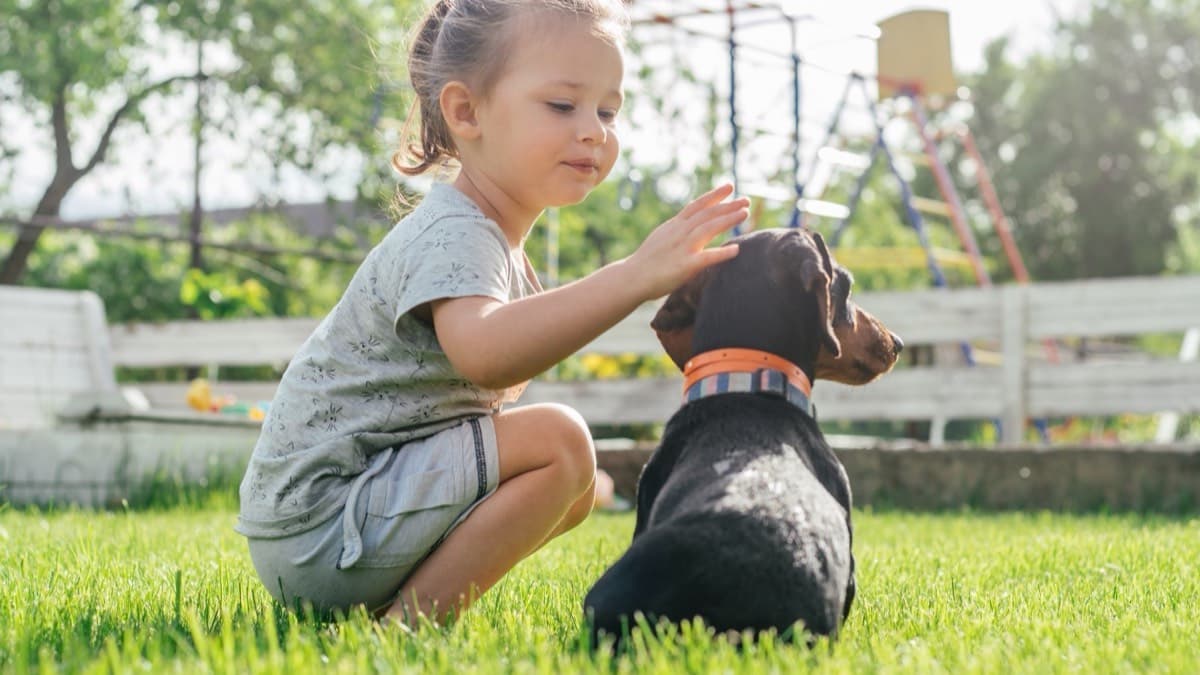
Supervise young children with every dog, including the family pet, teach them to leave a dog alone while it eats or sleeps, and show them what to do when a strange dog comes near.
Satisfy+ Editorial · Published July 8, 2026 · 3 min read
At a glance
- Supervise
- Young children with every dog, even the family pet
- Leave alone
- A dog that's eating, sleeping or caring for puppies
- A strange dog
- Stand still, side on, hands at the neck
- Knocked over
- Curl into a ball, hands over ears and neck
Children are more likely than adults to be bitten by a dog, and their injuries tend to be more severe. Most bites to young children happen during everyday activities with a dog they know. Having a dog at home raises the chance of being bitten, and the chance goes up with each added dog. Nearly 1 in 5 people bitten by a dog needs medical attention.
Any dog can bite, especially when it's scared, nervous, eating, playing, protecting toys or puppies, or not feeling well.
At home
- Never leave a young child alone with a dogThat includes the family dog, and a dog the child has met before.
- Teach children not to bother a dog that's eating, sleeping or caring for puppies
- Teach them to leave alone a dog that's hidingTeach them to stop petting one that seems scared, sick or angry, too.
- Don't let anyone play rough with the dogNever encourage aggressive play or roughhousing.
- Keep children out of dog fightsDon't try to break one up.
- Use a leash in public with your own dog
Teach the kids dog safety
- Talk through the dog rules with each child
- Keep the family dog on a leash in public
Meeting someone else's dog
- Ask the owner before petting, every timeAsk even when the dog looks friendly.
- Let the dog come to youStand still so it feels comfortable.
- Make sure the dog has seen and sniffed you before reaching out to pet it
A dog you don't know
- Teach children never to go up to an unfamiliar dogThat includes one that seems friendly or healthy. Call animal control about a loose dog or one in trouble.
- Stand still and calm if a strange dog comes closeAvoid eye contact, turn side-on to the dog and slowly raise your hands to your neck with elbows in. Say "no" or "go home" in a firm, deep voice.
- Never run from a dog, panic or make loud noisesWait for it to pass, or back away slowly.
- Curl into a ball if a dog knocks you overTuck your head and cover your ears and neck with your hands. A bag or jacket held between you and the dog helps.
If a child is bitten
Wash a minor wound well with soap and water and cover it with a clean bandage. For a deep wound, press a clean, dry cloth on it to stop the bleeding and get medical care right away. Call 911 if the bleeding won't stop or the child feels faint or weak. See a health care provider if the wound is deep or becomes red, painful or swollen, or if you don't know whether the dog has had its rabies vaccine. Tell the provider it was a dog bite.
FAQ
How do I keep my toddler safe with our dog?
Supervise every time they're together, and teach your child to leave the dog alone while it eats, sleeps or cares for puppies.
What should a child do if a strange dog approaches?
Stand still and calm, avoid eye contact, turn side-on and slowly raise their hands to their neck. Never run.
When does a dog bite need a doctor?
When it's deep, won't stop bleeding, shows signs of infection, or the dog's rabies vaccination is unknown.
Sources
Checked October 20, 2026
- Centers for Disease Control and Prevention. Dogs (2026)
- Living
- Owner
- Tenant
- Free