Checklist
Fire safety for an older relative
Check an older relative's smoke alarms, clear two ways out of every room with them, and set up the habits that keep cooking and smoking fires from starting.
Satisfy+ Editorial · Published September 18, 2026 · 3 min read
At a glance
- The risk
- 2.5 times the general population's, for people 65 and over (2020)
- Smoke alarms
- Tested monthly, replaced at 10 years
- Ways out
- Two from every room, practiced twice a year
- By the bed
- Glasses, keys, hearing aids and a phone
People 65 and over are more likely to die in a fire. In 2020, their risk of dying in a fire was 2.5 times that of the U.S. population as a whole. Physical or mental impairments, medicines and alcohol, living with smokers, and substandard housing all add to the risk. Residents can have less than 2 minutes to get out once a smoke alarm sounds, so the plan and the alarms have to be ready before a fire starts.
Smoke alarms
- Check the alarms for a relative who can't do it themselvesPress the test button on each alarm once a month.
- Make sure there's an alarm in every bedroom, outside each sleeping area and on every levelThat includes the basement. Interconnected alarms all sound when one does.
- Check each alarm's ageA smoke alarm is replaced 10 years from the date it was made. Batteries in a 9-volt alarm, and backup batteries in a hardwired one, are replaced at least once a year.
- Check that your relative can hear the alarmAlarms for people with hearing loss use a different sound, strobe lights or a bed shaker.
Some fire departments install battery-operated smoke alarms free of charge. Call your relative's local fire department on its nonemergency number to ask. Hardwired alarms are installed by a qualified electrician.
Make an older relative's home fire-safe
- Test the smoke alarms in your relative's home
- Walk two ways out of each room with your relative
- Put new batteries in your relative's smoke alarms
- Take your relative through a fire drill
- Put glasses, keys, hearing aids and a phone by the bed
Getting out
- Know two ways out of every roomWalk both of them with your relative.
- Clear anything that blocks the way out of each room and the home
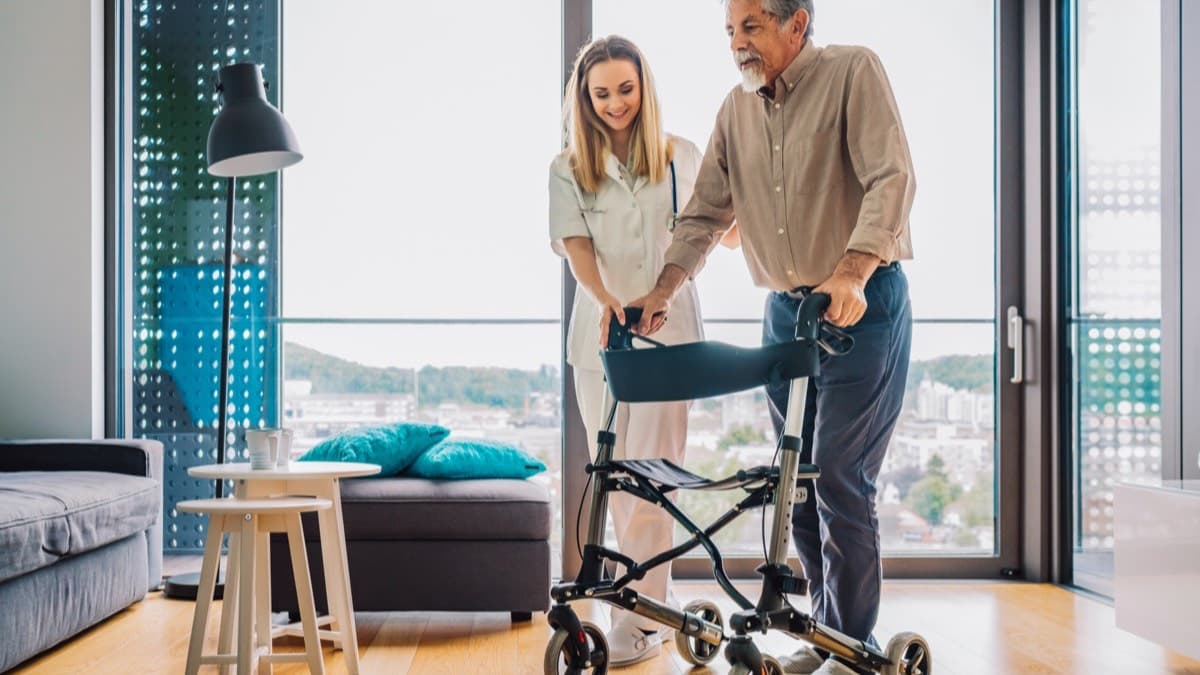
- Check the doorways with a walker or wheelchairMake sure your relative can get through every exit.
- Keep glasses, keys, hearing aids and a phone next to the bed
- Practice the escape drill twice a year
- Talk the plan through with family and neighborsIf your relative needs extra help getting out, talk it through with the building manager or the fire department too.
Cooking
- Use a timer as a reminder that something's cooking
- Stay in the kitchen while the burner is onTurn it off when leaving the kitchen.
- Keep a pan lid or baking sheet nearbySliding it over a pan that catches fire puts the fire out.
- Turn pot handles toward the back of the stove
Smoking and medical oxygen
- Never smoke around medical oxygenOxygen can explode if a flame or spark is nearby, and can catch fire even when it's turned off.
- Smoke outside, never in bedMattresses and bedding catch fire easily.
- Don't smoke after taking medicine that causes drowsiness
- Use an ashtray with a wide base, or a bucket of sandWet the ashes and butts before they go in the trash.
For the full household plan, see How to make a home fire escape plan and practice it.
FAQ
Why are older adults at higher risk of dying in a fire?
Physical or mental impairments, medicines and alcohol, and living with smokers or in substandard housing all add to the risk.
What smoke alarm works for someone who is hard of hearing?
There are alarms with a different sound, strobe lights or a bed shaker for people who can't hear a standard alarm.
How often should an older adult practice a fire drill?
Twice a year, using two ways out of every room.
Sources
Checked October 20, 2026
- U.S. Fire Administration. Fire safety for older adults (2026)
- U.S. Fire Administration. Escape planning for older adults (2026)
- U.S. Fire Administration. Smoke alarms (2026)
- U.S. Fire Administration. Smoking fire safety (2026)
- U.S. Fire Administration. Learn about fire (2026)
- U.S. Fire Administration. Cooking fire safety (2026)
- Living
- Owner
- Tenant
- Fire