How-to
Fertilizing the lawn without feeding the storm drain
Test the soil, feed only growing grass at up to a pound of nitrogen per 1,000 square feet, skip windy and rainy days, and sweep the pavement after.
Satisfy+ Editorial · Published August 11, 2026 · 3 min read · 45 min to do · Under $100
At a glance
- Per application
- No more than 1 pound of nitrogen per 1,000 square feet
- Cool-season lawns
- Most of it from late summer through fall
- Skip
- Windy or rainy days, frozen or dormant grass
- After
- Sweep granules off the pavement and back onto the lawn
Fertilizer left on a driveway, washed off by rain or spread faster than the grass can use it ends up in storm drains, streams and lakes. Nitrogen and phosphorus from lawns are part of what fouls those waters. A lawn fed the right amount at the right time is dense enough to cut runoff and soil loss, so the same habits help both the grass and the water.
What you need
- A soil test kit or a sample bag from a soil testing lab
- Lawn fertilizer
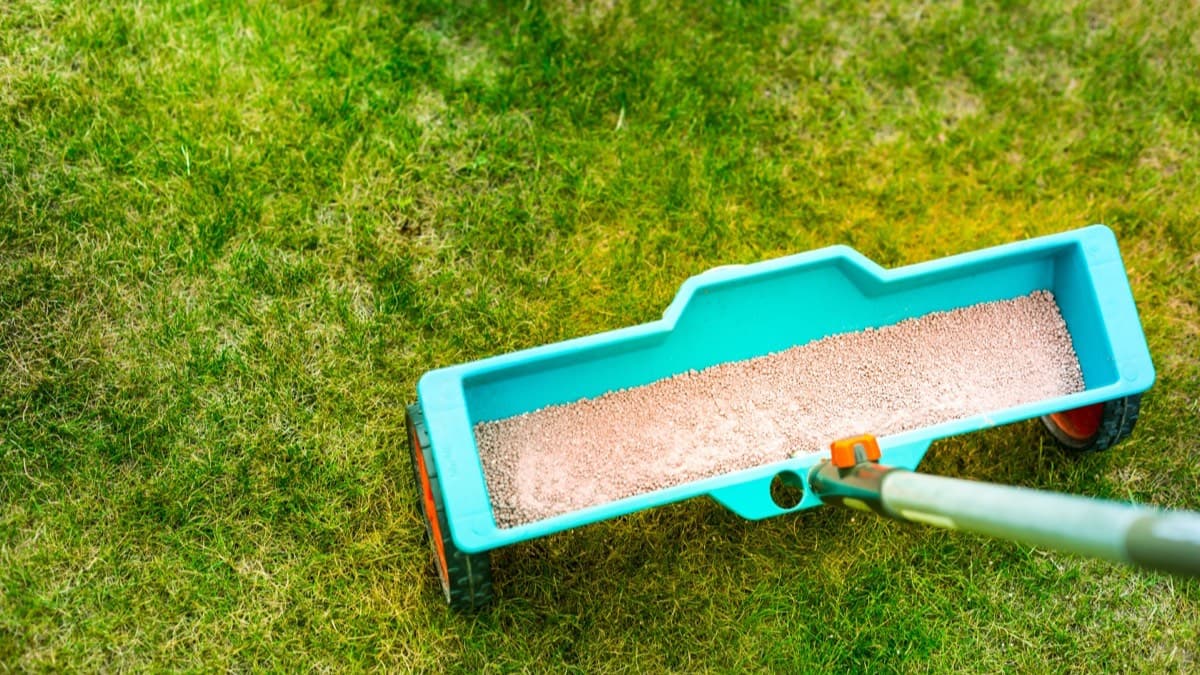
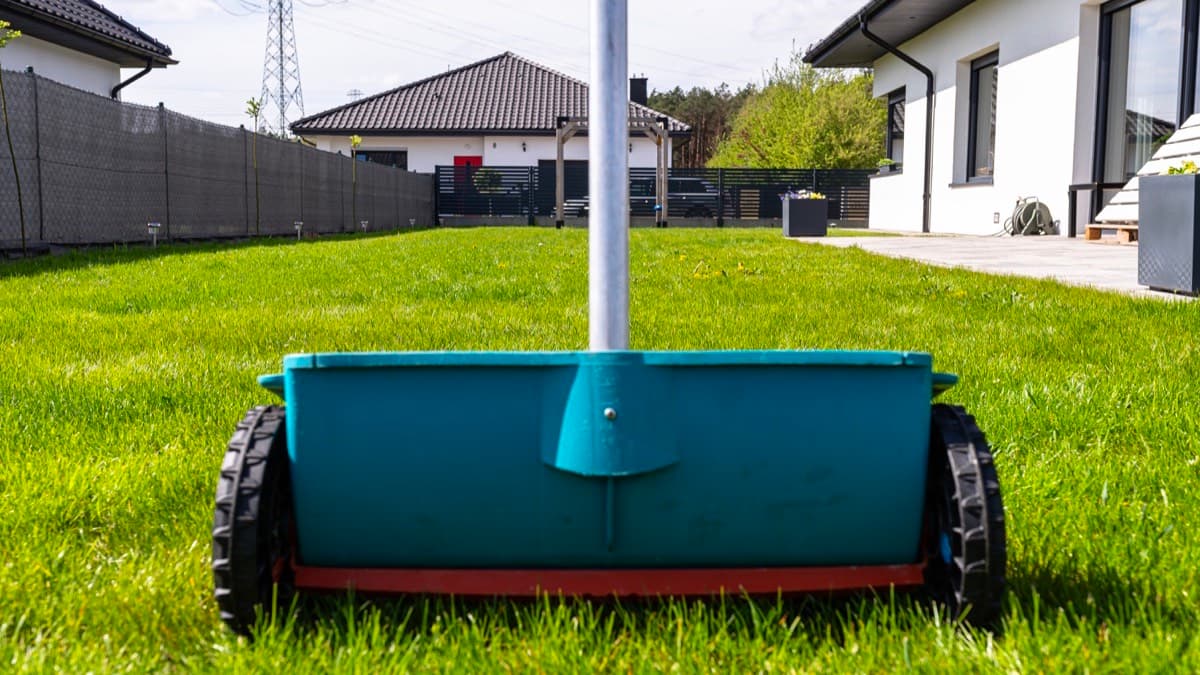
- A rotary spreader
- A push broom or a leaf blower
Steps
- 1
Test the soil first
A soil test shows the pH and whether the lawn needs phosphorus or potassium. Phosphorus is rarely needed on a mature lawn unless the test shows a shortage. Test clay soils every 2 to 3 years, and sandy soils every year.
15 min
- 2
Fertilize when the grass is growing
For cool-season grasses like bluegrass, fescue and ryegrass, put most of the year's nitrogen down from late summer through fall, with less in spring. Warm-season grasses use it best in early and late summer. Don't fertilize dormant, drought-stressed or frozen grass, or in winter.
2 min
- 3
Check the forecast
Skip a day with wind or rain coming, so the granules stay where you put them.
2 min
- 4
Work out the rate
Put down no more than 1 pound of actual nitrogen per 1,000 square feet in one application. Divide the pounds of nitrogen you want by the nitrogen percentage on the bag, as a decimal. At 0.5 pound with an 18 percent product, that's about 2.8 pounds of product per 1,000 square feet.
5 min
- 5
Fill the spreader on the driveway
A hard surface makes any spill easy to clean up.
5 min
- 6
Spread it evenly, away from water
Keep fertilizer away from streams, ponds and storm drains.
15 min
- 7
Sweep the pavement
Sweep or blow every granule off the sidewalk, driveway and street back onto the grass.
5 min
Fertilize the lawn without the runoff
- Test the lawn soil before fertilizing
- Put down the fall lawn fertilizer on a dry, calm day
- Clear the stray fertilizer off the driveway and walk
Habits that cut the fertilizer you need
- Set a yearly total. A low-maintenance cool-season lawn, with clippings left on and no watering, needs about 1 to 3 pounds of nitrogen per 1,000 square feet a year. A moderately kept one needs 2 to 4.
- Mow high and leave the clippings. Mow at 2.5 inches or taller. Clippings left on the lawn recycle their nutrients into the soil.
- Use less, more often. Smaller doses, such as half a pound of nitrogen per 1,000 square feet, give steadier color and growth than fewer big ones.
- Feed an older lawn less. A lawn fertilized regularly for more than 10 years has built up nutrients in its soil and needs less nitrogen.
- Don't overwater. Water that runs off carries fertilizer with it. A soaker hose puts water straight onto the ground.
- Keep clippings and leaves out of the street. Compost or mulch them, or bag them for community composting, so they don't wash into streams.
FAQ
How much fertilizer should I put on my lawn?
No more than 1 pound of actual nitrogen per 1,000 square feet in a single application. Let a soil test decide phosphorus and potassium.
When is the best time to fertilize a cool-season lawn?
Late summer through fall, when the grass benefits most, with lighter, slow-release applications in spring.
Why sweep fertilizer off the driveway?
Granules left on pavement can wash off in the next rain and into the storm drains.
Sources
Checked October 20, 2026
- U.S. Environmental Protection Agency. What you can do: in your yard (2025)
- Purdue University Extension. Fertilizing established cool-season lawns (AY-22-W) (2013)
- University of Connecticut Extension, Integrated Pest Management. Weeds as indicators of soil and growing conditions in turf (2018)
- Yard
- Owner
- Fall
- Under $100
- Beginner
- DIY