How-to
Mower and trimmer care at each end of the season
A fall service with treated or drained fuel, fresh oil and a sharp blade gets the mower through winter, and a check of the blade brake readies it for spring.
Satisfy+ Editorial · Published September 7, 2026 · 4 min read · 1.5 hr to do · Under $100
Satisfy+ is not an insurance agent, broker or adjuster. Your policy's wording controls.
At a glance
- Fuel
- Stabilizer added, or the tank drained and run dry
- Oil
- Changed at the end of each season
- Blade
- Sharpened or replaced once a year
- Blade brake
- Stops the blade within 3 seconds of letting go
Gas left in a mower over the winter leaves residue that can plug the small fuel jets in the carburetor. The mower is then hard to start in spring. An hour of work after the last mow of the fall avoids that and makes the mower last longer. String trimmers, leaf blowers and tillers with gas engines get the same fuel care. For a battery or corded electric mower, skip the fuel, oil and spark plug steps and follow the owner's manual.
Keep mowing as long as the grass is growing. Grass left long over winter slumps and mats down, which invites disease, and the mower can mulch fallen leaves into the lawn on the way.
What you need
- Gas stabilizer, or a gas can and a siphon to drain the tank
- The oil the owner's manual calls for, and a drain pan
- A new air filter, or a way to clean the old one
- A spark plug socket and a gap gauge
- A brush or a putty knife for the deck
- Grease and light oil
Steps
- 1
Treat or drain the fuel
Work outdoors with the engine cool. One way is to add stabilizer and run the engine for several minutes, until treated gas fills the carburetor. The other is to drain the tank and run the engine until it stops, which empties the lines. Stabilizer added to the can right after you buy the gas keeps it fresh for up to 2 years.
15 min
- 2
Pull the spark plug wire off
With the wire off, the engine can't start while your hands are near the blade.
1 min
- 3
Oil the cylinder if you drained the tank
Take out the spark plug and pour about 1 tablespoon of oil into the cylinder. Pull the starter cord a few times to spread it over the cylinder and piston.
5 min
- 4
Change the oil
Old oil forms sludge that wears the engine's internal parts and seals. Refill with the type and weight the owner's manual lists.
15 min
- 5
Clean or change the air filter
A dirty filter chokes the air into the engine and makes it run rich.
5 min
- 6
Check the spark plug
Replace it if it's fouled, and set the gap to the manual's figure.
5 min
- 7
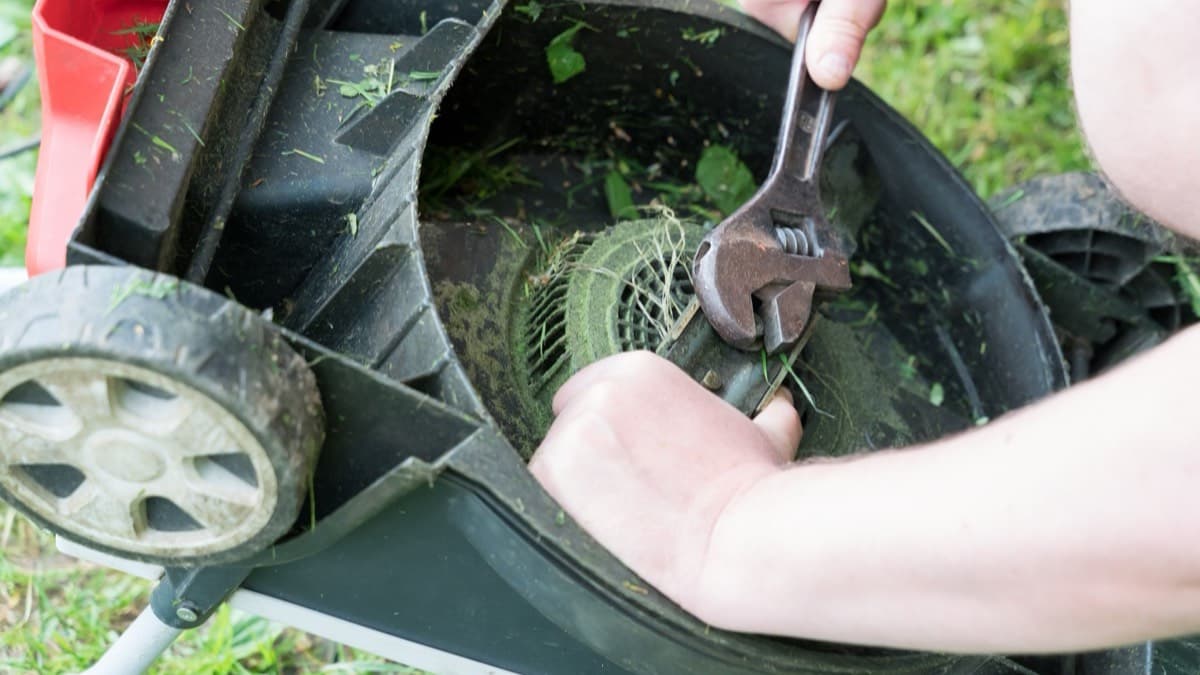
Sharpen or replace the blade
A sharp blade cuts cleanly and takes less power, while a dull one tears the grass. A mower shop can sharpen it if you'd rather not take it off.
10 min
- 8
Lubricate and tighten
Oil the wheel bearings and the throttle cable, grease the height adjusters, and tighten the nuts and bolts. Check the belts and the safety shields while you're there.
15 min
- 9
Clean the deck and the engine
Scrape off caked grass, which holds moisture and rusts a metal deck.
15 min
- 10
Store it dry and check the blade brake in spring
Keep the mower in a dry spot indoors, or loosely under a secured waterproof cover. Before the first mow of spring, start it and let go of the control bar. The blade should stop within 3 seconds.
5 min
Service the mower at each end of the season
- Add stabilizer to the mower's gas, or drain the tank
- Change the mower's oil and clean its air filter
- Have the mower blade sharpened or replaced
- Test the blade brake before the first mow of spring
Before each mow
- Fill the tank before you start, not while the engine is running or hot.
- Walk the lawn and pick up sticks, rocks and other debris. Objects struck by the blade and thrown out from under the mower have caused severe injuries and deaths. Hitting them also dulls the blade.
- Wait for wet grass to dry. Wet clippings clog the discharge chute and can jam the blade.
- Wear sturdy shoes with grip soles and long pants. Keep children and pets indoors while you mow.
- On a slope, mow across it with a walk-behind mower. Drive a riding mower up and down a slope instead.
- Set the cutting height before the engine starts.
- Leave the safety features in place, and repair or replace any that stop working.
Clearing a jam
Shut off the engine and wait for the blade to stop completely before you reach into the chute. A turning blade can take off a finger. A mower made before the 1982 federal safety standard may have no blade brake at all. To keep anyone from starting a mower, pull the wire off the spark plug or take the plug out.
FAQ
Should I drain the gas from my mower for winter?
Either drain it and run the engine dry, or add stabilizer and run the engine several minutes. Stabilizer added when you buy the gas keeps it fresh for up to two years.
How often should a mower blade be sharpened?
Once a year, at the end of the season. A dull blade tears the grass instead of cutting it.
How do I know the blade brake works?
Start the mower and let go of the control bar. The blade should stop within 3 seconds.
Sources
Checked October 19, 2026
- University of Kentucky Cooperative Extension Service. Fall maintenance tips for lawnmowers (2003)
- U.S. Consumer Product Safety Commission. Power lawn mowers (Publication 5126) (2016)
- Owner
- Spring
- Fall
- Under $100
- Beginner
- DIY