How-to
Protecting young trees and shrubs through the winter
Water deeply before the freeze, mulch the roots, wrap thin-barked young trunks in light-colored wrap, and ring them with hardware cloth against rabbits.
Satisfy+ Editorial · Published August 3, 2026 · 3 min read · 1.5 hr to do · Under $100
At a glance
- Water
- Deeply before the ground freezes, after a dry fall
- Mulch
- 3 to 4 inches, pulled 6 inches off the trunk
- Wrap
- On in late fall, off in spring
- Rabbit guard
- 18 to 24 inches above the snow line
Winter sun, wind and cold can dry out evergreens, split bark and kill buds and roots. Hungry rabbits, mice and voles chew bark and can girdle a young trunk. Young and newly planted trees and shrubs, with thin bark and shallow roots, take the most damage.
What you need
- A hose
- Shredded wood mulch
- Light-colored tree wrap
- 1/4-inch hardware cloth and wire ties
- Burlap and stakes, for evergreens
Steps
- 1
Water deeply before the freeze
If the fall has been dry, soak the root zones of young trees and evergreens heavily before the ground freezes. Water evergreens thoroughly through October until freeze-up. Watering only at the very end of fall doesn't help.
30 min
- 2
Mulch the roots
Spread 3 to 4 inches of shredded wood mulch over the roots of new plantings, pulled back about 6 inches from the trunk in a donut. Fill any cracks in the soil of a new planting hole, which let cold air reach the roots.
20 min
- 3
Wrap thin-barked trunks
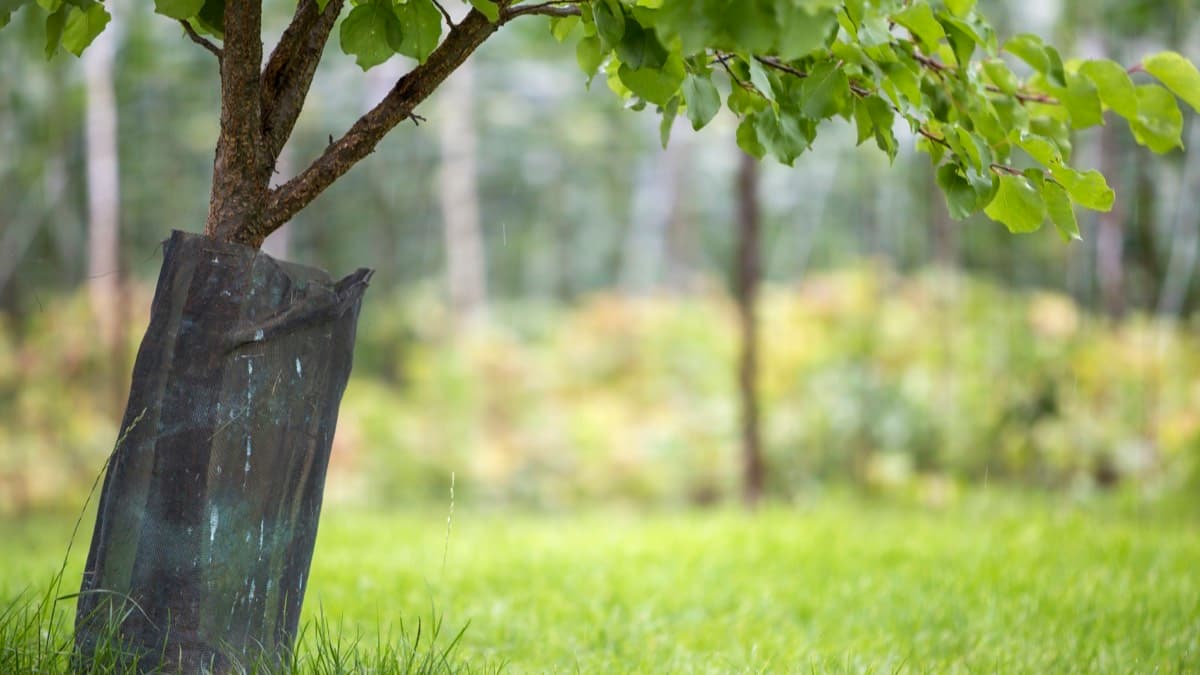
In late fall, wrap the trunk from the ground up to the first branch, overlapping each turn by a third, and tape the top. Use a white or light-colored wrap, which reflects the sun. Brown or dark wraps absorb heat. Don't staple into the bark.
10 min
- 4
Put up a rabbit and mouse guard
Set a cylinder of 1/4-inch hardware cloth about 6 inches out from the trunk. Bury the bottom 2 to 3 inches for mice and voles, and run it 18 to 24 inches above the usual snow line for rabbits. It can stay on all year.
15 min
- 5
Cut the grass short around young trees
In late fall, mow or cut grass and weeds short within 2 feet of young trunks, so mice and voles have no cover.
10 min
- 6
Screen tender evergreens
Set burlap on stakes on the south, southwest and windward sides of yews, arborvitae and hemlocks. Leave the top open for air and light.
15 min
- 7
Check the guards and wraps after a big snow
Make sure the snow hasn't drifted above the guard, and that the wrap hasn't slipped.
5 min
Get the young trees ready for winter
- Water the young trees deeply before the ground freezes
- Put the tree wrap on the young trunks in late fall
- Take the tree wrap off in spring
Why the wrap matters
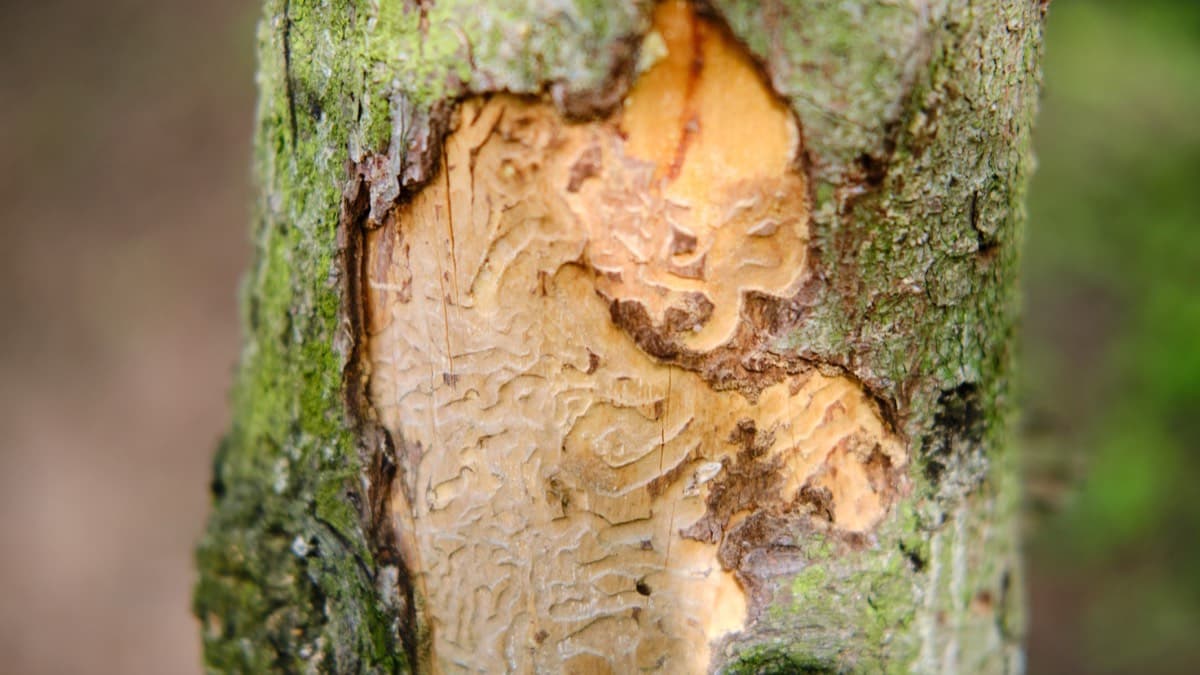
On a sunny winter day, the south and southwest side of a young trunk warms up enough for the bark to lose its dormancy. When the sun drops or a cloud passes, the temperature falls fast and the tissue dies. The result, called sunscald, is a long, sunken or cracked patch of dead bark. Frost cracks, vertical splits in the trunk, form the same way. Older trees with thick bark don't need wrapping.
Young, newly planted and thin-barked trees are the ones to wrap, such as cherry, crabapple, honey locust, linden, maple, mountain ash, plum and redbud. Wrap new trees for at least the first two winters, and thin-barked kinds for longer. Take the wrap off in spring after the last frost, and don't leave it on all year.
Snow, ice and pruning
- Tie up weak trees. Work only on what you can reach from the ground. Tie the leaders of small multi-stem trees and upright evergreens like arborvitae together with strips of cloth or old nylon stockings. Place the ties about two-thirds of the way up, and remove them in spring so they don't girdle the stems.
- Large trees. An arborist can cable the main branches of large, wide-spreading or multi-stem trees.
- Hold off on late pruning and fertilizing. Pruning, fertilizing or overwatering in late summer pushes tender new growth that winter kills. Don't prune evergreens after August.
- Keep salt away. Salty runoff and spray make winter injury worse, and a burlap barrier can block the spray.
After a hard winter
Brown evergreen foliage is most likely dead, but the buds are hardier and often fill in. Wait until mid-spring to prune out injured foliage, and cut dead branches back to living wood. Sunscalded bark usually heals on its own as new bark grows in from the edges. Leave the wound uncovered, with no paint, tar or wound dressing.
FAQ
Should I wrap my young trees for winter?
Yes, for young, newly planted and thin-barked trees. Use a white or light-colored wrap from the ground to the first branch in late fall, and take it off in spring.
How do I keep rabbits from eating my trees in winter?
Put a cylinder of 1/4-inch hardware cloth around the trunk, running 18 to 24 inches above the usual snow line and 2 to 3 inches into the ground.
Should I water trees before winter?
Yes, if the fall has been dry. Soak the roots deeply before the ground freezes.
Sources
Checked October 20, 2026
- University of Minnesota Extension. Protecting trees and shrubs in winter (2024)
- Colorado State University Extension. Wrapping trees for winter (CMG GardenNotes 653) (2024)
- Cold
- Yard
- Owner
- Fall
- Under $100
- Beginner
- DIY