Guide
Trees near the house, and when to call an arborist
Walk each large tree once a year for dead limbs, cracks, decay and root trouble, and know which signs mean a certified arborist should look at it.
Satisfy+ Editorial · Published August 7, 2026 · 3 min read
At a glance
- Check
- Each large tree, once a year
- Look for
- Dead limbs, cracks, decay, mushrooms at the base
- Power lines
- Never touch, call the utility
- The work
- Pruning and removal are for a trained arborist
Watch the trees within reach of the house, the driveway, the power lines or the play area. Walk around each of them once a year and look for the defects below the canopy and in it. Judging how serious a defect is, and doing the work, is a job for a certified arborist.
The yearly walk
Stand back from each large tree, then walk around it, and ask:
- Are there large dead branches, or branches hanging loose in the canopy?
- Have branches already fallen?
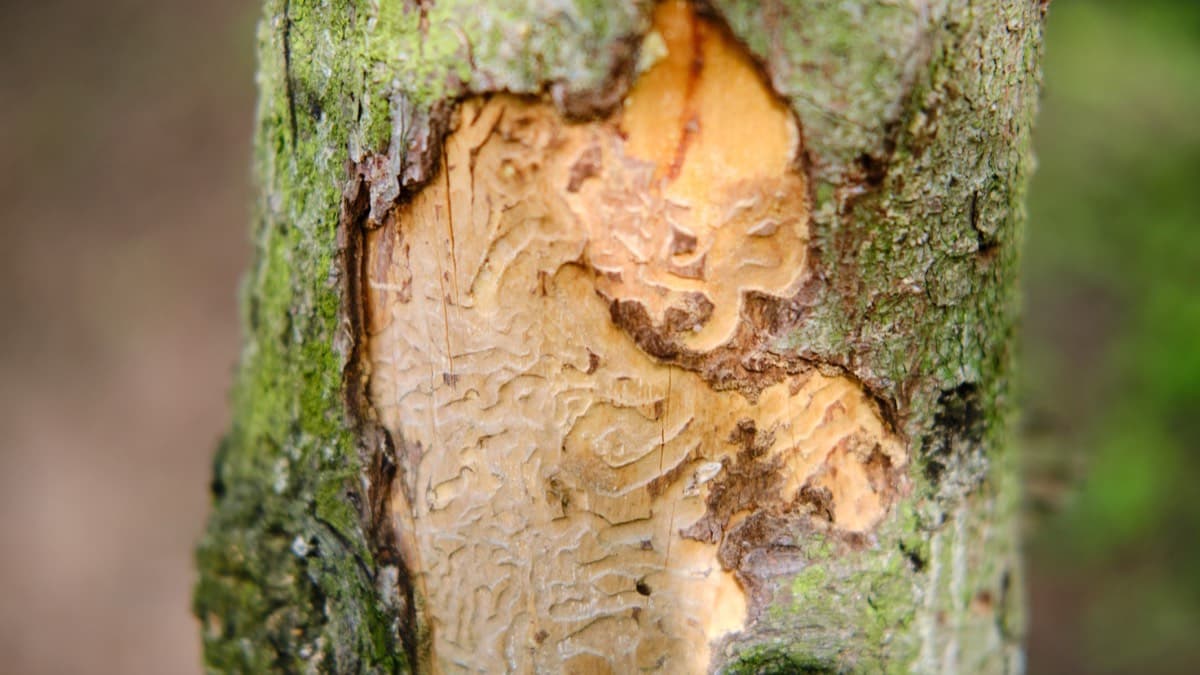
- Is bark coming loose on the trunk?
- Are there cracks or splits in the trunk or where branches join it?
- Are there cavities or soft, rotten wood on the trunk or the main branches?
- Are mushrooms growing at the base or under the tree?
- Has the ground cracked or lifted around the roots, especially if the tree leans?
- Has the soil been dug, raised or paved around the tree for construction?
- Are the leaves smaller than usual, or an odd yellow?
- Has the tree been topped or cut back hard?
A yes to any of these is a reason to have an arborist look at the tree.
Defects worth knowing by sight
Dead branches are the most obvious hazard, and the risk depends on their size and what's under them. A trunk that splits into two equal stems is a common failure point. So is a branch with its weight bunched near the tip. Lopsided swelling on the trunk can be the tree growing around decay inside.
Trees and power lines
Never try to cut or pull a branch from a power line, and never go near a downed line. It can still carry electricity. Call the electric company about any tree touching the lines.
What an arborist does
An arborist can prune out defective branches, add cables and braces to support weak limbs, or recommend removing a tree whose risk is too high. Pruning done badly can weaken a tree, and cutting large trees is dangerous work for anyone not trained and equipped for it. Confirm that the arborist is certified and insured before the work starts.
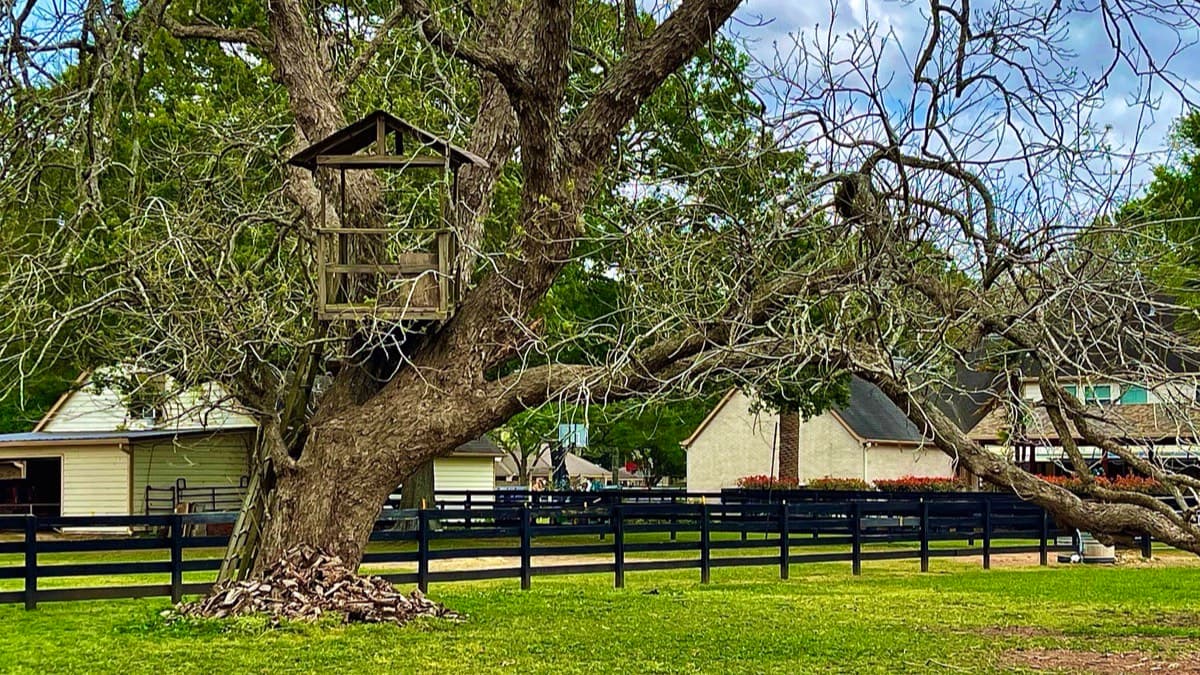
An annotated example
What to do next
Walk each large tree near the house once a year, in late winter when the branches are bare or in early fall. Write down any yes from the list, with the tree and the side it's on, and take a photo. Book a certified arborist for those trees, and call the utility about anything touching a line.
Walk the trees near the house
- Check each large tree for dead limbs, cracks and decay
- Call the utility about any branch touching a power line
- Book a certified arborist for any tree that shows a defect
FAQ
How do I know if a tree near my house is dangerous?
Look for large dead branches, cracks, cavities, mushrooms at the base and lifted soil around the roots. Any of these means an arborist should look at it.
Can I cut a branch off a power line?
No. Never touch a branch near a power line. Call the electric company.
Sources
Checked October 19, 2026
- International Society of Arboriculture. Recognizing tree risk (2021)
- International Society of Arboriculture. Why hire an arborist (2026)
- Yard
- Hire
- Owner