Explainer
How electricity gets to your house
Follow power from the plant over transmission lines, through substation transformers and along local distribution lines, and see who runs each part.
Satisfy+ Editorial · Published June 17, 2026 · 3 min read
At a glance
- Made at
- Power plants, which may belong to your utility or to someone else
- Carried far by
- High-voltage transmission lines on tall towers
- Stepped down at
- Substations, where transformers lower the voltage
- Brought to the house by
- The local utility's lower-voltage distribution lines
Electricity is made at power plants and travels to the house through a network of power lines, substations and transformers called the grid. Across the United States, it runs to thousands of miles of high-voltage lines and millions of miles of lower-voltage ones. Those lines connect thousands of power plants to hundreds of millions of customers.
From the plant to the street
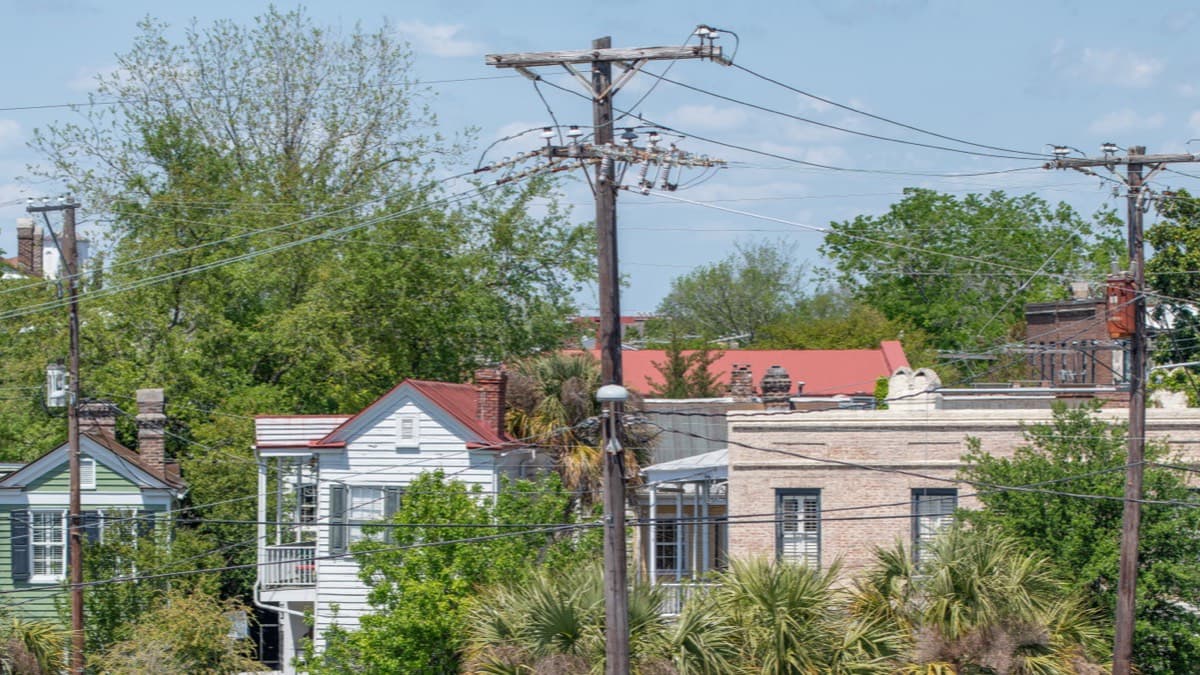
Power leaves a plant on high-voltage transmission lines, the ones strung between tall metal towers. High voltage makes carrying electricity over long distances more efficient and less expensive. Near where the power will be used, transformers at substations step the voltage down. Distribution lines then carry the lower-voltage electricity, which is safer to use in homes, along the streets to each customer.
Transformers work in both directions. At the plant they step the voltage up for the long trip, and at substations they step it down for local delivery.
Who runs each part
The company that sells you electricity may be one of three kinds:
- A not-for-profit municipal utility, owned by the city or local government
- An electric cooperative, owned by its members
- A private, for-profit utility owned by stockholders, often called an investor-owned utility
Some utilities make all the power they sell at their own plants. Others buy it from other utilities, power marketers, independent producers or wholesale markets. Some customers buy electricity from a power marketer while the local utility still delivers it. Whoever made the power, the local utility runs the distribution system that connects homes to the grid. That's why outages on your street are reported to the local utility.
Why the grid rarely goes dark all at once
In the lower 48 states the grid has three main interconnections. The Eastern covers the area east of the Rocky Mountains, and the Western runs from the Rockies west. The Electric Reliability Council of Texas covers most of Texas. The supply of electricity has to match demand at every moment. Organizations called balancing authorities keep the two in step within each region. If they fall out of balance, local or widespread blackouts can follow.
The network gives power more than one path, so a single failed line or plant doesn't have to black out a whole region. Mandatory reliability standards cover how utilities plan and run their systems and address security threats to critical electrical infrastructure.
The meter and the smart grid
A smart meter is part of the smart grid. It adds digital equipment to the traditional system, so the utility and the customer can send and receive information. Smart devices on power lines and at substations help a utility pinpoint where an outage or a problem is and fix it faster, sometimes remotely. At home, smart devices can tell you when electricity prices are higher. Where the utility offers time-of-day pricing, you can shift use to cheaper hours.
An annotated example
What to do next
Find the name of the utility that delivers your power. It's on the electric bill, along with any separate supplier. Save its outage number, and check whether the meter is a smart meter. For what each line on the bill charges, see Reading your electric bill. For the panel and the circuits inside the house, see Electrical panel checks and warning signs.
Know who supplies the power
- Write down the electric utility's outage number
- Find out whether the meter is a smart meter
FAQ
What is the difference between transmission and distribution lines?
Transmission lines carry high-voltage power over long distances on tall towers. Distribution lines carry lower-voltage power along streets to homes and businesses.
Who do I call when the power goes out?
The local utility, which runs the distribution lines to the house even if someone else made the power.
What does a substation do?
Its transformers lower the voltage from the transmission lines so it can travel on local distribution lines.
Sources
Checked October 20, 2026
- U.S. Energy Information Administration. Electricity explained: how electricity is delivered to consumers (2026)
- Owner
- Electrical