How-to
Keeping mice out when the weather turns
Find and seal the gaps mice use to get in, put food where they can't reach it, clear their cover outside, and trap any that are already inside.
Satisfy+ Editorial · Published August 13, 2026 · 3 min read · 1.5 hr to do · Under $100
At a glance
- Gap a mouse fits through
- 1/4 inch, the width of a pencil
- Small holes
- Steel wool, held in with caulk
- Woodpiles and compost
- 100 feet from the house
- Traps
- Snap traps, not glue or live traps
A mouse can squeeze through a hole the width of a pencil. Mice and other rodents spread disease through their droppings, urine, saliva and bites, and they're far easier to keep out than to get rid of once they've settled in. Droppings and gnaw marks are the first signs. Droppings are pointed at one end and often turn up in cabinets and drawers.
What you need
- A flashlight
- Steel wool and a tube of caulk
- Hardware cloth or metal sheeting, and snips, for bigger holes
- Containers with tight lids for food and trash
- Snap traps, if mice are already inside
- Rubber or plastic gloves, and a disinfectant
Steps
- 1
Look for gaps inside
With the flashlight, check inside, under and behind the kitchen cabinets, and in the corners of closets. Look behind the appliances, around the pipes under the sinks and the washer, and where pipes run to the water heater and furnace. Check around the fireplace, windows, doors, floor drains and vents, and along the line where the floor meets the wall.
20 min
- 2
Look for gaps outside
Walk around the house. Check around windows and doors, especially any without weather stripping, along the foundation where it meets the ground, and where electrical, plumbing, cable and gas lines come in.
15 min
- 3
Fill the small holes
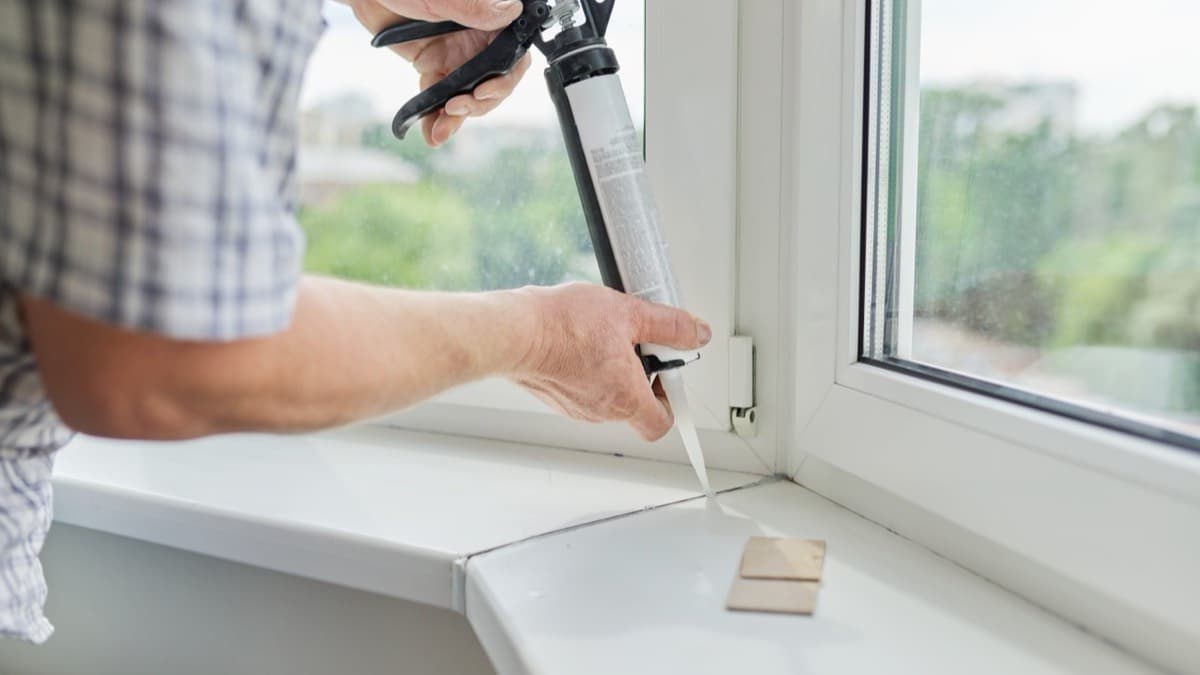
Pack small holes tight with steel wool, then run caulk around it to hold it in place. Spray foam works too.
20 min
- 4
Cover the bigger holes
Cover larger holes with hardware cloth, metal sheeting, lath screen or cement, cut to fit around any pipes. Gaps up in the roof, eaves or soffits, or around attic and crawl space vents, are a job to have done.
15 min
- 5
Put the food away
Keep food in thick plastic, metal or glass containers with tight lids. Clean up spills right away. Put pet food away after meals and don't leave the bowls out overnight. Keep the kitchen trash in a thick plastic or metal can with a tight lid.
10 min
- 6
Clear the outside
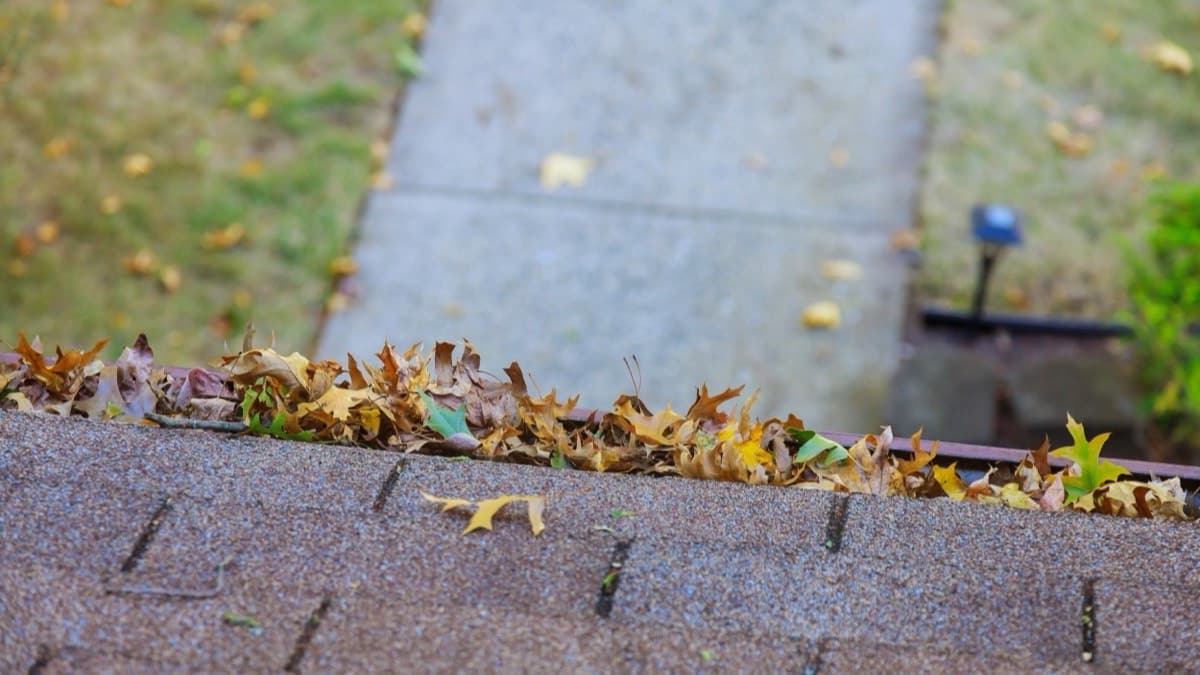
Move woodpiles at least 100 feet from the house, raised a foot off the ground. Keep compost bins 100 feet away too, and bird feeders well away from the house. Cut back brush and weeds, and keep the grass and shrubs near the house trimmed.
10 min
- 7
Check your work
Go back to each spot you sealed. The steel wool should be packed in tight with caulk around it, with no gap showing.
5 min
Keep mice out this fall
- Check the kitchen cabinets and closets for droppings
- Seal the small gaps around pipes with steel wool and caulk
- Move the woodpile 100 feet from the house
If they're already in
Seal the gaps first, then trap the mice still inside. Use snap traps. Glue traps and live traps scare mice into urinating, which raises the chance of someone getting sick. Keep traps away from children and pets.
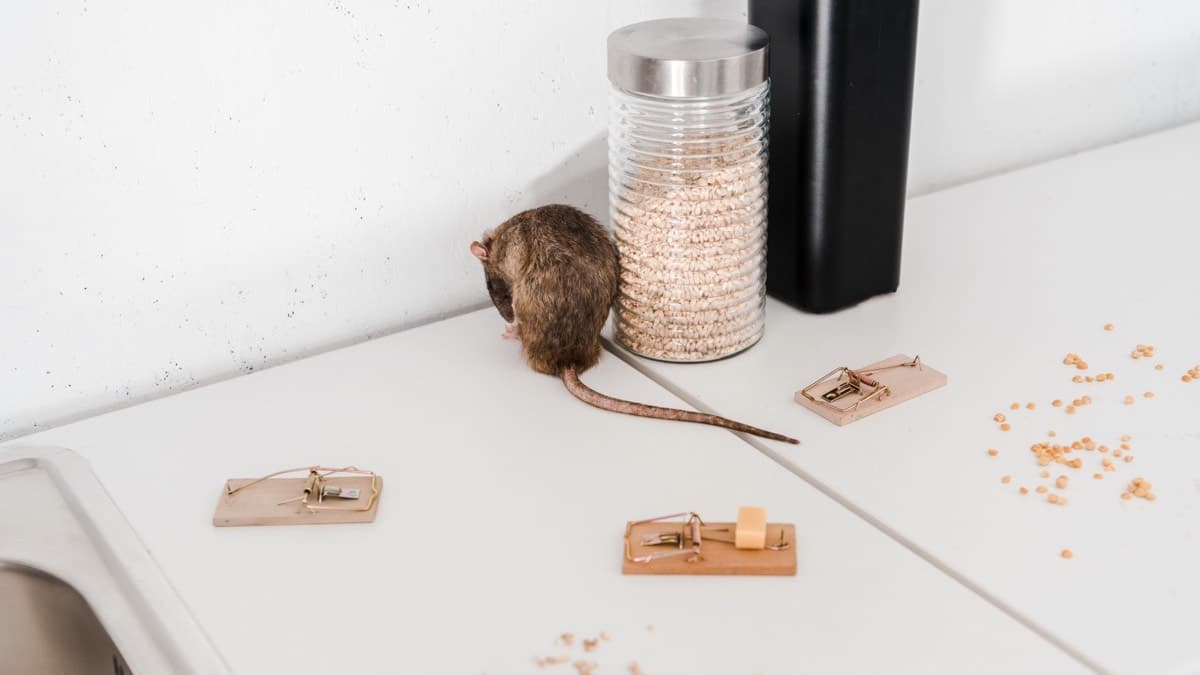
Put a small dab of peanut butter on the trap's bait pad. Set it on the floor against the wall, with the bait end touching the wall so the trap makes a T, since mice run along walls. Good spots are behind the stove and refrigerator, at the back of cabinets and drawers, and anywhere you've found droppings. Check the traps every day and reset them until you stop catching mice and stop finding new droppings. If trapping doesn't work, call a pest control company.
Cleaning up droppings
Don't sweep or vacuum droppings, urine or nests. That puts tiny particles carrying viruses into the air. Instead:
- Put on rubber or plastic gloves.
- Spray the area with a disinfectant, or a fresh mix of 1.5 cups of bleach in a gallon of water, until it's soaked. Leave it for 5 minutes.
- Wipe it up with paper towels and throw them in a covered trash can.
- Mop or sponge the area with disinfectant.
- Wash your gloved hands, take the gloves off, then wash your hands again with soap and warm water.
FAQ
How small a hole can a mouse get through?
One about a quarter inch across, the width of a pencil.
Should I vacuum mouse droppings?
No. Vacuuming or sweeping puts virus particles into the air. Soak the droppings with disinfectant and wipe them up with paper towels.
Sources
Checked October 19, 2026
- Centers for Disease Control and Prevention. How to seal up to prevent rodents (2024)
- Centers for Disease Control and Prevention. How to trap up to remove rodents (2024)
- Centers for Disease Control and Prevention. How to clean up after rodents (2024)
- Centers for Disease Control and Prevention. Controlling wild rodent infestations (2024)
- Owner
- Interior
- Fall
- Under $100
- Beginner
- Tenant
- DIY