Guide
Respirators on the job
Match the respirator to the hazard, read the N, R and P filter ratings, fit-test each worker once a year, seal-check at every use and know when a mask is done.
Satisfy+ Editorial · Published July 21, 2026 · 3 min read
At a glance
- Dust, mist and fumes
- A filtering facepiece or a mask with particle filters
- Gases and vapors
- A reusable mask with the right cartridges
- Fit test
- Once a year, and after a change of model or size
- Seal check
- Every time it goes on
A respirator only protects a worker who has the right type for the hazard, a mask that fits that face, and a seal that holds. NIOSH tests and approves workplace respirators. An approved one carries "NIOSH," its protection rating, such as N95, and a TC approval number listed on NIOSH's certified equipment list. Before someone wears a tight-fitting respirator at work, they get a medical evaluation, a fit test and training.
Match the respirator to the hazard
- Particles. Filtering facepiece respirators, the disposable kind like an N95, filter dust, mist and fumes. They don't protect against gases or vapors.
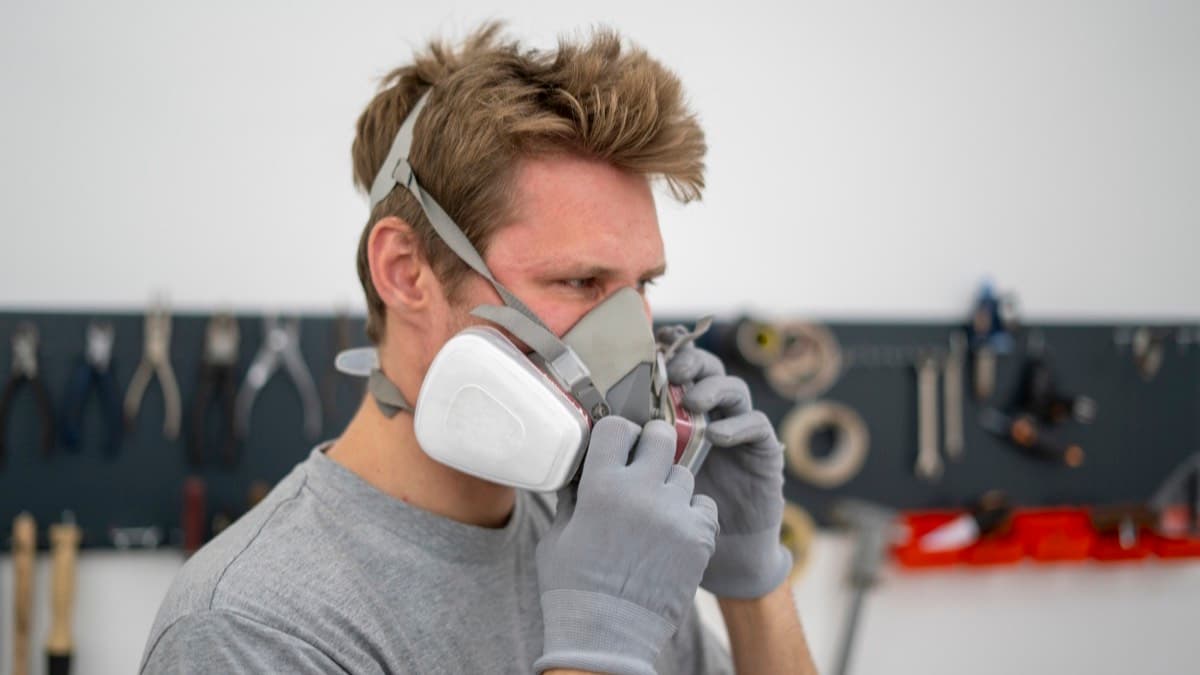
- Gases and vapors. A reusable elastomeric respirator takes cartridges or canisters for gases and vapors, filters for particles, or both. Half masks cover the nose and mouth, and full facepieces cover the eyes too, with a more reliable seal.
- Splashes and irritating vapors. A full facepiece also guards the eyes and face.
Read the filter rating
The letter says how the filter handles oil, and the number says how much it catches.
- N. Not resistant to oil.
- R. Somewhat resistant to oil.
- P. Strongly resistant to oil.
- 95, 99 and 100. At least 95, 99 or 99.97 percent of airborne particles.
So a P100 filter catches at least 99.97 percent of particles and holds up around oil.
Fit and seal
- Fit-test once a year. A fit test checks that a tight-fitting respirator seals on that worker's face. Retest whenever the model, style or size changes, and after a noticeable change in weight or dental work.
- Seal-check every time. For a positive check, block the exhale paths and breathe out gently. There should be slight pressure and no leak. For a negative check, block the inhale paths and breathe in quickly. The facepiece should pull in slightly. Use the check the maker specifies.
- Shave where it seals. Hair under the sealing surface lets 20 to 1,000 times more air leak in (2018). A mustache that stays clear of the seal and any valve can work, but a beard or stubble under the edge can't.
When it's done
- Disposables. A filtering facepiece can be worn until it's damaged, dirty or noticeably harder to breathe through, unless the maker says single use. Keep reuse to the same worker, and store it properly between uses.
- Reusable masks. Clean and sanitize the facepiece by the maker's instructions, and store it between shifts.
Dust masks and respirators for home projects covers the same gear for a homeowner's own projects.
An annotated example
What to do next
Check that each respirator model the crew uses carries a NIOSH TC approval number, and book a fit test for every worker who wears a tight-fitting mask. Teach the two seal checks so they happen every time a mask goes on.
Keep the crew's respirators working
- Book each worker's respirator fit test
- Check the TC approval number on each respirator model
- Clean the crew's reusable half masks
FAQ
What's the difference between N95, R95 and P95?
All three catch at least 95 percent of airborne particles. N isn't resistant to oil, R is somewhat resistant, and P is strongly resistant.
Does an N95 protect against paint fumes?
No. A filtering facepiece filters particles, not gases or vapors. Vapors call for a reusable respirator with the right cartridges.
How often does a respirator need a fit test?
Once a year, and whenever the model, style or size changes.
Sources
Checked October 20, 2026
- National Institute for Occupational Safety and Health. Respirators (2025)
- National Institute for Occupational Safety and Health. Filtering facepiece respirators (2025)
- National Institute for Occupational Safety and Health. Elastomeric respirators (2025)
- National Institute for Occupational Safety and Health. Fit testing (2025)
- National Institute for Occupational Safety and Health. Facial hairstyles and filtering facepiece respirators (2018)
- Professional