Explainer
Safety data sheets and chemical labels for a crew
Learn what the 16 sections of a safety data sheet cover, which four a crew reads most on a job, what each part of a chemical label means and what the nine pictograms warn about.
Satisfy+ Editorial · Published July 6, 2026 · 3 min read
At a glance
- The safety data sheet
- 16 sections in the same order for every chemical
- Read first
- Sections 2, 4, 7 and 8
- The label
- Pictograms, a signal word, hazard and precautionary statements
- Pictograms
- Nine symbols in red borders
Every hazardous chemical a crew uses, from primer and adhesive to concrete sealer and drain cleaner, comes with a safety data sheet from its maker or distributor. The sheets follow one format, with the same 16 numbered sections in the same order, so the same information is in the same place on each sheet. The label on the container is the short version.
The four sections a crew reads most
- Section 2, hazards. What the chemical can do, including how it changes if its form changes or it reacts, and the label elements it needs.
- Section 4, first aid. The symptoms to watch for, right away and later, and the treatment.
- Section 7, handling and storage. Precautions for handling it safely and storing it, including what it shouldn't be stored with.
- Section 8, exposure controls and protection. Exposure limits, the ventilation or other controls to use, and the protective equipment to wear, such as gloves, goggles or a respirator.
The rest of the sheet
- Section 1, identification. The product name on the label, the maker's address and phone number, an emergency phone number, and what it's meant for.
- Section 3, ingredients. The chemical names and identifying numbers.
- Section 5, fire-fighting. The right way to put out a fire, and the hazards the chemical adds in one.
- Section 6, spills. Emergency steps, protective equipment and how to contain and clean it up.
- Sections 9 to 11. Physical properties, stability and reactivity, and toxicity, including the routes of exposure and the short- and long-term effects.
- Sections 12 to 15. Ecological, disposal, transport and regulatory information.
- Section 16. The date it was prepared or last revised.
The label
A hazardous chemical's label carries:
- The product identifier, matching the name in Section 1 of the sheet.
- A signal word, such as Danger.
- Hazard statements, like "Highly flammable liquid and vapor."
- Precautionary statements, like "Keep away from heat, sparks and open flames" and "Wear protective gloves," with first aid steps.
- Pictograms for the hazards.
- The supplier's name, U.S. address and phone number.
The pictograms
Each pictogram is a symbol on a white background inside a red border, and it appears only once on a label even when several hazards call for it.
- Flame. Flammables, and chemicals that can self-heat or give off flammable gas.
- Flame over circle. Oxidizers.
- Exploding bomb. Explosives and some reactive chemicals.
- Gas cylinder. Gases under pressure.
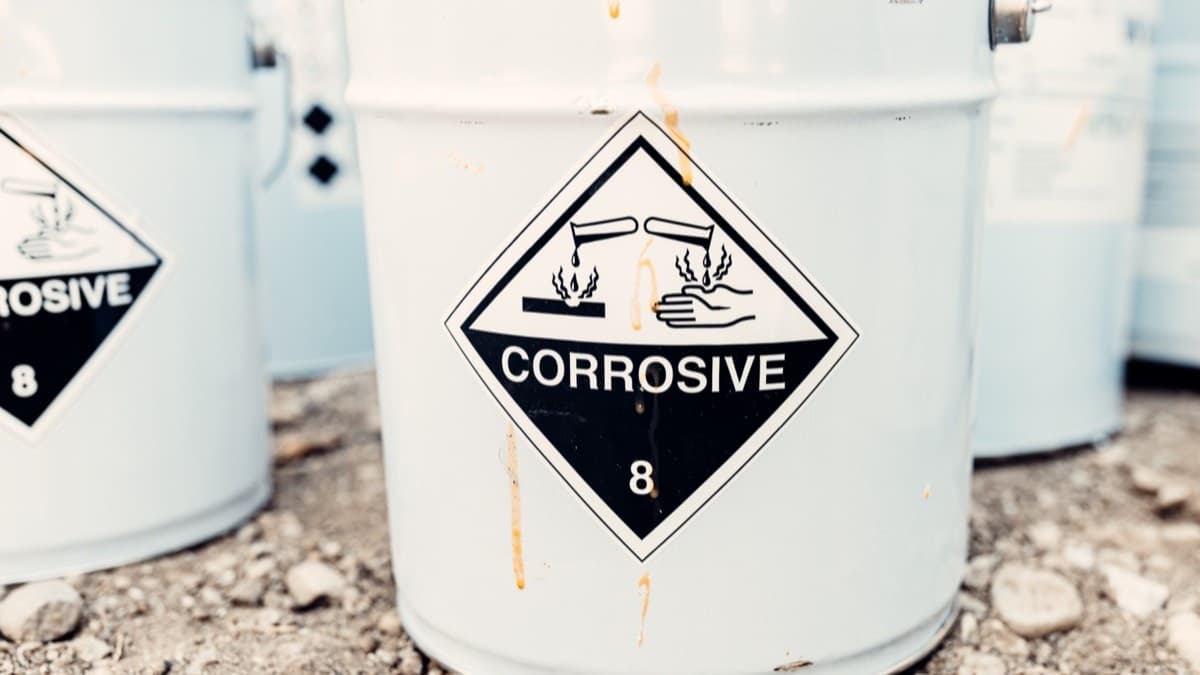
- Corrosion. Skin burns, eye damage and chemicals that corrode metal.
- Skull and crossbones. Acute toxicity that can be fatal.
- Health hazard. Cancer, breathing sensitivity, organ damage and other long-term effects.
- Exclamation mark. Skin and eye irritants, skin sensitizers and harmful toxicity.
- Environment. Toxic to aquatic life. This one is optional on a label.
An annotated example
What to do next
Print the safety data sheet for each chemical the crew uses and keep a binder in every truck, where anyone on the job can reach it. Go through the binder twice a year to add new products and pull ones you've stopped using.
Keep the crew's chemical papers on hand
- Print the safety data sheet for each chemical the crew uses
- Keep the safety data sheets in a binder in each truck
- Review the binder for new or dropped products
FAQ
Where is first aid information on a safety data sheet?
Section 4. Section 2 lists the hazards, and Section 8 lists the protective equipment to wear.
What does the flame pictogram mean?
The chemical is flammable, or it can self-heat or give off flammable gas.
What's the difference between a safety data sheet and a label?
The label is the short version on the container. The safety data sheet has 16 sections of detail, from first aid to storage and protective equipment.
Sources
Checked October 20, 2026
- Occupational Safety and Health Administration. Hazard communication: safety data sheets (QuickCard) (2024)
- Occupational Safety and Health Administration. Hazard communication standard labels (QuickCard) (2024)
- Occupational Safety and Health Administration. Hazard communication standard pictogram (QuickCard) (2024)
- Professional