Guide
Wet concrete and cement burns on the job
Wet cement can burn skin before it hurts, so tape snug gloves to your sleeves, tuck pants into high boots, wash in cool water with pH-neutral soap and get any burn seen fast.
Satisfy+ Editorial · Published August 19, 2026 · 3 min read
At a glance
- The hazard
- Wet cement is caustic, abrasive and drying
- The trap
- Cement burns often don't hurt at first
- Gloves
- Snug butyl or nitrile, taped to the sleeves
- Washing
- Cool, clean water and pH-neutral soap
Portland cement is in concrete, mortar, plaster, grout, stucco and terrazzo, so anyone pouring, finishing, laying brick or setting tile handles it. Wet cement damages skin because it's caustic, abrasive and absorbs moisture. It also carries trace amounts of hexavalent chromium, which can cause a lasting skin allergy. Dry cement is less hazardous to skin than wet.
Cement burns
Wet cement can cause caustic burns, with blisters, dead or hardened skin, or skin that turns black or green. Severe burns can reach the bone and leave scars or disability.
Pain isn't a reliable warning. A cement burn may not hurt right away, so by the time someone notices, much of the damage is done, and it can keep getting worse after the cement is off. Anyone with a cement burn should see a health care professional right away.
Dermatitis and chromium allergy
Wet cement can also cause dermatitis, with itching, redness, swelling, blisters or scaling. Some workers become allergic to the chromium in cement, from one exposure or from months or years of them. Once someone is sensitized, a brief touch of a very small amount can set off a severe reaction, and the allergy can last for years after the work stops. A skin patch test can confirm it. Early treatment helps prevent chronic skin problems, so show even a minor rash to a health care professional.
Gloves
- Butyl or nitrile. They suit caustic materials like cement better than cotton or leather.
- A snug fit. Loose gloves let cement in, and cement trapped inside a glove or soaked through clothing makes the exposure worse.
- Taped sleeves. Wear long sleeves with the cuffs duct-taped to the gloves.
- Clean hands going in. Wash and dry your hands before putting gloves on, and wash every time they come off.
- Rinse before removing. Rinse the cement off the outside first, hold your arms down so water doesn't run onto your skin, and handle used gloves by the inside only.
- Store them clean. Keep the inside of gloves clean and dry, store clean gloves in a plastic bag away from tools, and throw out worn or badly soaked ones.
- Skip barrier creams. Barrier creams and "invisible gloves" don't protect against cement.
Boots, knees and clothing
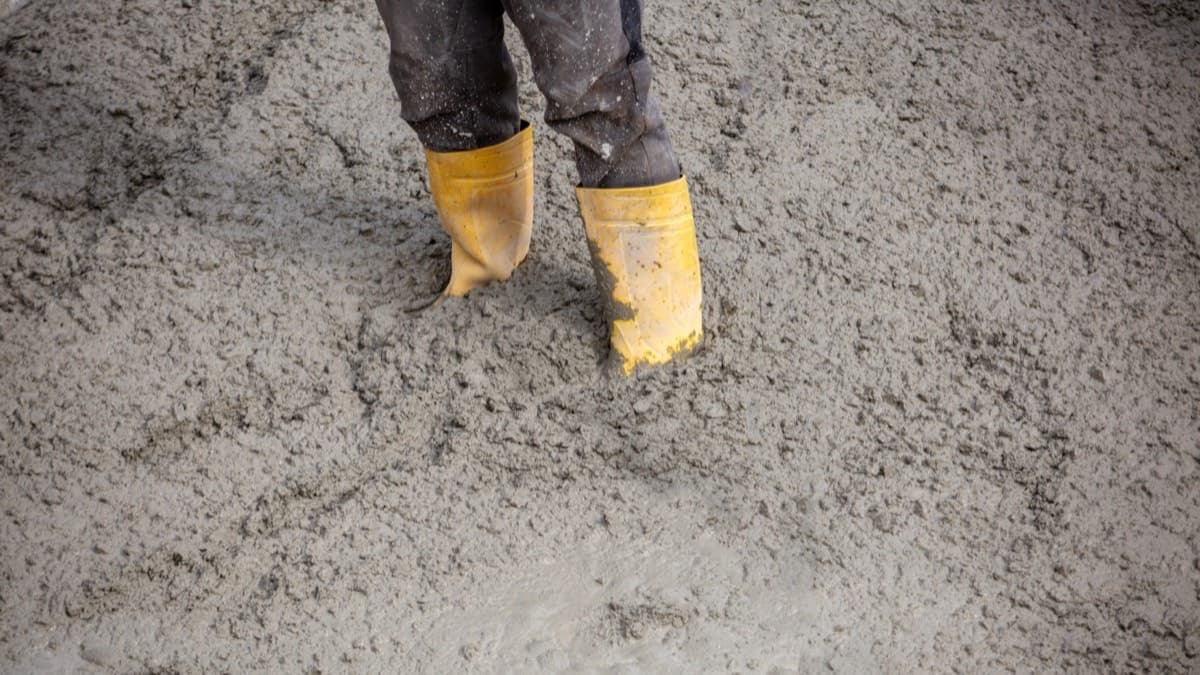
- High waterproof boots. Tuck pants inside and wrap duct tape around the top of the boots so cement can't get in.
- Waterproof kneepads or dry kneeboards. Use them when kneeling on wet cement.
- Change contaminated gear. Swap boots with cement inside them, change out of soaked work clothes, and keep work clothes apart from street clothes.
- Eye protection. Cement in the eyes needs irrigating right away.
- No watches or rings. Wet cement collects under them.
Eye and face protection on the job covers eye protection for the crew.
Washing up
- Wash right away. Wash skin that touched wet cement in clean, cool water with a pH-neutral or slightly acidic soap.
- Neutralize the residue. A mildly acidic rinse, like diluted vinegar, or a buffering solution helps neutralize caustic residue.
- No abrasives or waterless cleaners. Skip alcohol gels and citrus cleaners.
- No lanolin or petroleum jelly. Skin softeners can seal cement residue against the skin and irritate it, and they shouldn't go on a cement burn.
An annotated example
What to do next
Stock snug butyl or nitrile gloves for each worker, pack duct tape and waterproof kneepads for pours, and set up a wash station with clean water and pH-neutral soap.
Protect the crew from wet cement
- Stock butyl or nitrile gloves that fit each worker
- Pack duct tape, waterproof kneepads and high boots for pours
- Set up a wash station with clean water and pH-neutral soap
- Replace worn or badly soaked work gloves
FAQ
Why doesn't a cement burn hurt right away?
Cement burns may not cause pain or discomfort at first, and they can keep getting worse after the cement is washed off. See a health care professional right away.
What gloves protect against wet cement?
Well-fitting butyl or nitrile gloves rather than cotton or leather, with the sleeves duct-taped to them.
How should you wash wet cement off skin?
With clean, cool water and a pH-neutral or slightly acidic soap. Don't use abrasives, alcohol gels or citrus cleaners.
Sources
Checked October 20, 2026
- Occupational Safety and Health Administration. Preventing skin problems from working with portland cement (2008)
- National Institute for Occupational Safety and Health. NIOSH pocket guide to chemical hazards: portland cement (2019)
- Professional