Guide
Wildfire smoke on outdoor jobs
Plan ahead for smoky days on an outdoor job by watching the air, moving or rescheduling the heavy work, and fitting the crew with N95 respirators that seal.
Satisfy+ Editorial · Published June 12, 2026 · 2 min read
At a glance
- In the smoke
- Fine particles, carbon monoxide, benzene, acrolein
- Short-term effects
- Sore eyes and throat, coughing, wheezing
- Higher risk
- Heavy work, long days, heart or lung disease, age
- Respirator
- A fitted N95, for particles only
Wildfire smoke is a mix of gases and fine particles from burning vegetation, buildings and other materials. It carries carbon monoxide, carbon dioxide, hydrocarbons, benzene, acrolein, aldehydes and particulate matter. How it's made up changes with the weather, the fire and what's burning. A crew on a roof or in a yard breathes it all day, and heavy work makes them breathe faster and take in more.
What it does to a crew
Smoke irritates the eyes and throat and brings on coughing and wheezing. It can set off asthma and COPD and lead to bronchitis and pneumonia, and it's linked to heart and blood vessel problems. How much risk a worker faces depends on age, heart or lung disease, long work schedules and how physically demanding the work is. What years of repeated exposure to heavy smoke does is not yet fully known.
Plan before the smoke arrives
Write down what the crew does on a smoky day before the fire season starts, so nobody decides on the spot. Check the air often through the day on the EPA's Fire and Smoke Map, and decide in advance when the work changes. What the air quality numbers mean for the house explains the scale.
On a smoky day
- Move the work to a less smoky spot, or do it at a less smoky time of day.
- Cut back on strenuous work, since heavy breathing pulls in more smoke.
- Take frequent breaks somewhere free of smoke.
- Move what work you can indoors.
- Inside a house, close the windows, set the system to recirculate and run a HEPA air cleaner.
Respirators
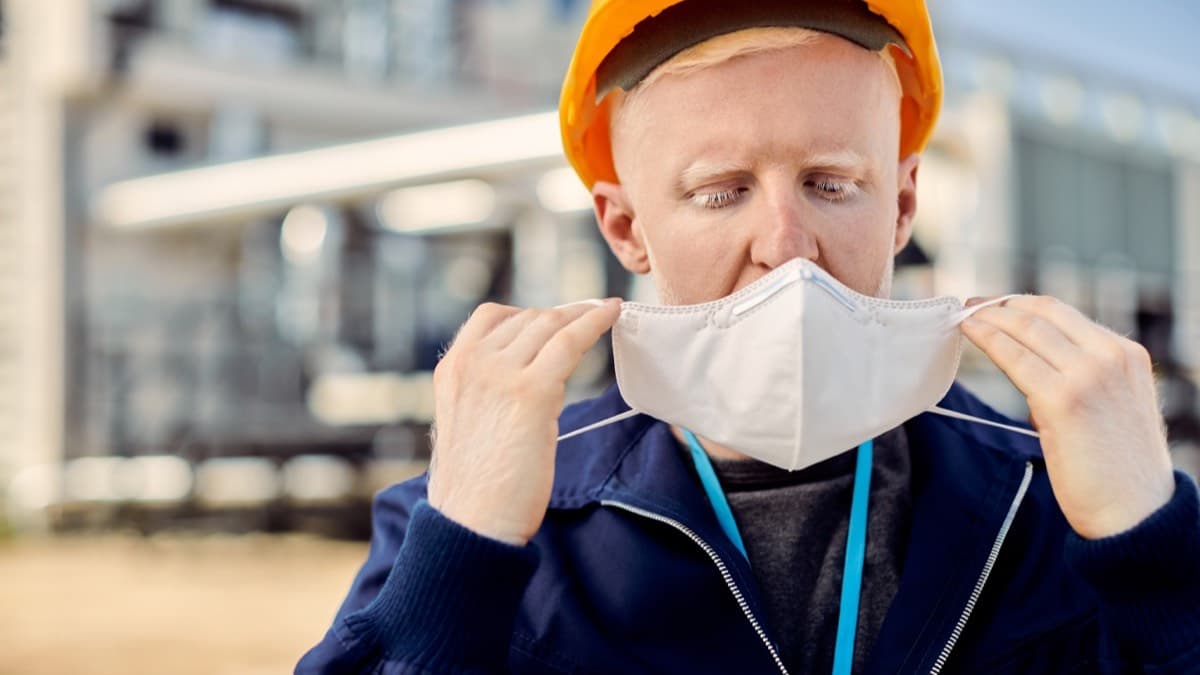
An N95 respirator may be the easiest, and sometimes the only, protection from the particles in smoke. It does nothing for gases such as carbon monoxide. A tight-fitting respirator has to seal against the face, so it won't work over a beard or stubble that gets in the way. A respirator also makes the body work harder in the heat, so build in more breaks and more water. Dust masks and respirators for home projects covers checking the seal and spotting a fake.
An annotated example
What to do next
Write the crew's smoky-day plan, stock N95 respirators on each truck, and check the smoke map each morning of the fire season.
Get the crew ready for smoky days
- Write the crew's plan for a smoky day
- Stock N95 respirators on every truck
- Check the smoke map before each outdoor job
FAQ
Does an N95 protect against wildfire smoke?
It filters the fine particles if it seals well, but not gases such as carbon monoxide.
Who on a crew is most at risk from smoke?
The risk depends on age, heart or lung disease, long work schedules and heavy work.
What should change on a smoky day?
Move or reschedule the work, cut back on strenuous tasks, and take frequent breaks out of the smoke.
Sources
Checked October 20, 2026
- National Institute for Occupational Safety and Health. Wildland fire smoke (2026)
- Professional
- Summer
- Wildfire