How-to
Checking a bill for counterfeits
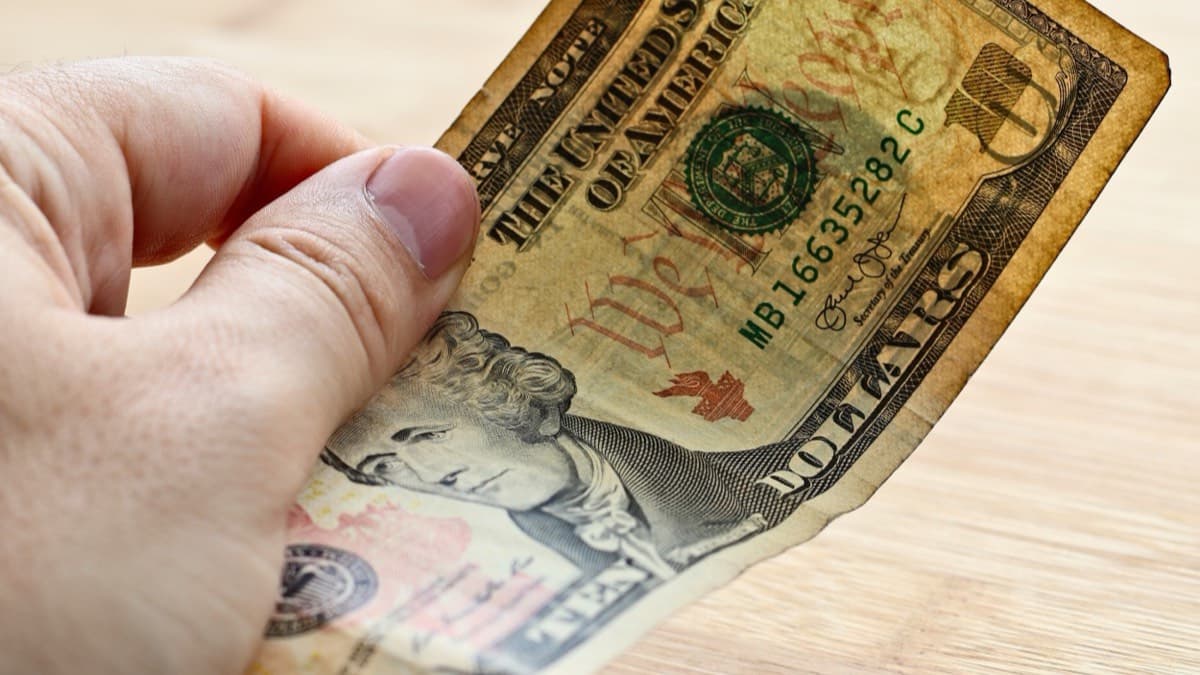
Feel for raised printing, tilt the bill to see the color-shifting numeral, and hold it to light for the watermark and security thread.
Satisfy+ Editorial · Published September 17, 2026 · 2 min read · 5 min to do
This is general education, not individual financial, investment or tax advice.
At a glance
- Feel
- Raised printing, rough to the touch
- Tilt
- The numeral in the lower right shifts color
- Hold to light
- A portrait watermark and a security thread
- Older designs
- Still good to spend
Every design of U.S. paper money issued since 1914 can still be spent, and the government redesigns bills from time to time to make them harder to counterfeit. That means the bill in your hand could be one of several designs, each with its own security features. The checks below work on the current $5, $10, $20, $50 and $100 bills. The $1 and $2 have no security thread.
What you need
- The bill
- Good light, such as a window or a lamp
- A genuine bill of the same value, to compare, if you have one
Steps
- 1
Feel the paper
Run a finger across the bill. Genuine bills have raised printing that gives them a distinctive rough texture. On the $100, the shoulder of Benjamin Franklin's coat feels especially rough.
1 min
- 2
Tilt it
Watch the numeral in the lower right corner of the front. On the current $10, $20, $50 and $100, it shifts from copper to green. The $5 has no color-shifting ink.
1 min
- 3
Hold it to light for the watermark
Look in the blank space beside the portrait for a faint image, visible from both sides. On the $10, $20, $50 and $100, it's a portrait of the same person. The $5 has numeral 5 watermarks instead.
1 min
- 4
Hold it to light for the security thread
Look for a thin strip embedded in the paper, running from top to bottom and printed with the bill's value. Under an ultraviolet light, it glows a different color for each value.
1 min
- 5
Check the $100's ribbon
The current $100 has a blue 3-D security ribbon woven into the paper. Tilt the bill back and forth and the bells on it change to 100s and move side to side. Next to it, the bell in the copper inkwell shifts from copper to green.
1 min
Check and report a suspect bill
- Check a suspect bill's watermark and security thread
- Take the suspect bill to the local police department
What each bill shows
| Bill | Watermark | Thread glows under UV | Color-shifting numeral |
|---|---|---|---|
| $5 | Numeral 5s | Blue | None |
| $10 | Alexander Hamilton | Orange | Yes |
| $20 | Andrew Jackson | Green | Yes |
| $50 | Ulysses S. Grant | Yellow | Yes |
| $100 | Benjamin Franklin | Pink | Yes, plus the bell in the inkwell |
Older designs
An older-design bill isn't a fake. On a $100 issued between 1996 and 2013, feel for the raised printing and tilt it to see the 100 in the lower right turn from green to black. Hold it to light for the watermark and the security thread, and look for tiny red and blue fibers in the paper.
If you think it's counterfeit
Take the bill to your local police department, or contact the nearest Secret Service field office. Your bank may also help work out whether it's genuine.
FAQ
How can I tell if a $20 bill is real?
Feel for raised printing, tilt it to see the 20 in the lower right shift from copper to green, and hold it to light to see the Jackson watermark and the security thread.
Are old-style bills still good?
Yes. Every design of U.S. paper money issued since 1914 can still be spent.
What do I do with a fake bill?
Take it to your local police department, or contact the nearest Secret Service field office.
Sources
Checked October 20, 2026
- U.S. Currency Education Program. The seven denominations (2023)
- U.S. Currency Education Program. $100 note (2023)
- U.S. Currency Education Program. Acceptance and use of older-design Federal Reserve notes (2025)
- U.S. Secret Service. Know your money (2016)
- U.S. Currency Education Program. Report a counterfeit (2026)
- U.S. Secret Service. Counterfeit investigations (2026)
- Owner
- Scam
- Tenant
- Free