How-to
Hearing and eye protection for home projects
Keep earplugs, earmuffs and safety glasses where the mower and the saw live, so the loud and dusty jobs around the house don't cost you your hearing or an eye.
Satisfy+ Editorial · Published August 4, 2026 · 3 min read · 30 min to do · Under $100
At a glance
- Can damage hearing
- Long or repeated sound at 85 decibels or more
- Loud at home
- Mowers, leaf blowers, woodworking tools
- Eyes
- Safety glasses for flying bits, goggles for splashes
- Not protection
- Ordinary glasses, contacts, sunglasses
Harmful noise at home comes from lawn mowers, leaf blowers and woodworking tools, and mowing, home repairs and cleaning put debris and splashes near the eyes.
Noise damages the hair cells in the inner ear, and those cells don't grow back. Hearing lost to noise is gone for good, and it's the one kind of hearing loss that can be prevented completely. Based on hearing tests from 2011 and 2012, at least 10 million adults in the United States under 70 show signs of hearing loss from loud noise.
What you need
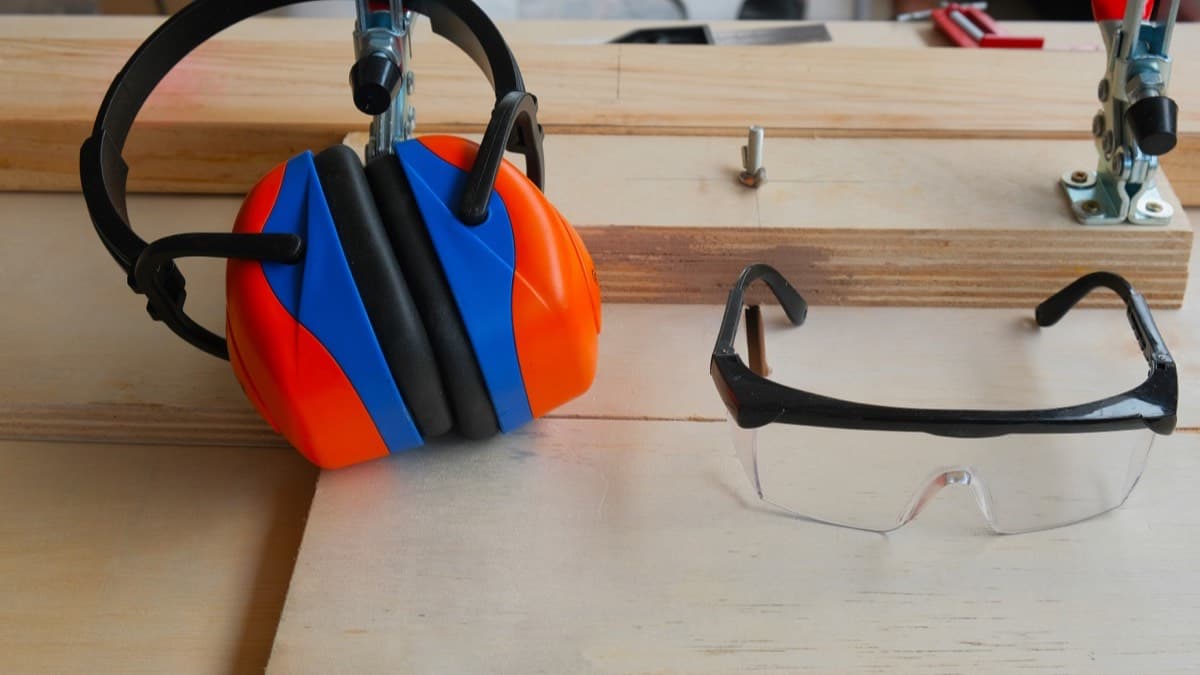
- Foam earplugs or earmuffs, from a hardware or sporting goods store
- Safety glasses or safety goggles
- Splash-proof goggles for cleaning products and chemicals
- A hook or a bin next to the mower, the blower and the saw
Steps
- 1
List the loud jobs
Sound at or below 70 decibels is unlikely to damage hearing, even over a long time. Long or repeated exposure at 85 decibels or more can. Normal conversation runs 60 to 70 decibels.
5 min
- 2
Get earplugs or earmuffs
Earplugs and earmuffs made for specific activities are sold at hardware and sporting goods stores.
10 min
- 3
Get the right eye protection
Safety glasses and goggles protect the eyes during construction work and home repairs. Wear safety goggles to mow, and splash-proof goggles or safety glasses to work with cleaning products. If you wear glasses, most protective eyewear can be made in your prescription.
10 min
- 4
Clear the yard before mowing
Pick up trash and anything else that could fly into your eyes while you mow.
10 min
- 5
Keep it where the tools are
Hang the earplugs, earmuffs and glasses next to the tools that need them, so they go on every time. Keep children's ears covered, or keep children away, when the loud tools run.
5 min
Set up hearing and eye protection at home
- Buy earplugs or earmuffs for the loud yard and shop tools
- Buy safety glasses and splash-proof goggles
- Hang the protection next to the mower and the saw
If something gets in your eye
For sand or dust, don't rub the eye. Wash it out with water. For a chemical splash, rinse the eye with water for at least 10 minutes, then see a doctor right away. For a blow to the eye, hold a cold compress on it gently for 15 minutes to bring down the swelling, then see a doctor. If something is stuck in the eye, don't pull it out. Put a loose bandage over the eye without pressing on the object, and get medical care right away.
Signs your hearing is changing
Damage from noise usually builds slowly, so it's easy to miss. Sounds start to seem muffled or distorted, people seem harder to understand, and the television needs turning up. Ringing, buzzing or roaring in the ears, called tinnitus, can follow loud noise too. Have your hearing tested if you notice any of these. For sanding and other dusty work, dust masks and respirators for home projects covers protecting your lungs.
FAQ
How loud is too loud for my ears?
Long or repeated exposure at 85 decibels or more can damage hearing.
Are my regular glasses enough to protect my eyes?
No. Ordinary prescription glasses, contact lenses and sunglasses won't protect your eyes from injury. Most protective eyewear can be made in your prescription.
What should I do if I get a chemical in my eye?
Rinse it with water for at least 10 minutes, then see a doctor right away.
Sources
Checked October 20, 2026
- National Institute on Deafness and Other Communication Disorders. Noise-induced hearing loss (2025)
- National Eye Institute. Keep your eyes healthy (2025)
- National Eye Institute. Protective eyewear (2025)
- National Eye Institute. Sports and your eyes (2025)
- National Eye Institute. First aid tips (2025)
- Under $100
- DIY
- Renovating