Explainer
A home safe, a safe deposit box or the cloud for your papers
Decide which papers go in a safe deposit box, which stay in a home safe where you can reach them, and which to keep as digital copies.
Satisfy+ Editorial · Published September 25, 2026 · 2 min read
Satisfy+ is not an insurance agent, broker or adjuster. Your policy's wording controls.
At a glance
- Safe deposit box
- Originals that are hard to replace
- Home safe
- Things you may need fast, like a passport
- Digital copies
- Insurance policies, IDs and bank records
- Neither box
- Fully protected from fire, flood or theft
Important papers can be kept in three places: a safe deposit box at a bank, a safe at home, and digital copies. Each suits different papers, and the digital copies keep them within reach during a disaster.
A safe deposit box
Originals of key documents suit a bank box. Birth certificates, property deeds, car titles and paper U.S. Savings Bonds are examples. So are family keepsakes, valuable collections, irreplaceable photos, and pictures or videos of your home's contents for insurance.
A box is storage space, not a deposit account, so its contents aren't covered by FDIC deposit insurance. Banks generally don't insure the contents either. Your homeowners or renters insurance agent can tell you whether your policy covers them. Read the box rental agreement too, since the bank may limit what you can keep in the box.
A home safe
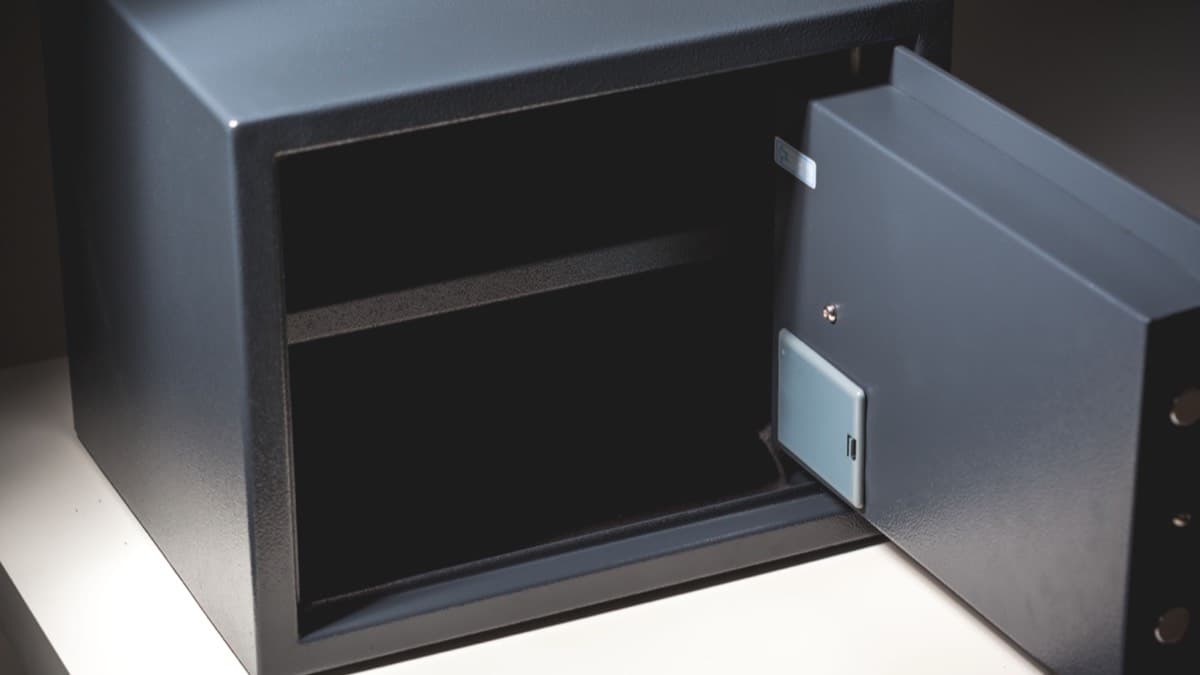
Don't keep anything in a bank box that you might need quickly or when the bank is closed, such as a passport. A home safe can hold replaceable items you may need right away. It isn't as secure as a bank box.
Digital copies
Store copies of important documents on an external drive or in the cloud, so they're easy to reach in a disaster. An emergency kit should hold copies of insurance policies, identification and bank account records, saved electronically or in a waterproof, portable container.
What none of them does
No safe deposit box or home safe is completely protected from theft, fire, flood or other damage. Put items in water-safe, zippered plastic bags or other resealable containers. Don't keep the box number or the bank's name on or near the key.
An annotated example
What to do next
List your original documents and where each one is kept now. Move the ones you might need quickly to where you can reach them at any hour. Scan your insurance policies and IDs to a cloud folder or an external drive, and seal anything in a box or safe in resealable plastic bags.
Decide where each important paper lives
- List your original documents and where each one is kept
- Save digital copies of your insurance policies and IDs
- Seal papers in the box or safe in resealable plastic bags
FAQ
Is a safe deposit box insured by the FDIC?
No. A box is storage space, not a deposit account, so its contents aren't covered by deposit insurance.
Should I keep my passport in a safe deposit box?
No. Keep anything you might need quickly, or when the bank is closed, somewhere you can reach it.
Sources
Checked October 19, 2026
- Federal Deposit Insurance Corporation. Five things to know about safe deposit boxes, home safes and your valuables (2018)
- Ready.gov. Financial preparedness (2026)
- Ready.gov. Build a kit (2026)
- Fire
- Flood
- DIY