How-to
Clearing snow from the walk, the drive and the roof
Push fresh snow rather than lift it, take frequent breaks, and leave heavy roof snow to a roofing contractor.
Satisfy+ Editorial · Published October 14, 2026 · 3 min read · 45 min to do · Free
At a glance
- Shovel
- Fresh snow, pushed rather than lifted
- Breaks
- Frequent, and stop if your chest feels tight
- Snow blower
- Engine off and a stick to clear a clog
- Roof snow
- A roofing contractor, or a plastic rake from the ground
Shoveling snow is heavy exercise, much like lifting weights. It raises your heart rate and blood pressure, and it's hardest on people over 40 and people who don't exercise much. If you have a history of heart trouble, check with your doctor before you shovel. Avoid shoveling right after eating or while smoking.
What you need
- A plastic shovel, or a pusher for wide areas
- Warm layers, a hat and waterproof gloves and boots
- A snow blower for long drives, ready for the season
Steps
- 1
Dress in layers
Dress as you would for any time outdoors in the cold, and take extra care to keep your hands and feet warm.
5 min
- 2
Warm up and stretch
Loosen up before you start, the same as before any other workout.
5 min
- 3
Start while the snow is fresh
Fresh snow is lighter and easier to move than wet snow that has been packed down.
1 min
- 4
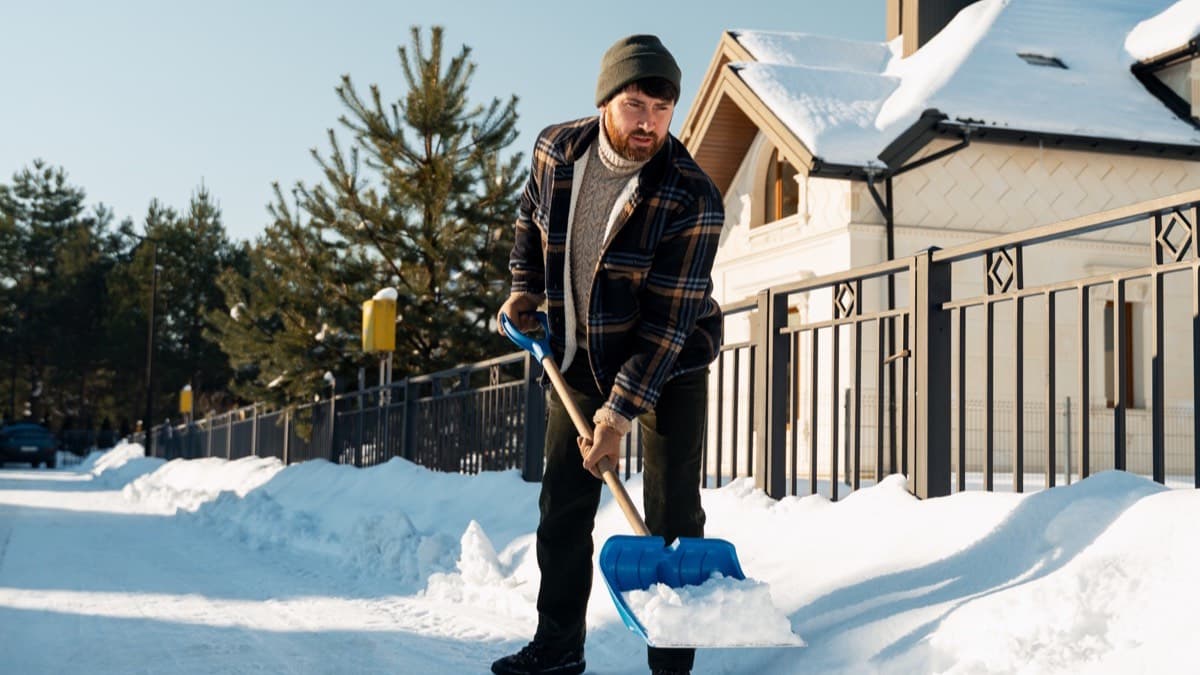
Push the snow rather than lift it
Push it ahead of the shovel to the edge of the drive. When you have to lift, take small loads.
20 min
- 5
Lift with your legs
Keep your knees bent and your back straight, and sit into the movement so your legs do the work.
10 min
- 6
Take frequent breaks
Stop well before you're exhausted. If your chest feels tight, stop at once.
5 min
- 7
Check the path is clear
Walk the cleared path from the door to the street, and look for any strip the shovel missed.
2 min
Get ready to clear snow this winter
- Ask your doctor whether shoveling snow is safe for you
- Check the downspouts are clear before a big snow
- Find a roofing contractor who removes roof snow
With a snow blower
Most snow blower injuries happen when someone reaches into the chute or the auger to clear a clog, and they include finger amputations. Stop the engine and clear it with a long stick. Run it only outdoors, add gas outdoors before you start, and keep track of the cord on an electric model. Getting the snow blower ready before the first storm covers the fall checks.
Snow on the roof
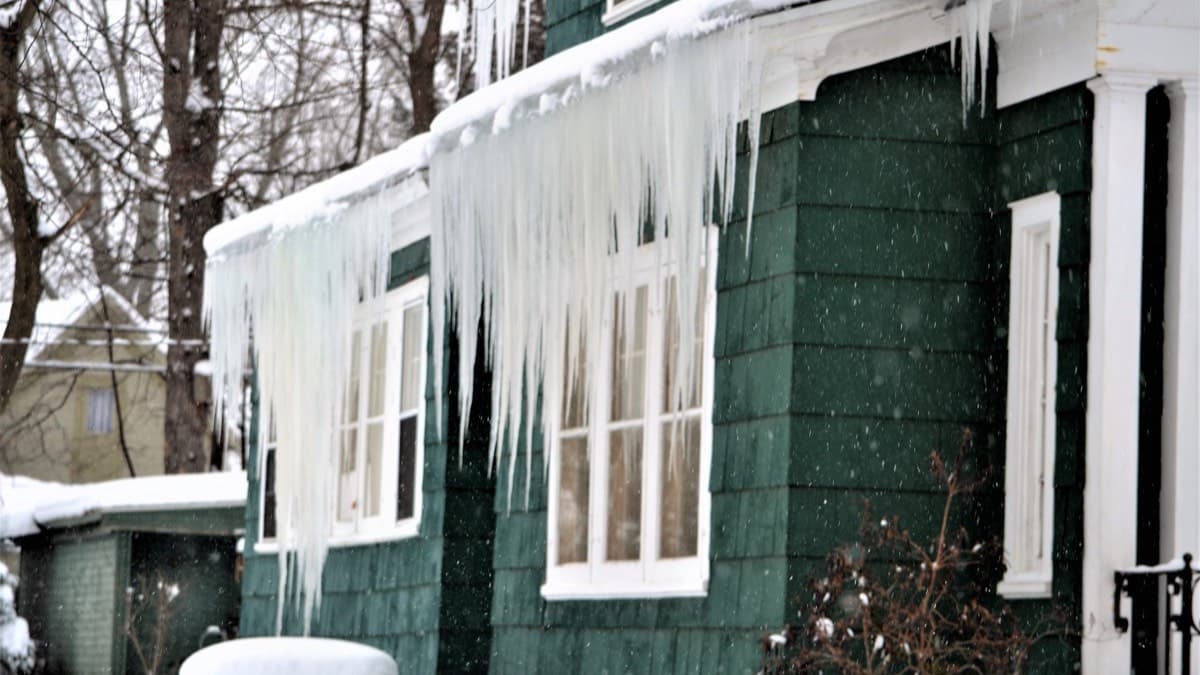
The weight of snow varies a lot. A foot of light, dry snow weighs about 3 pounds per square foot. A foot of wet, heavy snow weighs up to 21 pounds. Ice is heavier still, at a little under 5 pounds per square foot for each inch. Drifts pile up against chimneys, dormers and changes in the roofline, and ice dams at the eaves stop snow from sliding off.
A roof under too much load usually shows signs first:
- Popping, cracking or creaking noises
- Sagging ceiling boards or a sagging roof
- Doors or windows that suddenly won't open or close
- Cracks in walls or masonry, or cracked framing
- A severe roof leak
If you see any of them, get everyone out of the house and call a structural engineer to inspect it.
Removing roof snow is a job for a licensed, insured roofing contractor with experience doing it. A contractor leaves at least 2 inches of snow on the roof, since scraping it bare can damage the roofing. A plastic snow rake used from the ground keeps you off the roof. Snow on a roof can slide at any moment, so stand well back from the eave.
Why ice dams form and how to stop them covers the ice at the edge of the roof.
FAQ
How do I shovel snow without hurting my back?
Push the snow instead of lifting it, and take small loads when you do lift. Keep your knees bent and your back straight so your legs do the work.
Is shoveling snow hard on the heart?
Yes. It's weight lifting that raises your heart rate and blood pressure. If you have heart trouble, check with your doctor first, and stop at once if your chest feels tight.
How much snow is too much for a roof?
It depends on the snow and the roof. Wet snow weighs up to 21 pounds per square foot per foot of depth. Creaking, sagging or doors that stop closing mean the roof is under strain.
Sources
Checked October 20, 2026
- National Weather Service, Bismarck. Winter weather awareness: staying healthy this winter (2026)
- Federal Emergency Management Agency. Snow load safety guide (FEMA P-957) (2013)
- U.S. Consumer Product Safety Commission. Snow thrower safety (Publication 5117) (2012)
- Cold
- Owner
- Winter storm
- Winter
- Free
- DIY