Checklist
Earthquake checklist for the house
Secure what can fall in an earthquake, such as bookcases and the water heater, pack a supply kit, check your insurance, and know what to do when the shaking starts.
Satisfy+ Editorial · Published July 17, 2026 · 2 min read · 4 hr to do
Satisfy+ is not an insurance agent, broker or adjuster. Your policy's wording controls.
At a glance
- Secure
- Bookcases, refrigerators, water heaters, TVs and anything hung on walls
- During
- Drop, cover, hold on
- After
- Expect aftershocks; stay out of damaged buildings
- Insurance
- A standard homeowners policy doesn't cover earthquake damage
Start with the heavy things in the house that can fall: bookcases, refrigerators, water heaters, televisions and whatever hangs on the walls. Securing them before an earthquake keeps them from falling on someone during one.
The house
- Fasten the tall furniture to the wallThat includes bookcases, refrigerators and televisions. Use the anchor kit the furniture maker supplies or recommends.
- Secure what hangs on the wallsStart with what hangs over a bed or a couch.
- Store heavy and breakable things on low shelves
- Have the water heater strappedA plumber can strap it and check the gas or water connections at the same visit.
- Have a structural engineer or contractor look at the houseAsk about fixing structural problems that could make the house collapse. That work is for a licensed professional.
The kit
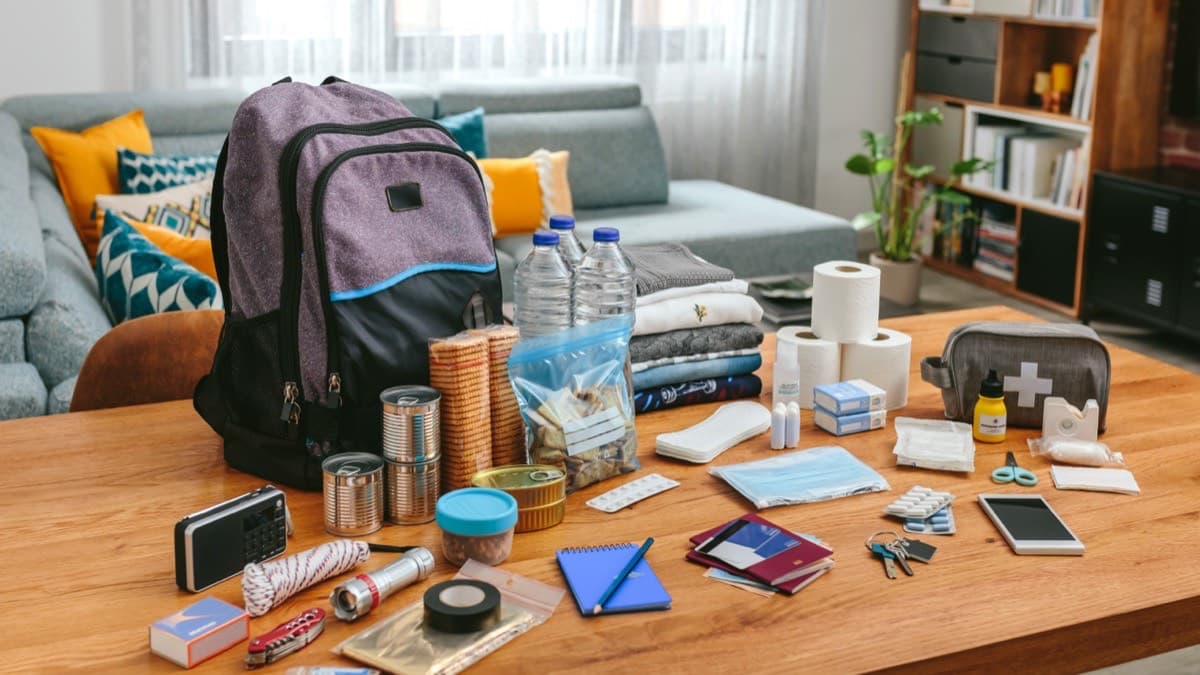
- Stock food and water for several days
- Add a flashlight, a fire extinguisher and a whistleThe whistle lets you signal for help if you're trapped.
The policy
- Read your homeowners policy for earthquake coverageA standard homeowners policy doesn't cover earthquake damage. The declarations page shows whether you have an earthquake endorsement or a separate policy.
Get the house ready for an earthquake
- Tie the bookcases and the TV to the wall
- Move heavy and breakable things to low shelves
- Have the water heater strapped
- Pack food and water for several days
- Check the policy for earthquake coverage
When the shaking starts
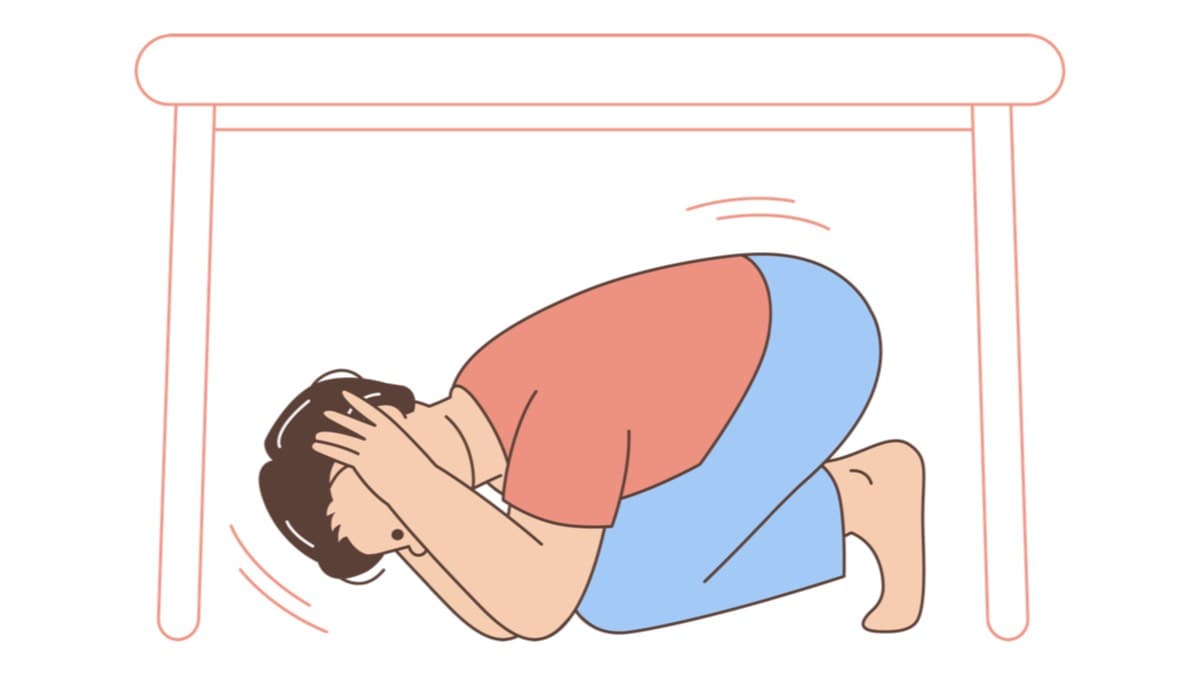
Drop, cover and hold on. Drop onto your hands and knees, cover your head and neck with one arm and hand, and hold on until the shaking stops. If a sturdy table or desk is nearby, crawl under it. If not, crawl next to an interior wall, away from windows. In a wheelchair, lock the wheels, bend over and cover your head and neck.
In bed, turn face down and cover your head and neck with a pillow. In a car, pull over, stop and set the parking brake. Outside, stay outside and move to an open area away from buildings, trees, streetlights and power lines.
When it stops
Check yourself for injuries, then help others if you have training. If the building is damaged, go outside and move quickly away from it, and don't go back into damaged buildings. Watch for leaking gas and water lines and downed power lines. Expect aftershocks, and drop, cover and hold on again when one hits. A text can be more reliable than a call, and it saves battery.
If you live where a tsunami can reach, go inland or to higher ground as soon as the shaking stops.
FAQ
Does homeowners insurance cover earthquake damage?
A standard homeowners policy doesn't.
What if I'm trapped?
Send a text, or bang on a pipe or a wall so rescuers can find you.
Should I run outside when the shaking starts?
No. Drop, cover and hold on where you are until the shaking stops. If you're already outside, stay there.
Sources
Checked October 19, 2026
- Ready.gov (FEMA). Earthquakes (2026)
- Pacific Northwest
- West coast
- Either
- Earthquake