How-to
How to use a home fire extinguisher
Learn when a fire is small enough to fight and how to put it out with pull, aim, squeeze and sweep.
Satisfy+ Editorial · Published August 11, 2026 · 2 min read · 15 min to do · Under $100
At a glance
- Use it on
- A small fire in one object, such as a pan or a wastebasket
- The steps
- Pull, aim, squeeze, sweep
- For a home
- A multipurpose A-B-C extinguisher
- Check
- The pressure gauge, the hose and the nozzle
An extinguisher is for a small fire in one object, such as a pan or a wastebasket. A fire can become life-threatening in two minutes, so the first decision is whether to fight it at all. Read the label on yours today, and check that nothing blocks your reach to it.
What you need
- A multipurpose extinguisher labeled A-B-C or B-C. Either one works on most home fires.
- A "UL Listed" or "ULC Listed" label, which means a recognized testing lab certified it.
- The largest size you can lift and work safely and comfortably.
- A spot you can reach in a hurry, with nothing in front of it.
What the label means
Class A covers ordinary materials such as cloth, wood and paper. Class B covers flammable liquids such as grease, gasoline and oil-based paint. Class C covers plugged-in electrical equipment, and its agent doesn't conduct electricity. Class D is for flammable metals in factories, and Class K is for cooking oils in commercial kitchens.
The number before the A shows how much water the extinguisher equals. The number before the B is the square footage of liquid fire it can put out.
Steps
- 1
Decide whether to fight it
Fight it only if everyone in the house has been alerted and someone has called the fire department. You also need to be able to work the extinguisher, the fire has to be in one object or surface, the smoke can't reach you, and you need a clear way out. If any of that isn't true, or you aren't sure, get out and call 911 from a mobile phone or a neighbor's phone.
1 min
- 2
Keep your back to the way out
Stand where you can leave without passing the fire.
1 min
- 3
Pull the pin
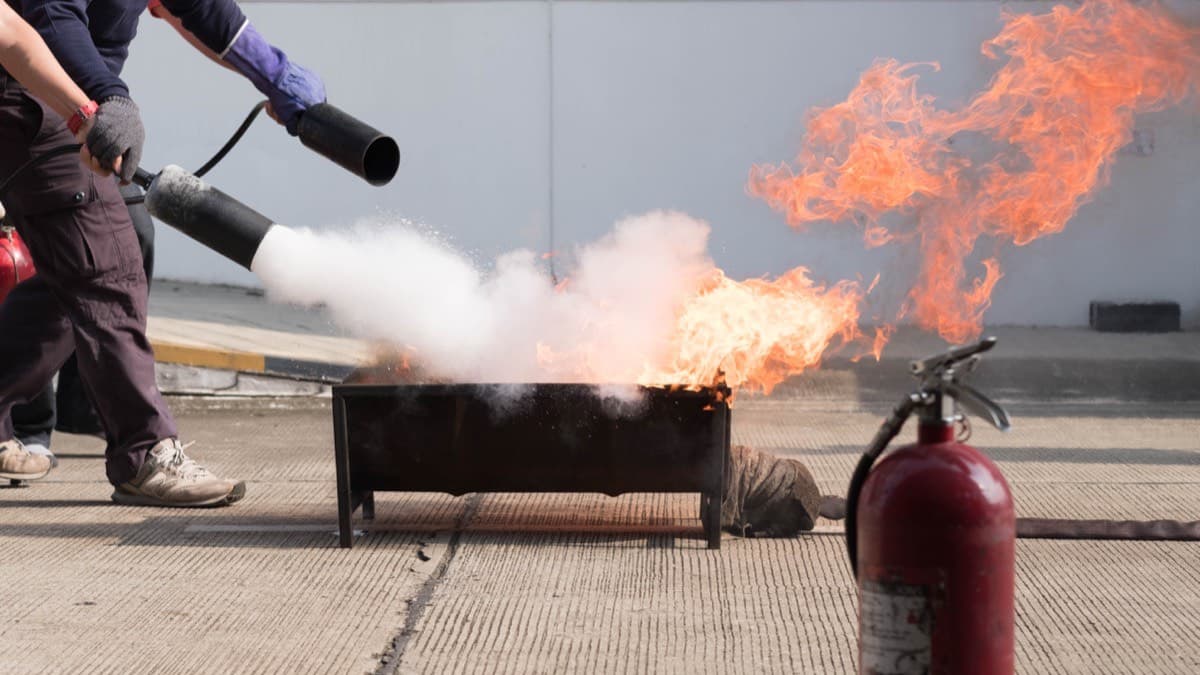
Hold the extinguisher with the nozzle pointing away from you, and pull the pin to release the lock.
1 min
- 4
Aim low
Point the nozzle at the base of the fire, not at the flames above it.
1 min
- 5
Squeeze the lever
Squeeze it slowly and evenly.
1 min
- 6
Sweep side to side
Sweep the nozzle across the base of the fire until it is out. Watch the spot afterward in case it flares up again.
1 min
- 7
Check the gauge after any use
Some extinguishers can be recharged, and others need replacing once the pressure is too low.
5 min
Keep the fire extinguisher ready
- Check the fire extinguisher's pressure gauge
- Check the extinguisher's hose and nozzle for damage
Keeping it ready
Check that the pressure gauge reads in the recommended range. Look over the can, the hose and the nozzle for damage, dents or rust, and wipe off any dust or grease. The label sets the rest of the schedule. Some extinguishers need shaking every month, and others need a pressure test every few years.
Who shouldn't use one
Young children and older adults shouldn't use a fire extinguisher. Their part of the fire plan is getting out. Find two ways out of each room, and practice the plan twice a year.
FAQ
What kind of fire extinguisher is best for a house?
A multipurpose extinguisher labeled A-B-C or B-C works on most home fires.
Can a fire extinguisher be refilled?
Some can be recharged, and others need replacing when the pressure is too low. The label says which.
Sources
Checked October 19, 2026
- U.S. Fire Administration. Fire extinguishers (2023)
- Ready.gov (FEMA). Home fires (2026)
- Owner
- Under $100
- Beginner
- Tenant
- Fire
- DIY