How-to
Keeping floodwater out of the house
Find your home's potential flood height, then raise, seal and fit the house against it, from backflow valves and sump pumps to the steps the day before a flood.
Satisfy+ Editorial · Published July 8, 2026 · 3 min read
At a glance
- Raise equipment
- At least 1 foot above the potential flood height
- Backflow valves
- Fitted by a licensed plumber
- Electrical work
- Done by a licensed electrician
- Sump pump
- With a battery backup
Floods are the most common and costly disaster in the United States, and anywhere it can rain, it can flood. Many of the ways to cut a house's flood damage are small and inexpensive. Each one starts from how high the water could get, called the potential flood elevation.
What you need
- The home's address, to look up its flood zone and flood elevation
- Hydraulic cement or mortar and masonry caulk, for foundation cracks
- A licensed plumber and a licensed electrician for the work that needs them
Steps
- 1
Find out how high water could get
Look up the home's flood zone and base flood elevation on FEMA's Flood Map Service Center. The local planning, zoning or building office keeps the flood maps too. Ask neighbors how high the water has come in past floods.
30 min
- 2
Stop sewer backups
Fit drain plugs in the basement floor drains. Have a licensed plumber install backflow valves on every pipe entering the house, which let water flow out only, so floodwater can't come back up through toilets, sinks and drains.
30 min
- 3
Raise the electrical system
Have a licensed electrician raise the panel, outlets, switches and wiring to at least 1 foot above the potential flood elevation.
30 min
- 4
Raise the outdoor equipment
Have air conditioning condensers, heat pumps and water meters set on platforms at least 1 foot above the potential flood elevation.
30 min
- 5
Move or raise the indoor equipment
The main parts of the heating and cooling system can move to a higher floor or the attic. The washer, dryer and water heater can go above the ground floor. Where that isn't possible, low floodwalls and shields protect them in place.
30 min
- 6
Have any fuel tanks anchored
Indoor and outdoor tanks get fixed to a heavy concrete slab, or outdoor ones strapped to ground anchors. Floodwater can move and rupture a tank that isn't anchored.
30 min
- 7
Seal the foundation
Fill foundation cracks with mortar and masonry caulk or hydraulic cement, coat basement walls with a waterproofing compound, and keep the floor drains clear.
60 min
- 8
Have a plumber add a sump pump with a battery backup
It pumps groundwater away from the house, and the battery keeps it running if the power goes out.
30 min
- 9
Keep the water moving away outside
Have the gutters, downspouts and splash pads kept clear, keep nearby storm drains free of debris, and grade the yard so it slopes away from the house.
20 min
Protect the house from flooding
- Look up the home's flood zone and potential flood height
- Have a plumber put backflow valves on the incoming pipes
- Have an electrician raise the panel above flood height
- Seal foundation cracks with hydraulic cement
The day before a flood
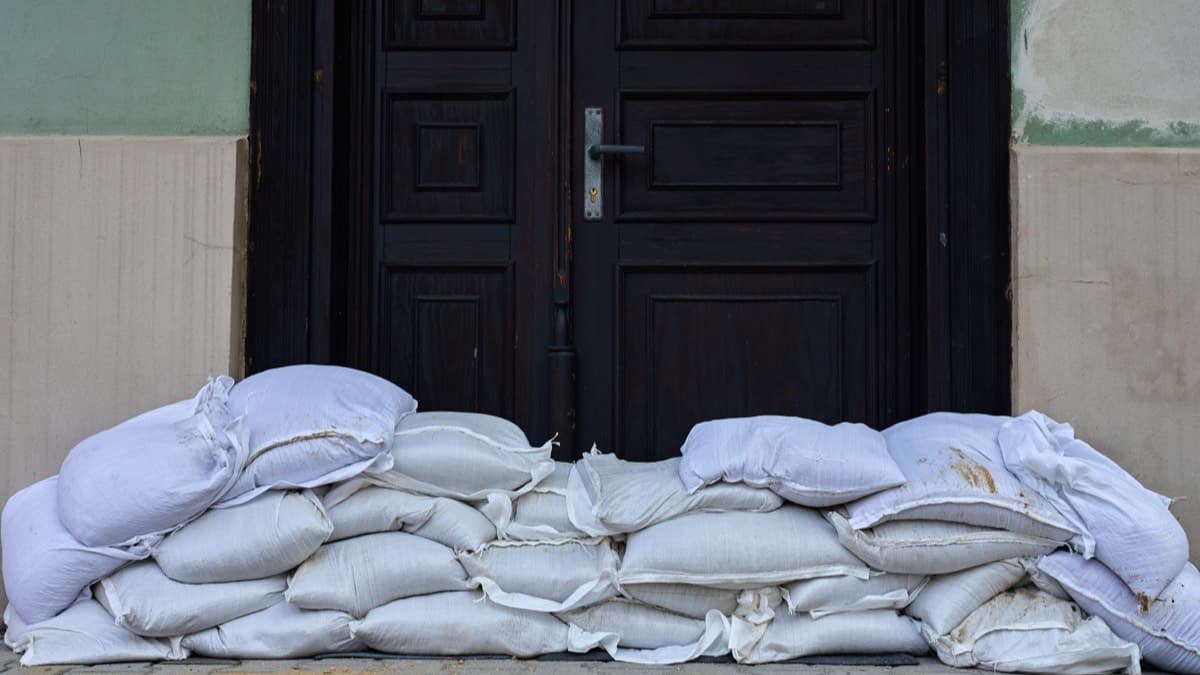
Turn on the sump pump and close any backflow valves. Move papers, furniture, rugs and electronics to an upper floor, or at least off the floor. Set major appliances on concrete blocks. Put out sandbags or other temporary flood barriers. Shut off the power at the breaker panel. If you're told to evacuate, go right away, and never walk, swim or drive through floodwater. Six inches of moving water can knock a person down.
FAQ
How high should equipment be raised to protect it from flooding?
At least 1 foot above the potential flood elevation for the property.
What stops sewage from backing up into a basement in a flood?
Drain plugs in the floor drains and backflow valves on the incoming pipes, installed by a licensed plumber.
Should a sump pump have a battery backup?
Yes, so it keeps running when the power goes out.
Sources
Checked October 19, 2026
- Federal Emergency Management Agency. Protect your home from flooding: low-cost projects you can do yourself (2020)
- Ready.gov (FEMA). Floods (2026)
- Foundation
- Owner
- Plumbing
- Electrical
- Flood