Explainer
Lightning, surges and summer thunderstorms
Learn how lightning gets into a house and what it damages, what to stay away from indoors during a storm, how surge protectors work, and what a lightning protection system does.
Satisfy+ Editorial · Published May 22, 2026 · 3 min read
At a glance
- Strikes in the U.S.
- About 25 million a year
- Deaths
- About 20 a year, hundreds more badly hurt
- Thunder heard
- Lightning is close enough to strike
- Wait after the last thunder
- At least 30 minutes
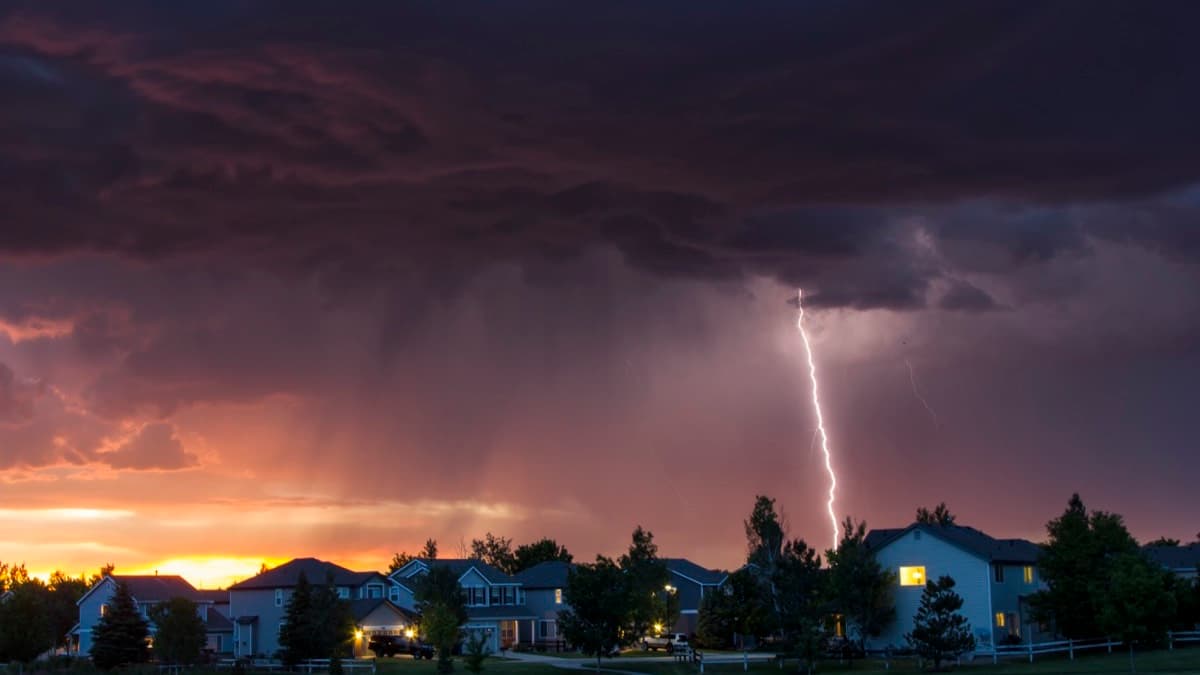
Lightning strikes the United States about 25 million times a year, and it kills about 20 people a year and badly injures hundreds more. Most of it comes in summer, but it can strike in any season. No place outside is safe in a thunderstorm. If you can hear thunder, the lightning is close enough to strike you, so go inside and stay there at least 30 minutes after the last thunder.
How lightning gets into a house
A safe shelter is a building with electricity and plumbing, or a metal-topped car with the windows shut. A picnic shelter or a small building without wiring or plumbing isn't. Lightning gets into a house three ways: by a direct strike, through the wires and pipes that run outside, or through the ground. Once inside, it travels along the electrical wiring, the phone lines, the plumbing, the cable and antenna lines, and even the metal bars in concrete walls and floors.
Where to stay away from indoors
Keep off corded phones. A cell phone or a cordless phone is fine. Don't touch computers, TVs or cords, though a remote control is safe. Stay out of the shower and away from the sink, the tub and the dishwasher. Keep away from outside windows and doors, and off porches and balconies, and stay out of an open garage or carport. Don't lie on a concrete floor or lean against a concrete wall. A doghouse isn't a safe shelter, and a dog chained to a tree or a metal runner is especially at risk.
Surges
Lightning sends electrical surges along the lines that can damage electronics some distance from the strike. An ordinary surge protector won't protect equipment from a lightning strike. Don't unplug anything once the storm has started, since you could be struck doing it. Unplug sensitive electronics before it arrives instead.
Most surges don't come from lightning. Many start inside the house, when large appliances such as air conditioners turn on and off, and others come from the power grid. Repeated small surges can slowly damage electronics and shorten their life.
A plug-in surge protector covers only what's plugged into it, from most surges. Some show a light or sound an alarm when they need replacing. A plain power strip gives no surge protection at all. A whole-house surge protector mounts in or on the main electrical panel or at the base of the meter, and it covers the whole electrical system, including the outlets and light switches. Have a licensed electrician install it.
Lightning rods and protection systems
Lightning rods don't stop lightning from hitting a house. They catch the strike and carry it down a cable into the ground, which protects the house from a direct hit and the fire it can start. A complete lightning protection system also adds surge protection on the incoming power, data and phone lines, and may cover the gas piping. A system follows the national safety standards for lightning protection.
An annotated example
What to do next
Before storm season, have any tree that could fall on the house trimmed or taken down, and choose the room where the household waits out a storm, away from windows, doors and plumbing. Bring pets inside when a storm comes. During the storm, keep off corded phones and away from anything plugged in.
Get the house ready for thunderstorm season
- Have trees that could fall on the house trimmed
- Pick the safe indoor spot away from windows and plumbing
FAQ
Is it safe to shower during a thunderstorm?
No. Lightning can travel through plumbing, so stay out of the shower and away from sinks and tubs.
Can I use my phone during a thunderstorm?
A cell phone or cordless phone is fine. Stay off corded phones.
How long should I wait after a storm to go outside?
At least 30 minutes after the last thunder.
Sources
Checked October 19, 2026
- National Weather Service. Lightning safety tips and resources (2026)
- National Weather Service. Indoor lightning safety (2026)
- National Weather Service. Lightning rods (2026)
- Ready.gov (FEMA). Thunderstorms and lightning (2026)
- National Weather Service. Lightning safety (2026)
- Electrical Safety Foundation International (industry-funded). Surge and protect: power surges and how to protect yourself (2015)
- Owner
- Summer
- Electrical
- Tenant
- Fire