How-to
Building and filling a raised garden bed
Site the bed in 6 to 8 hours of sun, keep it narrow enough to reach the middle, skip old treated lumber, and fill it with about two parts topsoil to one part compost.
Satisfy+ Editorial · Updated June 29, 2026 · 3 min read · 4 hr to do · $100 to $1,000
At a glance
- Sun
- 6 to 8 hours for tomatoes, peppers and eggplant
- Width
- Narrow enough to reach the middle from the side
- Fill
- About 2/3 to 1/2 topsoil, 1/3 to 1/2 compost
- Avoid
- Old treated lumber, railroad ties, potting soil
A raised bed warms up earlier in spring, gets around compacted or poor soil, has fewer stubborn weeds, and brings the garden to a more comfortable height. It can also lower the risk where the ground has lead or other contaminants. The trade-off is that a raised bed acts like a container and dries out faster than the ground, and the taller it is, the more often it needs water.
What you need
- Boards, metal panels, blocks or other side material, and corner pieces
- A drill and exterior screws, if you're building with wood
- A shovel or garden fork
- A level and a tape measure
- Topsoil and plant-based compost
- Hardware cloth, if mice or chipmunks are a problem
Steps
- 1
Pick the spot
Tomatoes, peppers and eggplant need at least 6 to 8 hours of sun a day. Lettuce, kale, scallions and radishes manage with less. Put the bed where a hose reaches.
15 min
- 2
Size it
Make it narrow enough that you can reach the center without stepping in, since stepping in packs the soil. A few inches of height is often enough. Go 1 to 2 feet high on hot pavement, and about 27 inches for a gardener in a wheelchair. Several smaller beds make it easier to rotate crops than one long one.
15 min
- 3
Check the side material
Don't use old lumber, railroad ties or wood treated with chromated copper arsenate (CCA), which can leach arsenic into vegetables. Newer treated wood uses copper instead. Use only wood labeled for ground contact, and line the inside to keep copper out of the soil.
10 min
- 4
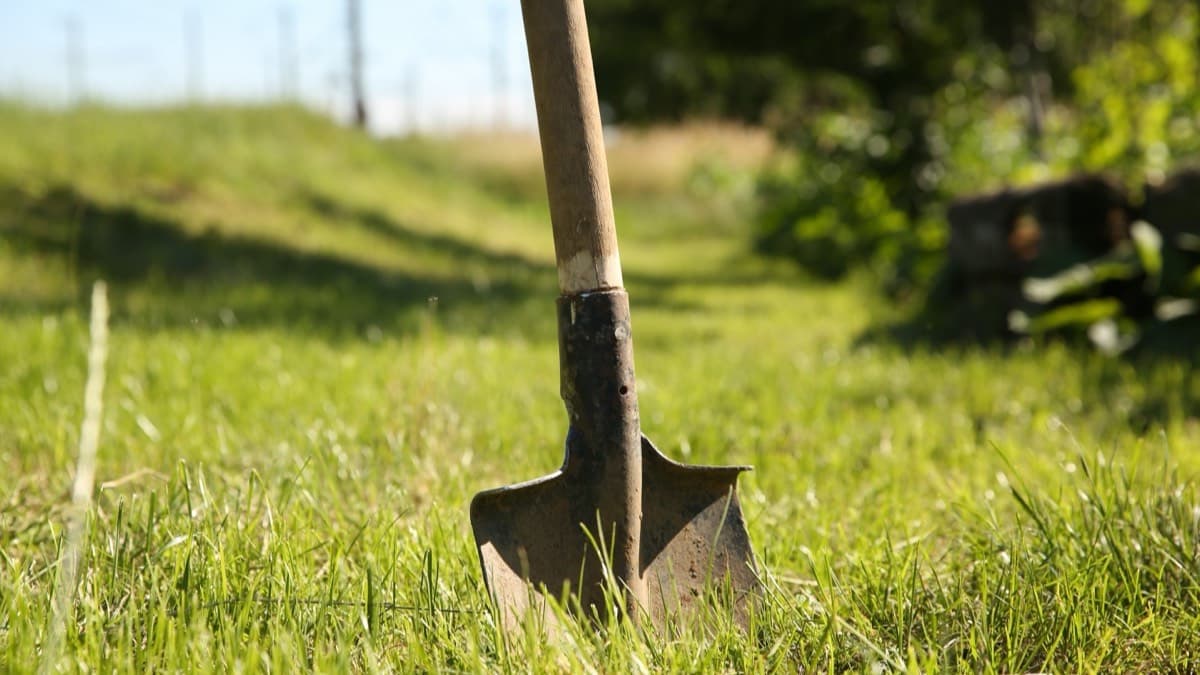
Clear and loosen the ground
Kill the grass or weeds where the bed will go, then loosen the top layer of soil with a fork or shovel. Skip a barrier underneath, which stunts roots. If you killed the grass under a tarp or cardboard, take it off first.
45 min
- 5
Build the frame
Keep boards to 6 feet or shorter so they're less likely to warp or break, and set them heartwood side in, so any warping bows outward. Check that the frame is level. Lay hardware cloth across the bottom if mice or chipmunks tunnel in your yard.
60 min
- 6
Work out the soil
Multiply length by width by depth in feet and divide by 27 for cubic yards. A bed 4 by 8 feet and 1 foot deep holds about 1.2 cubic yards.
5 min
- 7
Fill it
Mix about 2/3 to 1/2 loam or sandy loam topsoil with 1/3 to 1/2 plant-based compost. Add some sand if the topsoil is heavy clay. Skip potting soil, which dries out too fast, and go light on manure, which is high in phosphorus.
60 min
- 8
Water it in
Soak the soil and let it settle, then top it up.
15 min
- 9
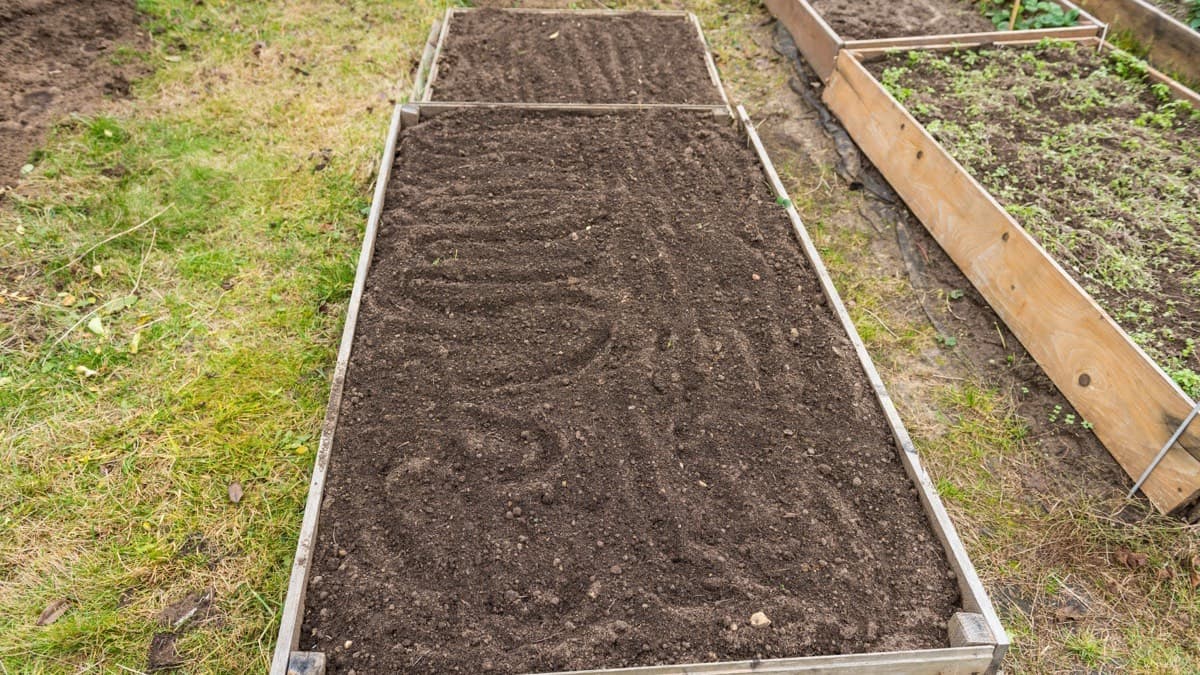
Check the soil after it settles
Look across the bed and add soil anywhere it sank below the rest.
2 min
Build the raised bed
- Pick a spot with 6 to 8 hours of sun near a hose
- Measure the bed and work out the cubic yards of soil
- Test the raised bed soil
Keeping it going
Test the soil every 2 to 3 years and add compost or fertilizer as the results call for. Heavy yearly compost can build up phosphorus and salts that burn young roots. Water close to the soil, with a soaker hose or watering can, to keep the leaves dry and cut down on disease. An established raised bed needs little or no tilling.
Raised ground beds
The simplest raised bed has no sides at all. It's a flat-topped mound of soil 6 to 8 inches high. Keep it to 2 1/2 feet wide if you can reach only one side, or up to 5 feet if you can work from both. Mounded beds stay put from year to year, needing only a rake to reshape them each spring. Bring in soil only from a source free of plant diseases, lead and pesticides.
FAQ
What soil goes in a raised bed?
About 2/3 to 1/2 topsoil and 1/3 to 1/2 plant-based compost. Potting soil dries out too fast.
Should I put anything under a raised bed?
Usually not. A barrier stunts the roots. Kill the grass and loosen the soil first, and use hardware cloth only if mice or chipmunks are a problem.
Is treated wood safe for a raised vegetable bed?
Avoid old lumber, railroad ties and CCA-treated wood. Newer treated wood uses copper, and should be labeled for ground contact and lined on the inside.
Sources
Checked October 20, 2026
- University of Minnesota Extension. Raised bed gardens (2024)
- Intermediate
- $100 to $1,000
- Yard
- Owner
- Spring
- DIY