Guide
Deer and rabbits in the yard and garden
Tell deer from rabbit damage by the cut, fence the garden at 7 to 8 feet for deer and 2 feet for rabbits, and use repellents early and in rotation.
Satisfy+ Editorial · Updated September 29, 2026 · 4 min read
At a glance
- Deer damage
- Rough, torn ends, usually higher up
- Rabbit damage
- A neat 45-degree cut, low to the ground
- Deer fence
- 7 to 8 feet
- Rabbit fence
- 2-foot chicken wire, 1-inch mesh or smaller
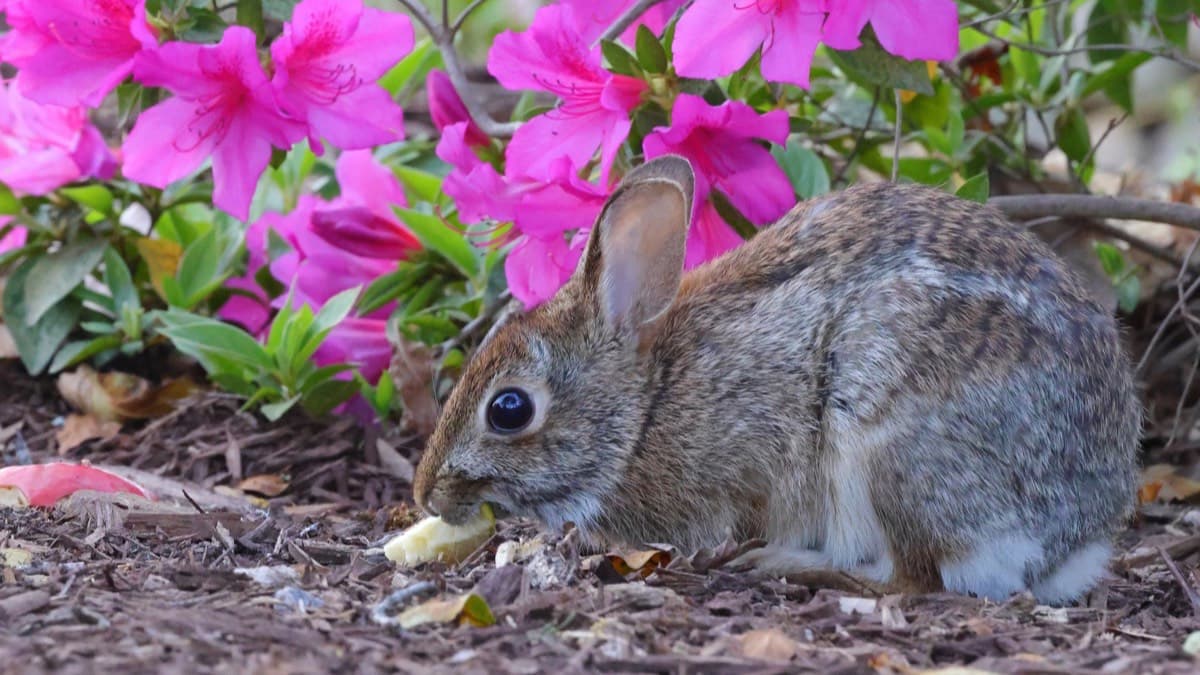
Deer and rabbits both eat garden and landscape plants, and the damage can look similar at first. Deer have no upper front teeth, so they grab and tear, leaving ragged, shredded ends on twigs and leaves. Rabbits clip stems with a clean cut at a 45-degree angle, low to the ground, and leave tooth marks in bark about as wide as the tip of a spoon. Deer seldom leave tooth marks.
When the damage happens
- Deer do the most damage in early spring, when their fat reserves are lowest, and in hard winters with deep snow. They feed mostly in the late evening and very early morning. In fall, bucks rub their antlers on young trees and shred the bark.
- Rabbits feed at dawn and dusk or at night, most in the few hours after sunrise and sunset. They eat most vegetables but usually leave corn, squash, cucumbers, tomatoes and potatoes alone. In winter they chew bark and can girdle young trees and shrubs.
Once deer or rabbits learn to feed in a yard, they keep coming back, so act at the first sign of damage.
Fences work best
A fence is the most reliable way to keep deer and rabbits out of a garden.
- Deer. Deer don't normally jump a 6-foot fence, but 7 to 8 feet gives the best protection. They can crawl under plastic mesh, so tie the bottom down with a wire strung tight between posts. Deer can squeeze through gaps of about 7 1/2 inches and keep testing a fence for weak spots.
- Rabbits. A 2-foot fence of chicken wire with 1-inch or smaller mesh keeps them out. Keep the bottom tight to the ground, or bury it a few inches, so they can't push under. Roll it up and store it over winter to make it last.
- Single trees and shrubs. Wire cylinders, tree tubes and shelters protect individual plants. For rabbits and mice, use 1/4-inch hardware cloth about 6 inches out from the trunk, buried 2 to 3 inches and reaching 18 to 24 inches above the usual snow line. Fencing or tree guards from August through December protect young trees from antler rubbing.
Repellents help less
Repellents are a short-term measure and work best on plants deer don't strongly prefer, in small areas.
- Start early. Put them on before browsing begins, or at the first sign of damage.
- Reapply often. New growth isn't protected, and rain wears some repellents off.
- Switch products. Deer and rabbits get used to one smell or taste, so rotate repellents through the season.
- Read the label. A repellent made for landscape plants isn't necessarily safe on vegetables.
A truly hungry animal may ignore any repellent. Home remedies like hair, soap and mothballs haven't been tested.
Making the yard less inviting
- Don't feed deer. Fed deer get used to foraging near houses and do more damage.
- Remove cover. Clear brush, debris and rock piles, weed patches and tall grass where rabbits hide, and fence off spaces under decks.
- Plant what deer avoid near the woods. Deer tend to pass over plants like daffodils, yarrow, ornamental onions and lilacs. Put the plants they like best near the house, where there's more activity.
- Expect some damage. A 50 percent cut in deer browsing counts as a success, and 30 percent is more typical. Under enough stress, deer will eat almost anything.
An annotated example
What to do next
Look at the cut ends to tell which animal you have. Put a low chicken wire fence around the vegetables for rabbits, and guard young trunks with hardware cloth before winter. For deer, fence the garden at 7 to 8 feet, or use repellents early and rotate them.
Keep deer and rabbits off the plants
- Put 2-foot chicken wire around the vegetable garden
- Put hardware cloth cylinders around young tree trunks
- Clear brush piles and tall weeds where rabbits hide
FAQ
How do I tell deer damage from rabbit damage?
Deer tear, leaving ragged ends higher on the plant. Rabbits make a clean 45-degree cut low to the ground.
How tall does a fence need to be to keep deer out?
Deer don't normally jump 6 feet, but 7 to 8 feet gives the best protection.
Do deer repellents work?
For a while. Apply them early, reapply after rain and new growth, and switch products so deer don't get used to one.
Sources
Checked October 20, 2026
- University of Minnesota Extension. How to manage deer damage on trees and other plants (2024)
- University of Massachusetts Amherst Extension. Wildlife: excluding and repelling problem wildlife from the garden (2024)
- University of Minnesota Extension. Protecting trees and shrubs in winter (2024)
- Yard
- Owner
- Pests
- DIY