Guide
Fixing water that pools in the yard
Water that stands near the house is fixed in order, starting with the downspouts and the grade, then a swale or a French drain where the lot is flat or tight.
Satisfy+ Editorial · Published June 30, 2026 · 5 min read
At a glance
- Soil by the house
- Slopes away at least 0.5 inch per foot for 10 feet
- Downspouts
- Empty at least 5 feet from the foundation
- Swale
- Sides no steeper than 3 to 1, falling 2% to 4% along its length
- French drain
- Perforated pipe 18 inches or more below ground
A few inches of rain on a typical suburban lot can produce 9,750 gallons of runoff. Water that stands against the house saturates the soil and can wick through the foundation into the basement or crawl space. Once inside, it leads to mold and rot. Some soils make it worse. Expansive soils swell when they get wet and can crack a foundation, and collapsible soils shrink and sink.
The fixes run from cheap to involved. Most yards need only the first two.
Start with the downspouts
All the rain on a roof leaves through its downspouts. One that empties at the foundation soaks the soil right where water does the most harm. Each one should carry water to a spot at least 5 feet from the foundation where the ground slopes away. An extension or a length of solid pipe does it, pitched at least 5/8 inch per foot away from the house. A splash block at the end keeps the outlet from washing out.
A buried downspout line goes at least 10 feet from the foundation, to a drywell or other catch point. Keep it separate from any perforated foundation drain. Connecting the two sends roof water straight to the footing.
Check the grade
The soil around the house should fall at least half an inch per foot for the first 10 feet. That's a drop of 5 inches at the 10-foot mark. Patios, walks and driveways within 10 feet of the house should slope away at 2%. Backfill next to a foundation settles if it wasn't compacted. A grade that was right when the house was built can then tip back toward it.
Low spots against the house can be built back up with soil and compacted so they don't settle again. A wide or deep regrade is a job for a landscaper or excavating contractor. It means moving soil along the whole wall without piling it against the siding. Some houses sit less than 10 feet from a fence, a wall or a rising hill. There isn't room for that slope, and the water needs a swale or a drain instead.
Swales
A swale is a shallow channel dug to catch runoff and carry it away from the house. Swales usually run along property lines or at the bottom of a slope. One can drain a flat yard or turn aside water running toward the house from higher ground.
The shape decides whether it works:
- The sides slope no steeper than 3 to 1, or 3 feet across to 1 foot of depth.
- The channel falls between 2% and 4% along its length. Under 2%, water pools in it. Over 4%, water runs fast enough to erode it.
- The soil in the bottom stays loose. Compacted soil stops water soaking in, so the trench is dug without driving equipment over it.
- A fine, close-growing grass lines it. Gravelly or coarse sandy soil that can't hold dense grass isn't a good place for one.
New swales settle. Plan to add soil and regrade after the first rainy season.
French drains
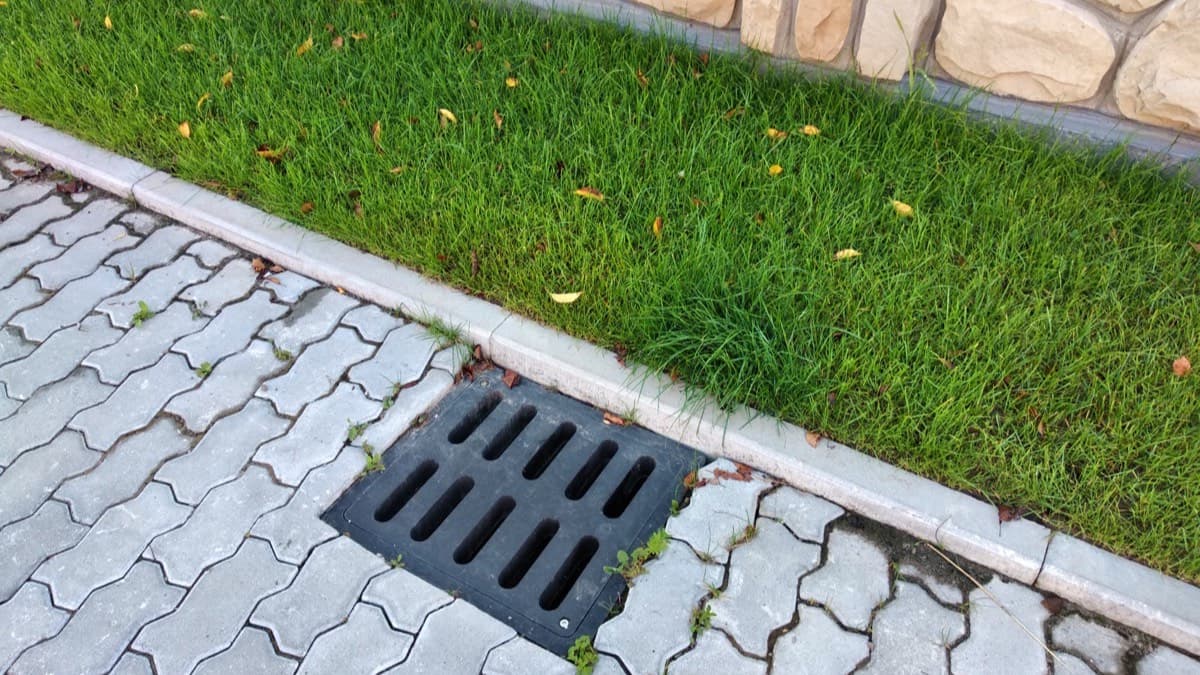
Where a yard is flat and there's no room for a swale, a French drain takes the water underground. It is a perforated pipe in a trench, wrapped in landscape fabric and clean rock. The pipe sits 18 inches or more below ground and slopes toward its outlet. Smooth PVC pipe is less likely to clog with sediment than corrugated pipe.
The outlet can be a lower part of the lot, a drywell or a storm sewer. A drain that empties onto the surface needs ground that slopes away from the house, with a splash block or stones to stop erosion. A drywell is a rock-filled pit, about 4 feet square and 4 to 6 feet deep, that lets the water soak in below ground. Keep shrubs and trees off the line.
Call 811 before anyone digs, so buried utility lines are marked first.
A rain garden
A rain garden is a planted low spot that collects runoff and lets it soak in. It can take in about 30% more water than the same patch of lawn. Native plants with deep roots do the work. Put it more than 10 feet from the house, so the water it holds stays away from the foundation.
An annotated example
What to do next
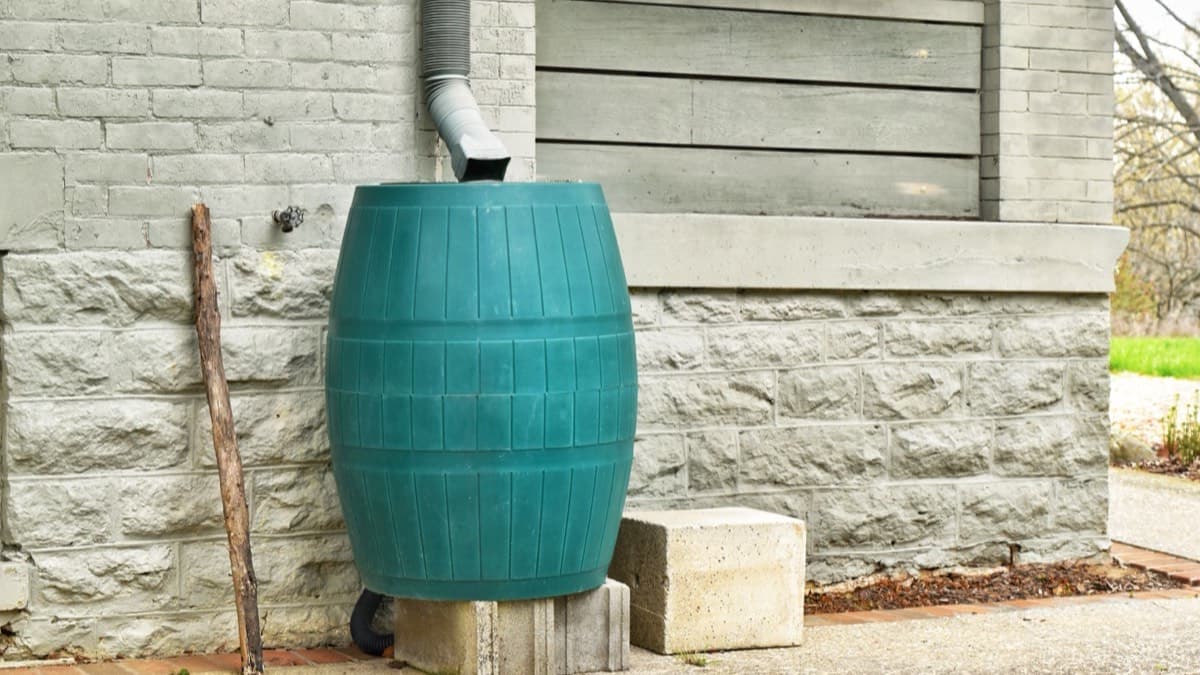
Walk the yard during the next heavy rain and note where water stands and where each downspout lets out. Fix the downspouts first, then check the grade along each wall. If water still pools, get a landscaper or drainage contractor to look at a swale or a French drain. A rain barrel holds back some of the roof water before it gets to the yard.
Find and fix where water stands
- Walk the yard in a heavy rain and note where water stands
- Check that each downspout empties 5 feet from the house
- Check that the soil slopes away from the foundation
FAQ
How far should downspouts drain from the house?
At least 5 feet from the foundation, onto ground that slopes away, or at least 10 feet if the line is buried.
How much should the yard slope away from the house?
At least half an inch per foot for the first 10 feet, a 5-inch drop in all.
What is the difference between a swale and a French drain?
A swale is an open, grassed channel that carries water across the surface. A French drain is a perforated pipe buried in rock that carries it underground.
Sources
Checked October 19, 2026
- U.S. Department of Energy, Building America Solution Center. Final grade slopes away from foundation (2026)
- U.S. Department of Energy, Building America Solution Center. Swales, drains, and site grading for stormwater control (2026)
- U.S. Department of Energy, Building America Solution Center. Gutters and downspouts (2026)
- Yard
- Foundation
- Owner
- Either