How-to
Rain barrels, setting one up and keeping it safe
Set a rain barrel on a firm, level base under a downspout, keep its top closed against mosquitoes, and drain it before winter.
Satisfy+ Editorial · Published May 6, 2026 · 2 min read · 1 hr to do · $100 to $1,000
At a glance
- Holds
- Typically 50 to 60 gallons
- Full weight
- About 450 pounds for 55 gallons
- Top
- Closed or screened
- Winter
- Emptied and stored upside down
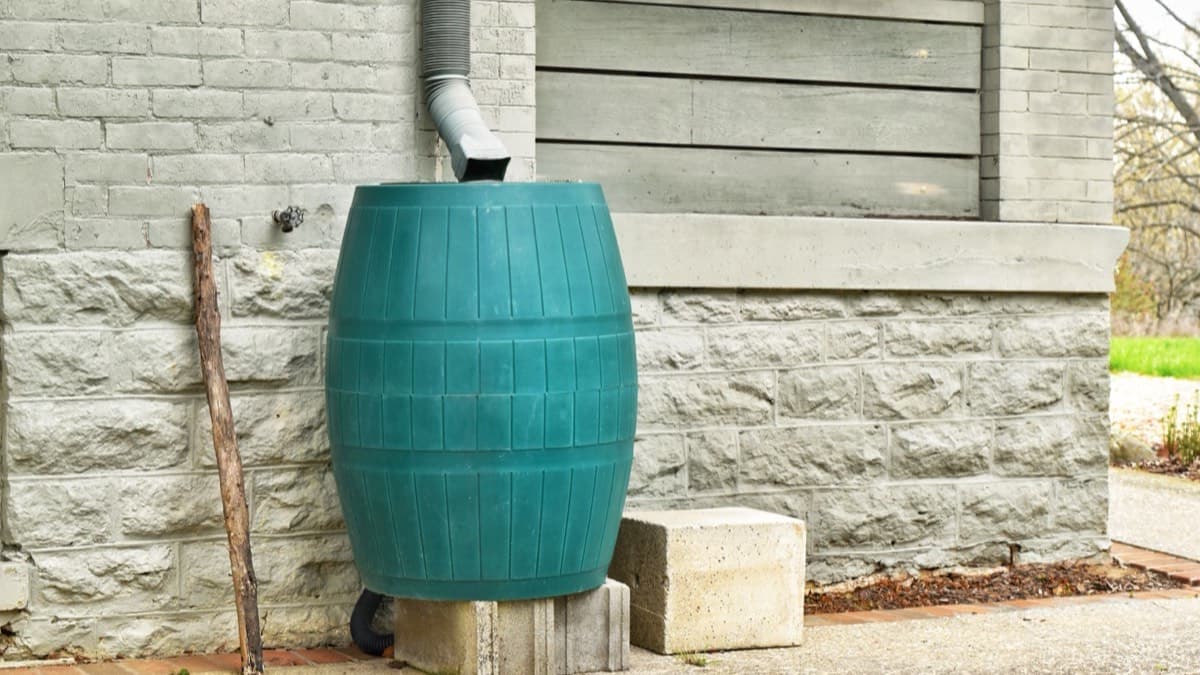
A rain barrel catches the water running off your roof through a downspout and holds it for the lawn, the garden or indoor plants. Most hold 50 to 60 gallons. A spigot at the bottom takes a garden hose, and an overflow sends extra water away from the foundation. The barrel cuts the water that runs off your property, and what it holds is free water for the yard.
Many cities and towns sell rain barrels to residents at annual sales. Home and garden stores and online retailers sell them too.
What you need
- A rain barrel with a closed or screened top, a spigot and an overflow
- Concrete blocks or pavers for the base
- A level
- A garden hose
Steps
- 1
Pick the downspout
Choose one near the garden or lawn you'll water, with room on the ground beneath it for the barrel.
10 min
- 2
Build a firm, level base
A full 55-gallon barrel weighs about 450 pounds and can tip over on an unstable surface, so set it on concrete blocks or pavers and check them with the level.
20 min
- 3
Set the barrel under the downspout
Line the downspout up with the barrel's screened opening. If the downspout has to be cut or rerouted to reach it, have that done.
10 min
- 4
Point the overflow away from the house
Aim it at the lawn or a bed, not at the foundation wall.
5 min
- 5
Close it up
Cover the barrel tightly so mosquitoes can't get in to lay eggs. If it has no lid, cover the opening with wire mesh whose holes are smaller than an adult mosquito.
5 min
- 6
Check after the first rain
After the next rain, the barrel should be filling, the lid tight and the overflow running onto the lawn. Hook up the hose and run the spigot.
5 min
Set up the rain barrel
- Pick a downspout and a firm, level spot for the barrel
- Check the rain barrel lid and screen are tight
- Drain the rain barrel and store it for winter
Using the water
Use the water on the lawn and plants, and for washing outside. Rain running over a roof can pick up bacteria from birds and chemicals from the roofing, so never drink it, and don't use it inside the house or for pets. Water vegetables at the soil rather than spraying the leaves. Keep children from playing in or around the barrel.
Keeping it working
Use the water often, so the barrel has room for the next rain and the water doesn't sit for long. Check the lid and screen each month for gaps, and clear leaves from the screen, the overflow and the gutter.
Before winter, disconnect the barrel from the downspout, empty it, wash it out with a non-toxic cleaner and store it upside down somewhere sheltered. Reconnect it in spring, once the risk of frost has passed. If you'll be away for a long time, open the spigot, and make sure the water drains away from the foundation. Watering the lawn covers how much water the yard needs.
FAQ
Do rain barrels breed mosquitoes?
Not if the top is closed or screened and you use the water between rains, so it doesn't sit.
Can I drink rain barrel water?
No. Rain picks up pollutants from the roof.
Sources
Checked October 20, 2026
- U.S. Environmental Protection Agency, Soak Up the Rain. Rain barrels (2026)
- U.S. Environmental Protection Agency. Semi-arid green infrastructure toolbox: rainwater harvesting practices (2022)
- Centers for Disease Control and Prevention. Mosquito control at home (2024)
- U.S. Environmental Protection Agency, WaterSense. Watering tips (2026)
- $100 to $1,000
- Yard
- Owner
- Beginner
- DIY
- Roof