Guide
Lawn weeds and what they say about the soil
A patch thick with one kind of weed can point to compacted, wet, dry, acidic, shady or underfed soil, and fixing that condition thins the weeds out.
Satisfy+ Editorial · Published September 24, 2026 · 3 min read
At a glance
- Compacted soil
- Plantain, knotweed, goosegrass, path rush
- Wet soil
- Chickweed, annual bluegrass, nutsedge
- Acidic soil
- Sorrel, hawkweed, silver cinquefoil
- Only proof of pH
- A soil test
Weeds move into the bare and thin spots where grass is struggling. Many kinds grow best under particular conditions, so the weeds that crowd a part of the lawn can point to what's wrong with the soil or the site there. Pulling or spraying them works only for a while if the condition stays the same. Changing it so the grass does better thins the weeds out over time.
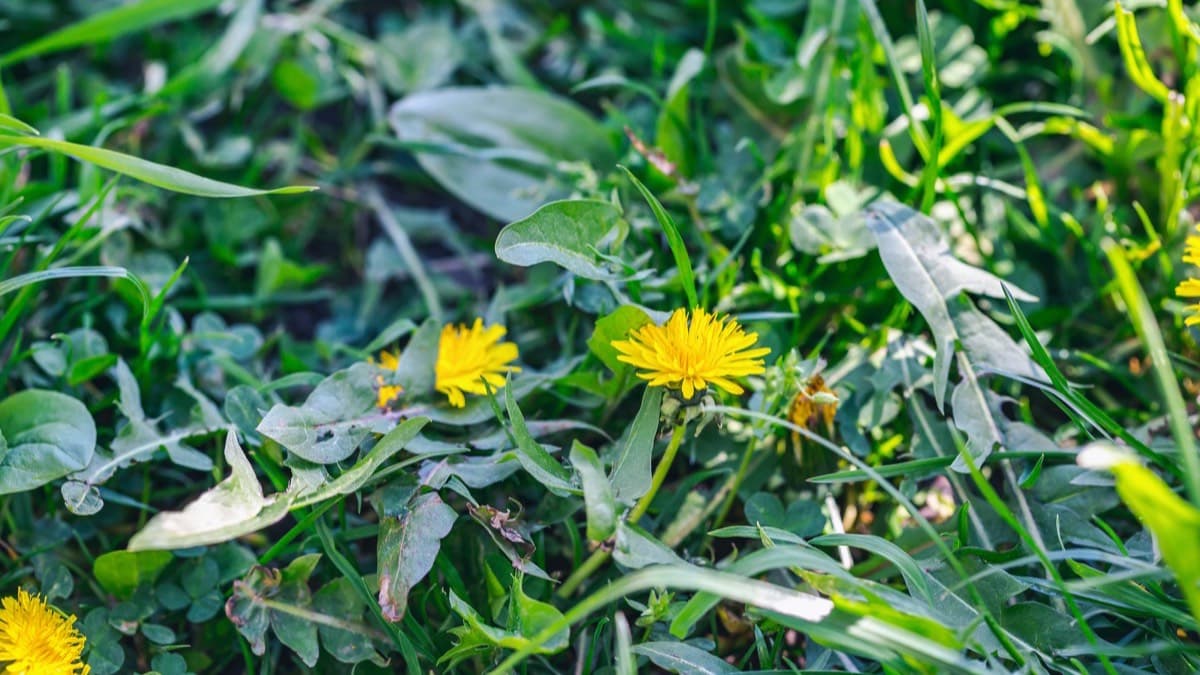
One or two weeds don't prove anything, and some, like plantain, knotweed and spotted spurge, grow in several conditions. A heavy patch of one kind, or several kinds that favor the same condition, is the clue.
What the weeds point to
| Condition | Weeds that favor it | What helps the grass |
|---|---|---|
| Compacted soil | Broadleaf plantain, prostrate knotweed, goosegrass, path rush, dandelion, common and mouse-ear chickweed, annual bluegrass, wild garlic | Core aeration, then a topdressing of sand or compost |
| Wet soil | Common and mouse-ear chickweed, annual bluegrass, yellow nutsedge, and in the South dollarweed | Watering less often, better drainage, or grass that takes wet soil |
| Dry, drought-prone soil | Black medic, crabgrass, spotted spurge, plantain, prostrate knotweed, red sorrel, white clover, wood sorrel | Compost or leaf mulch worked into the soil, overseeding bare spots, tall or fine fescue |
| Acidic soil | Red sorrel, hawkweed, silver cinquefoil, broadleaf plantain, sowthistle | Lime at the rate a soil test calls for, or fine fescues |
| Low fertility | White clover, black medic, crabgrass, plantain, red sorrel, annual bluegrass | Fertilizer at the rate a soil test calls for, with most of the nitrogen in fall |
| Too much shade | Moss, algae, ground ivy, violets, nimblewill, chickweed | A higher mowing height, shade-tolerant fescues, more light through the trees |
Reading the most common ones
- Plantain and knotweed along a path. Foot traffic presses soil particles together until there's no room for air, and roots can't grow. Clay soils compact most easily.
- Chickweed and nutsedge in a low spot. Find out why it stays wet first. Overwatering, compacted soil that won't drain, and a natural low area each call for a different fix.
- Clover and black medic across the lawn. Both do well where nitrogen is low.
- Moss under a tree. Moss and algae usually mean the spot is too shady for the grass, which leaves it thin. Most lawn grasses need at least 4 to 6 hours of sun a day.
- Sorrel and hawkweed. Grass grows best at a soil pH between 6.0 and 7.2. Below that, calcium, magnesium and phosphorus become less available, and below about 5.5 aluminum and manganese can reach levels that harm grass.
Test before you treat the soil
Weeds can hint at pH and fertility, but only a soil test can confirm them. Test the lawn every 1 to 3 years and follow the results for lime, nitrogen, phosphorus and potassium. Phosphorus is rarely needed on a mature lawn unless the test shows a shortage.
An annotated example
What to do next
Walk the lawn and note which weeds are thickest and where. Match each patch to the condition its weeds favor, then test the soil before adding lime or fertilizer. Fix the condition first, so the grass can fill in where the weeds were.
Read the weeds in the lawn
- Note the thickest weeds and where they grow
- Test the lawn soil for pH and nutrients
FAQ
Do weeds tell you about your soil?
They give clues. A heavy patch of weeds that favor the same condition can point to compacted, wet, dry, acidic, shady or low-fertility soil.
What weeds mean compacted soil?
Several grow well there. Broadleaf plantain, prostrate knotweed and goosegrass are three of them, and foot traffic on a path is a common cause.
Does moss mean my soil is acidic?
Moss usually means the spot is too shady for the grass. Only a soil test shows the pH.
Sources
Checked October 20, 2026
- University of Connecticut Extension, Integrated Pest Management. Weeds as indicators of soil and growing conditions in turf (2018)
- University of Florida IFAS Extension. Weeds as indicators of soil conditions in lawns and landscapes (ENH1370) (2022)
- Yard
- Owner
- DIY