Guide
Planting trees for summer shade and winter wind
Deciduous trees on the south and west shade the house in summer and let winter sun through, and dense evergreens to the north and northwest cut the wind.
Satisfy+ Editorial · Published August 10, 2026 · 4 min read
At a glance
- Summer shade
- Deciduous trees on the south and west
- Winter wind
- Dense evergreens to the north and northwest
- Windbreak distance
- 2 to 5 times the trees' mature height
- Under a tree
- Up to 25°F cooler than above blacktop
Well-placed trees and shrubs shade a house in summer, block winter wind and lower heating and cooling bills. The air right under a tree can be as much as 25°F cooler than the air above a nearby blacktop parking lot. Shading an air conditioner can raise its efficiency by as much as 10%.
What works where you live
The best plan depends on the climate.
- Temperate. Let the winter sun in, shade the house in summer, block winter wind with trees on the north and northwest, and channel summer breezes toward the house.
- Hot and dry. Shade the roof, walls and windows. Let summer winds reach a house cooled naturally, and block them from one that's air-conditioned. Native and drought-tolerant plants cut watering.
- Hot and humid. Channel summer breezes toward the house, and use trees that shade in summer but let the low winter sun through. Keep beds that need frequent watering away from the house.
- Cool. Use dense windbreaks against winter wind and let the winter sun reach south-facing windows. Shade south and west windows only if the house overheats in summer.
Your home's microclimate, the area right around the house, matters as much as the region. Plants adapted to the local climate, native species above all, need little care once they're established.
Trees for shade
- Deciduous trees block summer sun and let winter sun in. Their leaves shade the house in summer and fall away before winter.
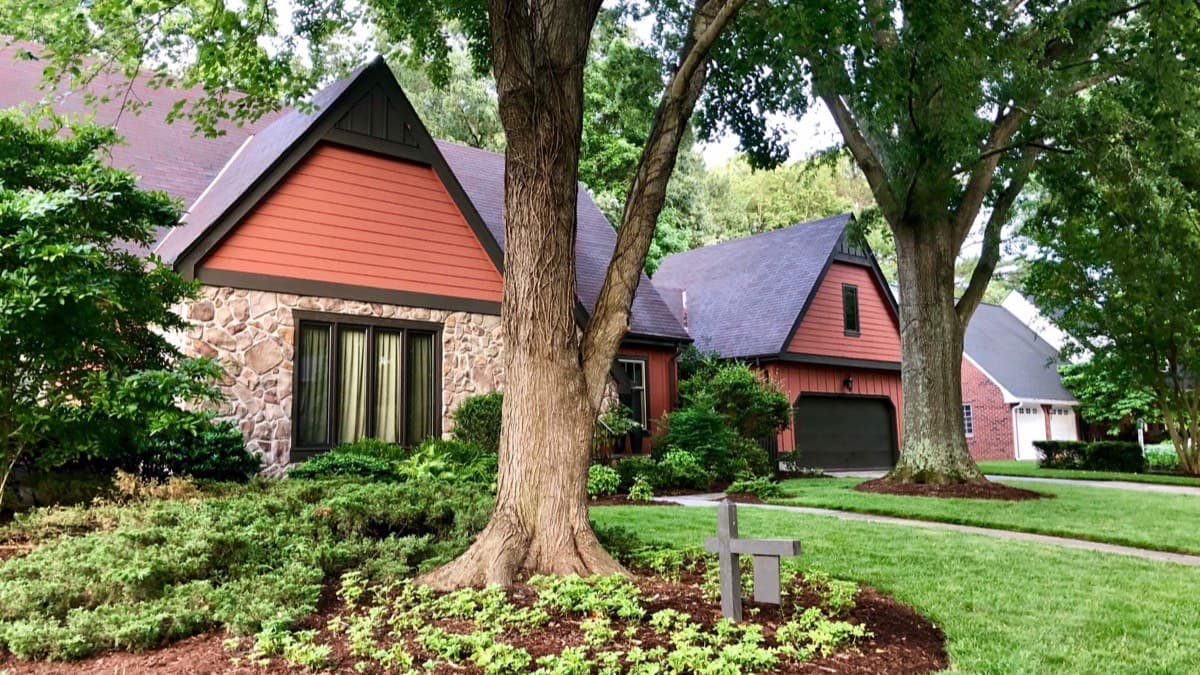
- Tall, spreading trees go on the south. A deciduous tree with a high, wide crown on the south side shades the roof in summer.
- Lower-crowned trees go on the west. The late-afternoon sun comes in low from the west, so a tree with a lower crown blocks it better.
- Keep evergreens off the south side. On a house that collects heat from the winter sun, evergreens there block it.
- Slow growers last. A slow-growing tree may take up to 10 years to shade a roof. It tends to live longer, with deeper roots that resist drought and stronger branches that are less likely to break in storms or under snow.
A deciduous tree 6 to 8 feet tall planted near the house will begin shading windows in its first year.
Trees for wind
A windbreak lowers the wind chill near the house, which cuts heating costs.
- Plant on the north and northwest. Dense evergreen trees and shrubs there are the most common windbreak.
- Block wind near the ground. Trees and shrubs with low crowns work best, and evergreen trees and shrubs planted together make the densest windbreak. Evergreens combined with a wall or fence can lift the wind over the house.
- Set it back. For the most protection, plant it 2 to 5 times the trees' mature height from the house. A tree that will grow to 30 feet goes 60 to 150 feet out.
- Trap the snow. Where snow drifts, low shrubs on the windward side of the windbreak trap it short of the house.
Close to the house
Shrubs and trellised vines shade walls and windows, and a large bush or a row of shrubs can shade a patio, a driveway or a front walk. Leave at least 1 foot of air space between the full-grown plants and the wall. Don't let dense growth crowd the house, where it can let pests in and where moisture and roots become problems.
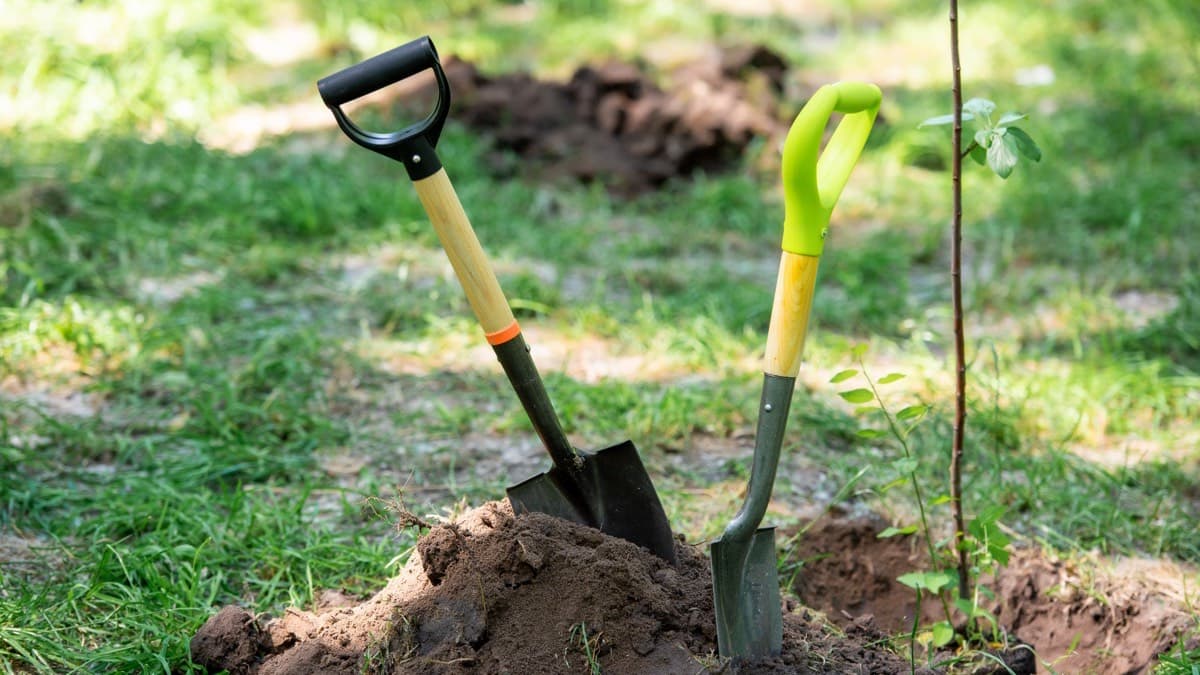
Plant trees far enough out that their mature roots won't damage the foundation, their leaves won't clog the gutters and their branches won't damage the roof. Planting a tree the right way covers the planting itself, and Calling 811 before you dig covers the buried lines.
An annotated example
What to do next
Note which windows get the hottest summer sun and which side takes the winter wind. Plan deciduous trees for the hot south and west sides and evergreens for the north and northwest, sized for their mature height and spread.
Plan trees for shade and wind
- Note the windows that get the hottest summer sun
- Plan a windbreak spot on the north or northwest side
FAQ
Where should I plant trees to shade my house?
Deciduous trees on the south and west sides. Tall, spreading trees suit the south, and lower-crowned trees block the low afternoon sun on the west.
How far from the house should a windbreak be?
2 to 5 times the trees' mature height, on the north and northwest sides.
Can trees really lower energy bills?
Yes. Shade cuts the heat a house takes in through its roof and windows in summer, and a windbreak cuts the wind chill in winter.
Sources
Checked October 20, 2026
- U.S. Department of Energy, Energy Saver. Consumer guide to home landscaping (2021)
- U.S. Department of Energy, Energy Saver. Energy Saver guide: tips on saving money and energy at home (2022)
- Yard
- Owner
- DIY