Explainer
Poison ivy, oak and sumac in the yard
Poison ivy, oak and sumac carry an oil that clings to tools, clothes and pets, so learn to spot them, never burn them, and wash right away after touching one.
Satisfy+ Editorial · Published May 4, 2026 · 4 min read
At a glance
- The oil
- Urushiol, in the sap
- Ivy and oak
- Usually leaves of three
- Sumac
- 7 to 13 leaflets in pairs
- Never
- Burn them
Poison ivy, poison oak and poison sumac release an oil called urushiol when any part of the plant is damaged or burned. An amount smaller than a grain of salt causes a rash in 80 to 90 percent of adults. The plants are a hazard all year, and the itching, red rash and blisters can show up anywhere from a few hours to several days after contact.
How to tell them apart
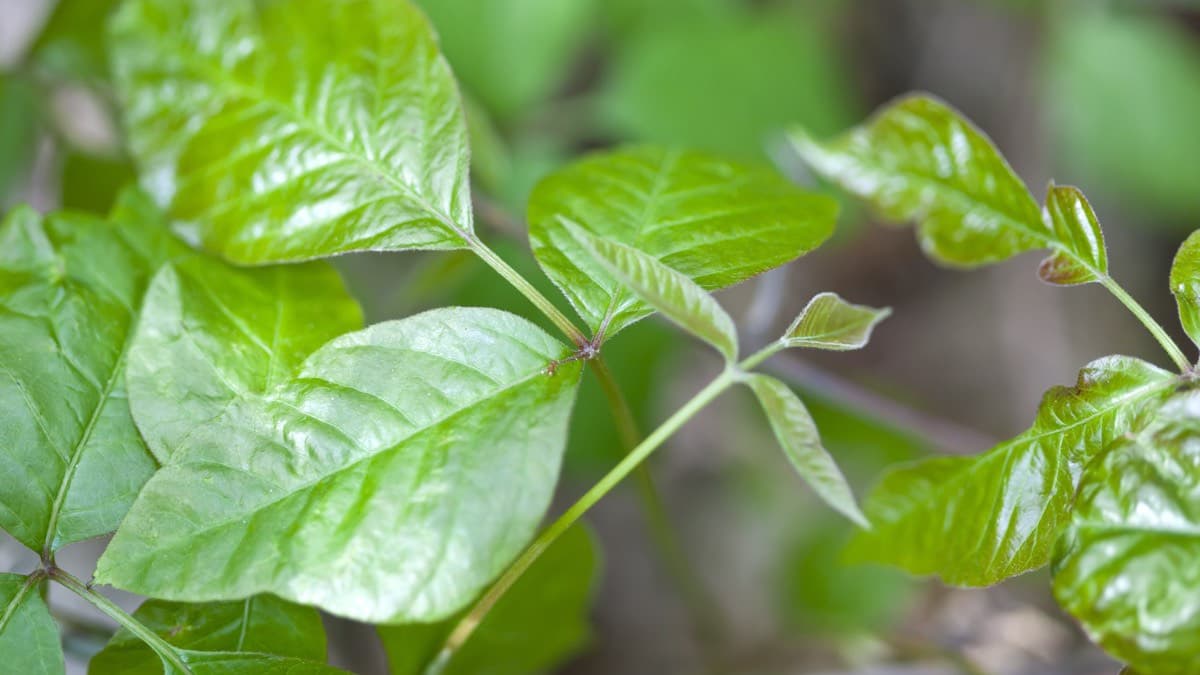
"Leaves of three, let it be" works for poison ivy and poison oak, but not for poison sumac. Ivy and oak can also have more than three leaves, look different by season and region, and grow beside lookalikes.
- Poison ivy. In the East it's usually a hairy, ropelike vine. In the West it's usually a low shrub that doesn't climb. Each leaf has three glossy leaflets with smooth or toothed edges, reddish in spring, green in summer and yellow, orange or red in fall. It grows everywhere in the U.S. except Alaska, Hawaii and parts of the West Coast.
- Poison oak. Usually a low, three-leaved shrub in the East and South, and tall clumps or long vines on the Pacific Coast. The fuzzy green leaves are lobed or deeply toothed, with rounded tips.
- Poison sumac. A tall shrub or small tree with 7 to 13 smooth-edged leaflets in pairs along each stem. It grows in bogs and swamps in the Northeast, the Midwest and parts of the Southeast.
How it gets onto you
You can touch the plant, touch something with the oil on it, or breathe the smoke from burning plants. Clothes, pets and garden tools all carry the oil, and it can stay active on a surface for up to five years until it's washed off with water or rubbing alcohol.
Most pets don't react to poison ivy, but the oil sticks to their fur and can give a rash to whoever pets them. Wash a pet that may have brushed the plants with pet shampoo and water, wearing rubber gloves.
The rash can't pass from person to person, and the fluid in the blisters isn't plant oil. A rash that seems to spread is the oil soaking in at different rates on different skin, or a new touch of something that still carries it.
Working near it
Wear long sleeves, long pants tucked into boots, and gloves. A barrier lotion containing bentoquatam can help, washed off and reapplied twice a day. Afterward, wash the clothes on their own in hot water with detergent. Clean the tools with rubbing alcohol or soap and plenty of water, wearing disposable gloves.
Never burn the plants. The smoke can cause serious lung problems. A vine climbing a tree, or a large patch, is a job to have done.
If you touch it
Rinse the skin right away with rubbing alcohol, a poison plant wash or dish soap and plenty of water. Rinse often, so the wash doesn't dry on the skin and spread the oil, and scrub under your nails with a brush. The sooner you wash, the better the chance of getting the oil off.
For the itch, wet compresses, cool soaks, calamine lotion and hydrocortisone cream all help, kept off broken skin. An antihistamine can ease the itching, taken as the package directs, and can make you drowsy. Don't scratch the blisters, since bacteria under your nails can infect them. Without treatment, the rash usually clears in a few weeks.
See a doctor for a fever over 100°F, pus or soft yellow scabs on the rash, or itching that keeps you awake. A rash on the face, eyes, mouth or genitals, or over more than a quarter of the skin, needs a doctor too. Call 911 or go to an emergency room for swelling or trouble breathing, or if you've had a severe reaction before.
An annotated example
What to do next
Walk the yard once in late spring and mark any patches before you start weeding or mowing near them. Keep disposable gloves and a bottle of rubbing alcohol with the garden tools.
Get ready to work near poison ivy
- Walk the yard and mark any poison ivy, oak or sumac
- Store disposable gloves and rubbing alcohol by the tools
FAQ
Can poison ivy spread from person to person?
No. But you can pick up the oil from clothing, pets or tools that touched the plant.
Can I burn poison ivy?
No. The smoke can cause serious lung problems.
Sources
Checked October 19, 2026
- National Institute for Occupational Safety and Health. Poisonous plants and work (2026)
- U.S. Food and Drug Administration. Outsmarting poison ivy and other poisonous plants (2021)
- Yard
- Owner
- Summer
- Tenant
- DIY