How-to
Starting a vegetable garden
Start with a 10-by-10-foot plot in full sun, mix in compost, and sow each crop when the soil reaches the temperature its seed needs.
Satisfy+ Editorial · Published May 21, 2026 · 4 min read · 4 hr to do · Under $100
At a glance
- First plot
- 10 by 10 feet, or a container for greens
- Sun
- 8 hours a day for tomatoes, peppers, squash and other fruiting crops
- Soil
- 2 to 4 inches of compost mixed in
- Time
- About 40 minutes a week, plus 30 minutes each watering
A first vegetable garden works best small. A 10-by-10-foot plot is a good size to learn on. A well-tended small garden produces many times more than a big one that gets neglected. For a sense of scale, a 30-by-30-foot garden grows enough fresh produce for a family of four. If there's no ground to dig, a container 2 feet across and 18 inches deep can grow leafy greens.
Planting and tending a 10-by-10-foot garden takes about 40 minutes a week, plus about 30 minutes each time you water. Most vegetables are annual crops that need attention through the whole season, so size the garden to the time you have.
What you need
- A spot that gets at least 8 hours of sun
- A soil test kit, or a sample sent to a soil testing lab
- Compost, enough for 2 to 4 inches over the plot
- A spading fork, a broadfork or a rototiller
- A soil thermometer
- Seeds, transplants from a garden center, or both
- Potting mix, if you're growing in a container
Steps
- 1
Pick the sunniest high spot you have
Tomatoes, cucumbers, squash, eggplant, peppers and melons need 8 hours of sun. Lettuce and spinach tolerate partial shade. Low spots drain poorly and collect cold air, which shortens the growing season. A raised bed improves drainage and warms the soil where the only ground is low.
15 min
- 2
Test the soil
A soil test shows the nutrient levels and pH, and which amendments the soil needs. The best time is the fall before. Lime for acidic soil goes on in the fall too, to give it time to work.
15 min
- 3
Choose what to grow
Start with what you like to eat, crops that are expensive to buy such as herbs, and short-season crops. Lettuce that matures in 40 to 50 days gives an early harvest.
30 min
- 4
Check that the soil is workable
Squeeze a handful. If water drips out, wait a few days before you dig.
2 min
- 5
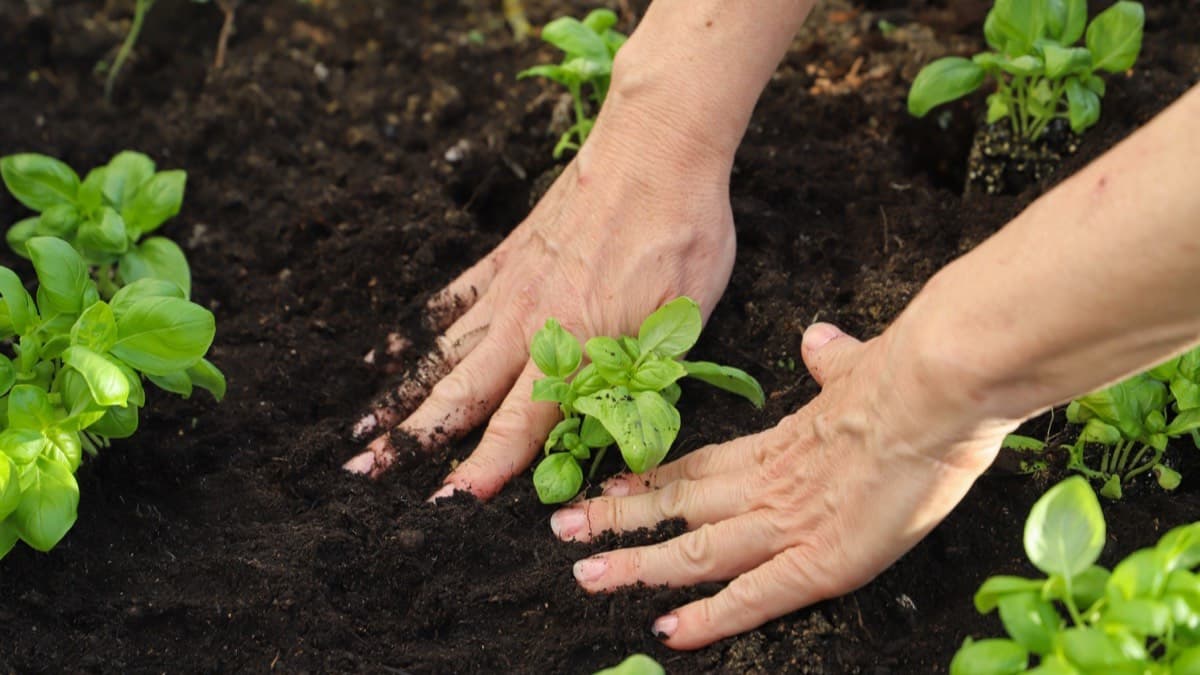
Mix in compost
Work 2 to 4 inches of compost into the soil. In new ground, break up the clods with a fork or a rototiller. Stop while the soil still has particles of different sizes, before it turns to powder.
60 min
- 6
Sow when the soil is warm enough
Seeds germinate once the soil is at or above the minimum temperature for that crop. Check it with the soil thermometer before you sow.
45 min
- 7
Set out the transplants
Pick plants that are firmly rooted but don't yet have roots circling the pot. Soak each root ball in water just before planting, then water well after.
45 min
- 8
Water and check the moisture 6 to 8 inches down
Water until the root zone is evenly moist. Dig down 6 to 8 inches after watering to check that the water reached that deep.
30 min
Get a vegetable garden going
- Test the garden soil in the fall
- Plan next year's garden on paper over the winter
- Buy a soil thermometer for the garden
When to sow
| Crop | Minimum soil temperature |
|---|---|
| Peas, onions | 35°F |
| Carrots | 40°F |
| Beans | 50°F |
| Eggplant, peppers, tomatoes | 55°F |
| Basil | 60°F |
Air temperature matters once the seeds are up. Peas grow best at 50 to 60°F, and peppers at 70 to 80°F. Tomatoes like 60 to 80°F by day and 59 to 68°F at night, and cucumbers 75 to 80°F. Peas sown in late winter may germinate but won't grow well until the air warms.
Short-season crops mature in 50 days or less, so they can be sown straight into the ground. Long-season crops such as tomatoes take 75 to 90 days. Transplants give them a head start, so they ripen before fall rains and cold nights arrive.
For a fall and winter garden, sow cool-season crops such as kale, broccoli and beets in mid to late summer.
Feeding the plants
Use a balanced fertilizer with nitrogen, phosphorus and potassium, adjusted to the crop. Leafy greens need more nitrogen, fruiting and flowering crops more phosphorus, and root crops more potassium.
- Heavy feeders such as beets, collards, kale, lettuce, parsley, spinach and tomatoes may need more fertilizer.
- Light feeders such as carrots, garlic, onions, chard, mustard and peppers need a moderate amount.
- Beans and peas take nitrogen from the air and often do well with none.
Plants can only use nutrients dissolved in soil water. A water-soluble fertilizer works right away. A dry organic fertilizer goes on a couple of months before planting.
Watering
A drip system puts water at the roots and beats an overhead sprinkler, which wets the leaves and can spread disease. If you water overhead, keep the splash down and water early in the day, when less is lost to evaporation, rather than late. Each crop has a stage when water matters most:
- Beans and peas, while they flower and form pods
- Broccoli and cabbage, while the heads form and fill out
- Onions, while the bulbs form
- Eggplant, peppers and tomatoes, from the first blossoms until the fruit sizes up
- Lettuce and other leafy greens, from sprouting to harvest
FAQ
How big should a first vegetable garden be?
About 10 by 10 feet. It takes roughly 40 minutes a week to tend, plus about 30 minutes each watering.
How much sun does a vegetable garden need?
At least 8 hours a day for fruiting crops such as tomatoes, peppers and squash. Lettuce and spinach tolerate partial shade.
When can I plant tomatoes?
When the soil reaches at least 55°F. Transplants give them a head start, since they take 75 to 90 days to mature.
Sources
Checked October 19, 2026
- Oregon State University Extension Service, Clackamas County Master Gardeners. Starting your vegetable garden (2015)
- Owner
- Spring
- Under $100
- Beginner
- DIY