Explainer
Radon when you buy or sell a house
Learn when to test for radon around a home sale, where the test goes, and which short tests give a result in time.
Satisfy+ Editorial · Published October 16, 2026 · 4 min read

At a glance
- Fix the home at
- 4 pCi/L or higher
- Shortest test
- 48 hours
- Closed house
- From 12 hours before the test to the end
- Homes with a high level
- Nearly 1 in 15
You can't see, smell or taste radon, and it's the second leading cause of lung cancer in the United States. Nearly one home in 15 has a high level, and the house next door can read very differently from yours. The only way to know a home's level is to test it.
If you're selling
Test before the house goes on the market, and lower the level if it needs it. Fixing it before you list gives you more time than fixing it in the middle of a sale. Keep the results and the record of any fix to show buyers.
If the house was tested before, give the results to the buyer. A buyer may still ask for a new test when:
- the last test is more than about two years old;
- you've renovated or changed the house since the test;
- the buyer plans to use a lower level than the one tested, such as the basement; or
- the test didn't follow the testing checklist below.
If you're buying
Ask the seller for any radon test results, and for whatever they have on a radon-reduction system if the house has one. Before you accept an earlier test, find out:
- who ran it, whether the owner or a radon professional;
- where in the house it was placed;
- what has changed in the house, or in its heating and cooling, since then.
If the house hasn't been tested, have it tested as soon as you can, and talk it over with the seller early.
Where the test goes
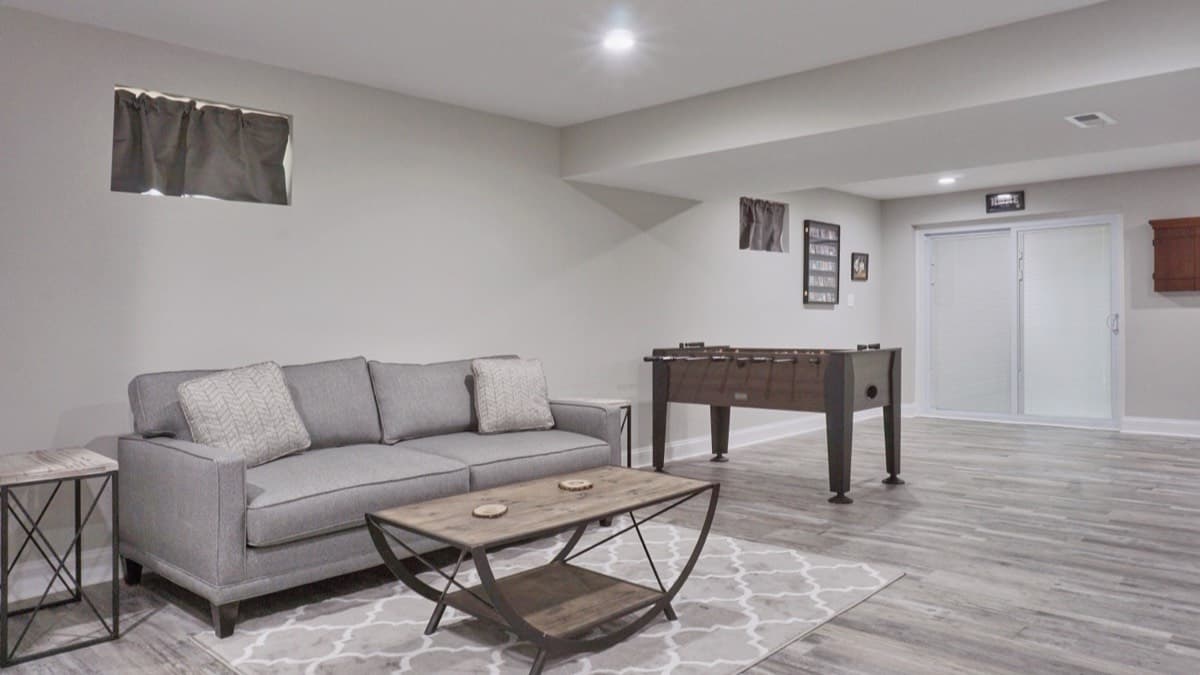
Test in the lowest level of the house that could be used regularly, finished or not. A basement the seller only uses for storage counts if a buyer could make it a bedroom, a playroom or a workshop. Don't test in a closet, stairway, hallway or crawl space, or in a kitchen, bathroom, laundry room or furnace room.
Place the device at least 20 inches above the floor, away from drafts, high heat, high humidity and outside walls, somewhere it won't be moved.
The short tests that fit a sale
Any of these three gives a result in time for a sale:
- Two tests at once. Put two short-term tests side by side and run them for at least 48 hours.
- Two tests in a row. Run one test for at least 48 hours, then a second in the same spot right after it.
- A continuous monitor. Run it for at least 48 hours. It records the level hour by hour, which shows any odd swings during the test.
Keeping the test reliable
Keep the house closed from 12 hours before the test until it ends. That means windows shut and doors closed except for coming and going, and no fans that pull in outside air. A radon system's own fan, and a bathroom or kitchen fan run briefly, are fine.
Don't run a test shorter than four days during a severe storm or high winds. Write down the start and stop times, and send the kit to the lab right away. Moving the device or opening the house during the test ruins the result, so tell everyone living there before it starts.
If the level is high
Fix the home if the average is 4 picocuries per liter or more. Levels below 4 still carry some risk and can often be lowered. Most homes are fixed with a vent pipe and fan that pull the radon from under the floor. The cost is about the same as other common home repairs. Sealing cracks on its own doesn't lower radon reliably. Test again after the work is done.
A house built before 1978
In most homes built before 1978, the seller tells the buyer what's known about lead-based paint in the house before the contract is signed. Have that disclosure ready alongside the radon results.
An annotated example
What to do next
If you're selling, find any past radon results, or book a test in the lowest level someone could live in. If you're buying, ask the seller for their results. How to test your home for radon covers setting up a test kit.
Test for radon around a sale
- Find any past radon test results for the house
- Book a radon test in the lowest level someone could live in
FAQ
Should I test for radon when I buy a house?
Yes. Ask the seller for their results, and test if the house hasn't been tested or the test is old.
What radon level needs fixing?
4 picocuries per liter or higher.
How long does a radon test take for a sale?
At least 48 hours, with the house kept closed from 12 hours before the test until it ends.
Sources
Checked October 19, 2026
- U.S. Environmental Protection Agency. Home buyer's and seller's guide to radon (2024)
- U.S. Environmental Protection Agency. Real estate disclosures about potential lead hazards (2026)
- Radon
- Owner
- Selling
- Buying