How-to
Cleaning brick and stone without damaging them
Clean masonry with low-pressure water and a bristle brush, test a small patch first, skip the pressure washer and sandblasting, and leave water-repellent coatings off a sound wall.
Satisfy+ Editorial · Published May 7, 2026 · 3 min read · 2 hr to do · Under $100
At a glance
- Start with
- A garden hose, 100 psi or less
- Brush
- Natural or synthetic bristle, never metal
- Never
- Sandblasting, grinders or high-pressure power washing
- Coatings
- A sound, watertight wall rarely needs a water repellent
The wrong cleaning or coating is one of the main causes of damage to older brick and stone. Masonry often gets cleaned because cleaning seems like an improvement, but the goal is to remove the dirt, stains or growth in the gentlest way that works. High-pressure water and blasting can etch soft stone and some brick for good. Clean only what you can reach from the ground. For anything higher, have a professional with experience on older masonry do it.
What you need
- A garden hose
- A natural or synthetic bristle brush, never a wire brush
- A non-ionic detergent, for oily dirt
- A bucket
Steps
- 1
Decide whether to clean at all
Good reasons to clean are dirt or growth that looks bad or is damaging the masonry, or a clean surface for matching new mortar. Find out what you're removing, since soot, oil, metal stains, mold and mildew, and old ivy tendrils each need a different approach. If the wall is painted, think about why before removing it. Paint sometimes covers a mismatched repair or protects soft brick.
5 min
- 2
Check the wall first
Make sure the mortar joints are sound and the wall is watertight. Water forced through a leaky wall can rust metal anchors inside it and ruin plaster. Badly deteriorated masonry may not take water cleaning at all.
10 min
- 3
Pick the right weather
Don't wash masonry in cold weather or when frost is possible. Water inside the masonry can freeze and crack or spall it. A wall can take more than a week to dry, so stop washing several days before the first average frost date.
1 min
- 4
Test a small patch
Start with a small, out-of-the-way area, and let it dry completely before you judge it. Test each type of masonry and finish separately. Enlarge the test area as you settle on what works, eventually to a square yard or more that takes in several bricks and joints.
30 min
- 5
Wash with low-pressure water
Start at very low pressure, 100 psi or less, from a garden hose. Scrub especially dirty areas with the bristle brush. A metal brush scratches the surface and leaves bits of metal that stain.
60 min
- 6
Add detergent for oily dirt
For oily soil, add a non-ionic detergent to the water and scrub. Unlike most household detergents, it leaves no visible residue. Rinse with plain water after.
15 min
Clean the brick or stone gently
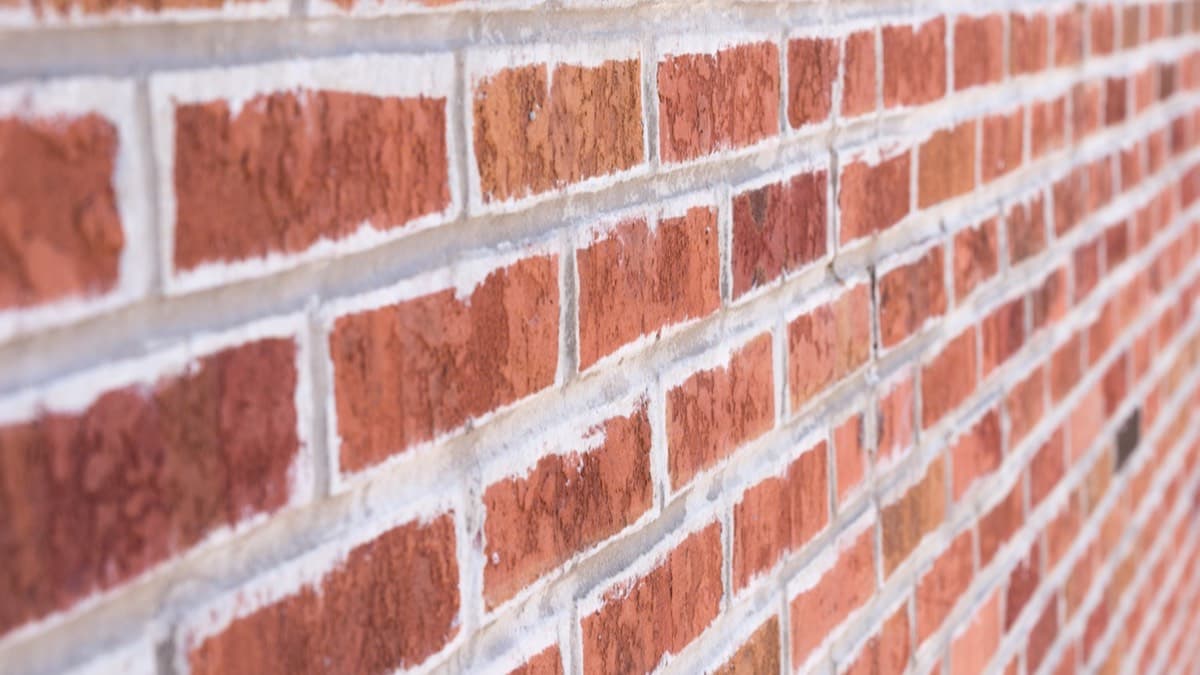
- Clean a small test patch of the brick before the whole wall
- Wash the brick with a garden hose and a bristle brush
What to avoid
- Power washing and water blasting. Water at too high a pressure is very abrasive and can easily etch marble, other soft stone and some brick. A professional going above a garden hose generally stays at 300 to 400 psi or less.
- Sandblasting and other abrasive blasting. Abrasive methods shouldn't be used to clean older masonry, and never on a whole building.
- Grinders and sanding disks. These grind away the surface.
- The wrong chemical. Acid cleaners etch or dissolve marble, limestone and some sandstone. Chemical cleaning is a job for a professional, after testing.
- A water-repellent coating on a sound wall. Most watertight walls don't need one. A coating can slow moisture leaving the wall, and salts that build up behind it can make the surface spall.
Keeping it clean
Simple cleaning with low-pressure water and a bristle scrub brush can be very effective if it's done regularly. Commercial sprays are also available to remove biological growth such as mold and mildew.
For the mortar between the bricks, see Mortar joints and repointing brick.
FAQ
Can I pressure wash brick?
High-pressure washing is very abrasive and can etch soft stone and some brick. Start with a garden hose at 100 psi or less and a bristle brush.
What's the best way to clean old brick?
The gentlest method that works, usually low-pressure water and a natural or synthetic bristle brush, after testing a small patch.
Should I seal brick with a water repellent?
Usually not. A watertight wall rarely needs one, and a coating can trap moisture and salts that damage the surface.
Sources
Checked October 20, 2026
- National Park Service, Technical Preservation Services. Preservation Brief 1: assessing cleaning and water-repellent treatments for historic masonry buildings (2000)
- Exterior
- Owner
- Older home
- Beginner
- DIY