Explainer
Spiders in and around the house
Most house spiders are harmless and eat other pests, so vacuum the webs and egg sacs, cut the clutter, and learn the two that can give a serious bite.
Satisfy+ Editorial · Published July 10, 2026 · 3 min read
At a glance
- Most spiders
- Harmless, and they eat flies and other pests
- The two to know
- Black widow and brown recluse
- Best control
- Vacuuming, including the egg sacs
- Bites
- Mostly when a spider is trapped against skin
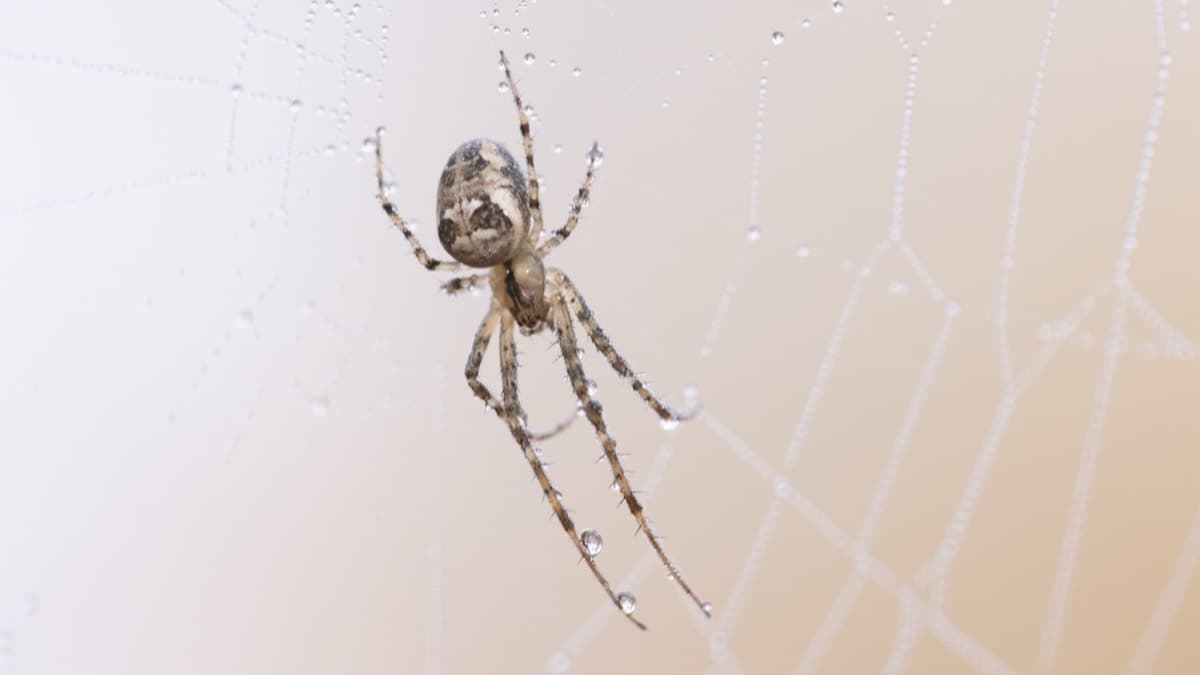
Many kinds of spiders live in and around houses. Most are harmless, and they help by eating flies and other insects. Most have fangs too small or weak to break human skin, and the ones that can bite usually don't unless they're trapped against the skin or their nest is disturbed. Two can give a serious bite: the black widow and the brown recluse.
The two to know
Black widow
The adult female is about 1/2 inch long and shiny black, usually with a red hourglass on the underside of the abdomen. In some, the hourglass is broken into separate red spots. Black widows spin loose, messy webs. Outdoors they live under rocks, boards and yard debris such as stacked flower pots. They're seldom found indoors, and when they are, it's usually in garages, entryways, sheds and outbuildings. Most bites happen when someone lifts an object or reaches into a spot where one is hiding.
The venom affects the nerves and works quickly. It can cause painful stiffness of the belly, tightness in the chest, sweating and nausea. Clean the bite, put ice on it, and get medical care promptly. Most bites respond to treatment, and an antivenin exists for severe cases.
Brown recluse
The brown recluse is cream-colored to dark brown, with a darker abdomen and a violin-shaped mark on the front part of the body. It has six eyes, where most spiders have eight. It's easy to confuse with harmless brown spiders. It hunts at night and hides by day in shoes, clothing, boxes, closets, basements, attics and crawl spaces. People are bitten putting on a shoe or a piece of clothing it's hiding in, or when one crawls into a bed. It's rare where winters are cold and the climate is dry.
The bite is usually painless at first. Three to eight hours later it can turn red, swollen and tender, and it may become an open sore that takes a month or more to heal. Prompt medical care can limit the damage. If you can, catch the spider and bring it in to be identified, so the doctor knows what bit you.
Keeping spiders down
- Vacuum or sweep the webs, the spiders and the egg sacs. Each egg sac can hold hundreds of young.
- Cut the clutter in closets, garages and basements, where spiders like quiet, undisturbed spots.
- Clear the outside walls. Move firewood, stacked items and debris away from the foundation. Trim shrubs and vines that touch the house.
- Close the gaps. Tight window screens and door sweeps keep spiders out, and so does caulk along cracks near baseboards and doors.
- Change the porch light. Yellow or sodium vapor bulbs at outside doors draw fewer night-flying insects, which in turn draw fewer spiders.
- Put down glue traps flush along walls and in corners. They catch wandering spiders and show where they're most active.
Wear heavy gloves when you reach into boxes or move stored things in a garage or shed. An infestation of black widows or brown recluses usually takes a pest control company to clear.
An annotated example
What to do next
Vacuum the corners, the webs and the egg sacs in the basement, the garage and the closets. Set a few glue traps along the walls to see what you have. Learn what a black widow and a brown recluse look like, and wear gloves when you dig through stored boxes.
Keep spiders down around the house
- Vacuum the webs and egg sacs in the basement and garage
- Move the firewood and stacked items away from the foundation
- Put door sweeps on the outside doors
FAQ
Are house spiders dangerous?
Most aren't. Their fangs are usually too small to break the skin, and they eat other insects. The black widow and the brown recluse are the two that can give a serious bite.
What does a brown recluse look like?
Cream-colored to dark brown, with a violin-shaped mark on the front of the body and six eyes instead of eight.
What's the best way to get rid of spiders in the house?
Vacuum the spiders, webs and egg sacs, cut the clutter, and seal gaps with door sweeps, screens and caulk.
Sources
Checked October 20, 2026
- University of Kentucky Cooperative Extension. Eliminating spiders around homes and buildings (ENTFACT-623) (2018)
- Colorado State University, Department of Agricultural Biology. Spiders in the home (2022)
- Owner
- Pests
- Fall
- Tenant
- DIY