Explainer
Unwanted moisture in an older house
Read the signs of moisture in an older house, trace them to one of five common sources, and fix the gutters, grade and leaks before sealing anything in.
Satisfy+ Editorial · Published October 15, 2026 · 4 min read
At a glance
- The biggest threat
- Uncontrolled moisture
- Fix first
- Gutters, downspouts, the grade and leaking pipes
- Tide mark
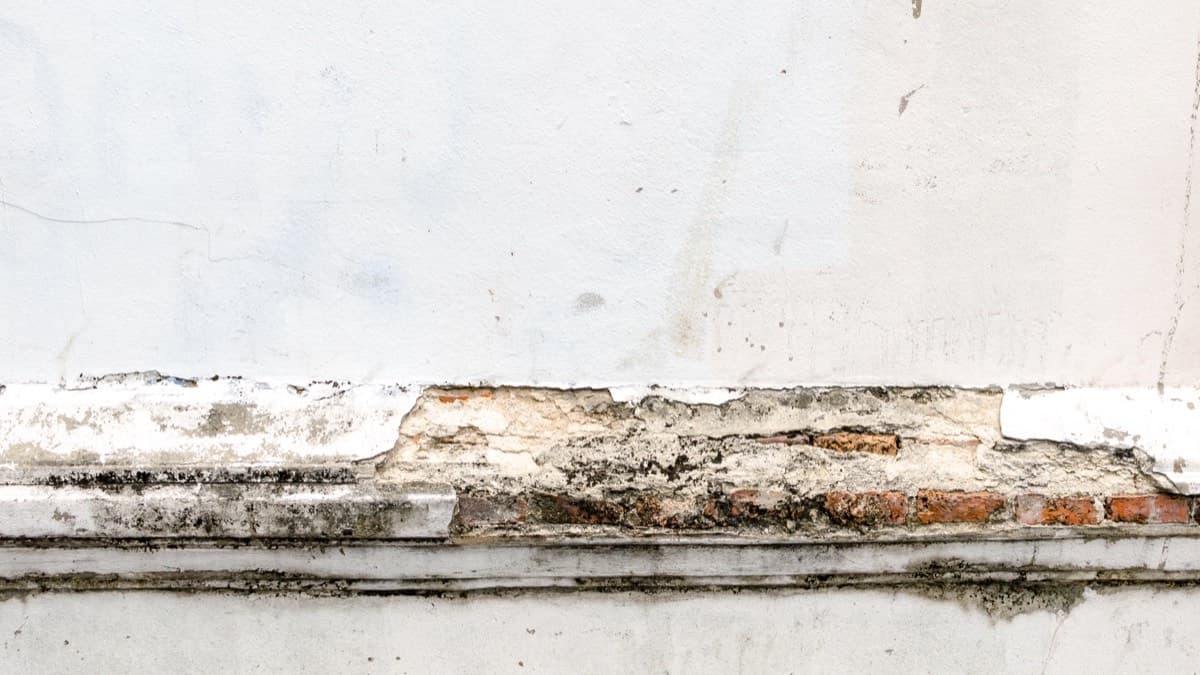
- A whitish salt band 1 to 3 feet up a wall
- Last resort
- Sealing coatings and digging out the foundation
Uncontrolled moisture is the most common cause of decay in older houses. It leads to rot, corrosion and erosion, and eventually to damaged finishes and structure. The goal isn't to get rid of moisture altogether but to manage how it moves. Moisture often travels far from where it starts, so the stain you see may not be next to the source.
The signs
- Standing water, mold, fungus or mildew
- Wet stains, eroded surfaces or white salt deposits, called efflorescence
- Flaking paint and plaster, peeling wallpaper or blisters on finishes
- Dank, musty smells in humid or poorly ventilated spaces
- Rust stains on metal
- Cupped, warped, cracked or rotted wood
- Spalled or cracked masonry and eroded mortar joints
- Missing roof shingles, slates or tiles, and failing flashing or gutters
- Condensation on windows and walls
- Ice dams on the gutters or roof
The five common sources
- Rain and snow getting in above ground. Through worn materials, cracks, open joints around windows and doors, and missing mortar. Vines growing right on the walls hold dampness against them, and their roots erode mortar.
- Ground moisture below grade. Rain runoff is one of the biggest causes. A heavy rain of 2 inches an hour can send about 200 gallons out of a house's downspouts in that hour. Saturated soil wets the footings and finds its way through cracks into the basement. A sprinkler system set too close to the house can add a lot of water at the foundation.
- Leaking pipes and equipment. Slow leaks at joints hidden in walls can rot floors and stain plaster. Drip pans under air conditioning equipment need regular cleaning, and cold, uninsulated pipes and ducts can drip condensation.
- Moisture from daily life. A family of four puts about 1 to 2 gallons of water a day into the air. Cooking, showers and laundry fog the windows in winter. Frequent condensation on the inside of windows means moisture is moving into the outside walls.
- Water used in cleaning and building work. Washing steps and walks and wet building materials add water at the walls too.
Rising damp
When ground moisture wicks up through brick or stone, it's called rising damp. It usually leaves a whitish stain or tide mark of salt about 1 to 3 feet above the ground, rising and falling with the seasons. The salts left behind make the masonry soak up even more moisture from the air. Most rising damp comes from a high water table or a steady source under the footing, and it's hard to control.
The order to fix things
Fix obvious problems such as broken pipes, clogged gutters and cracked walls right away. Then keep the ground dry by:
- Grading the soil so rain runs away from the foundation
- Carrying downspout water well away from the house
- Cutting down splash-back onto the foundation walls
Only after those should anyone dig out the foundation, add footing drains or put on damp-proof coatings. A waterproof coating can trap moisture and make the problem worse, and rushing to a fix without a diagnosis can remove good original material. A hard problem can take several months, or up to four seasons, of watching to diagnose.
An annotated example
What to do next
Walk the house inside and out and note any damp stains, salt, peeling paint or musty smells. Fix leaking gutters, downspouts and pipes first, and keep water draining away from the foundation. Clean out the downspout boots twice a year, and check any sump pump battery backup on the same schedule. For anything that doesn't clear up, have a preservation contractor or architect diagnose it before any coatings or digging. Exterior upkeep for an older house through the year has the schedule.
Keep moisture out of the older house
- Clean out the downspout boots and check the extensions
- Check the sump pump's battery backup
- Check the sprinklers and hose bibs by the foundation
- Move firewood and vines away from the walls
FAQ
What causes dampness in an old house?
Usually rain getting in through worn materials, ground moisture from poor drainage, leaking pipes or equipment, or moisture from cooking, showers and laundry.
What is rising damp?
Ground moisture wicking up through brick or stone. It often leaves a whitish salt tide mark about 1 to 3 feet above the ground.
Should I waterproof the walls of an old house?
Not first. Fix the gutters, downspouts, grading and leaks, then diagnose. A waterproof coating can trap moisture and make the damage worse.
Sources
Checked October 20, 2026
- National Park Service, Technical Preservation Services. Preservation Brief 39: holding the line, controlling unwanted moisture in historic buildings (1996)
- Exterior
- Foundation
- Owner
- Older home
- Mold