How-to
Using disinfectants safely at home
Check that the product is EPA-registered for the surface, clean off the dirt first, and leave the surface wet for the full contact time the label gives.
Satisfy+ Editorial · Published September 25, 2026 · 2 min read · 20 min to do · Under $100
At a glance
- First
- Find the EPA registration number
- Before you spray
- Wash off visible dirt
- Contact time
- Keep the surface wet the whole time
- After
- Gloves off, hands washed, cap on, out of reach
A disinfectant only works the way its label says it does. It has to be the right product for the surface, put on a clean surface, and left wet long enough.
What you need
- The disinfectant, with its label
- Soap and water and a cloth
- Disposable gloves, or a pair of reusable gloves kept for disinfecting
Steps
- 1
Check the registration number
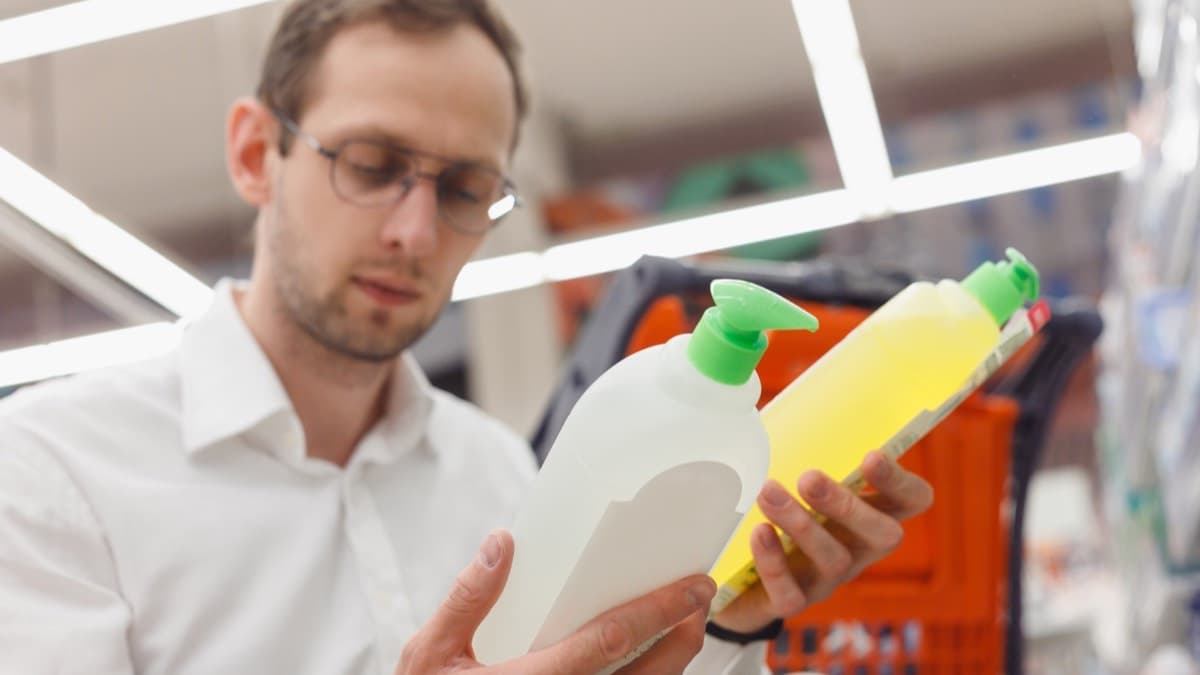
Look for the EPA registration number on the label. It's how you know the product has been registered as a disinfectant. EPA keeps lists of disinfectants for specific germs at epa.gov.
2 min
- 2
Read the directions
Check the use sites and surface types to see where the product can go, and read the precautionary statements.
3 min
- 3
Clean the surface first
Wash it with soap and water if it's visibly dirty, or if the directions call for cleaning first.
5 min
- 4
Leave it wet for the contact time
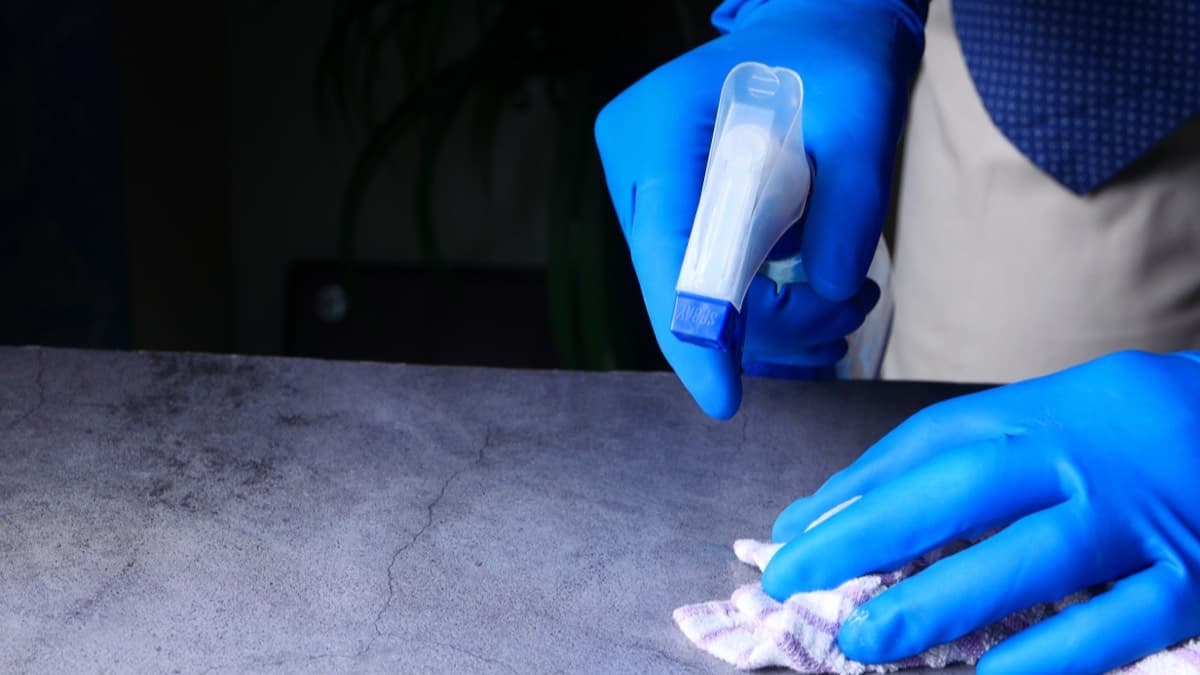
The directions give a contact time. The surface has to stay wet that whole time for the product to work.
5 min
- 5
Take off the gloves and wash your hands
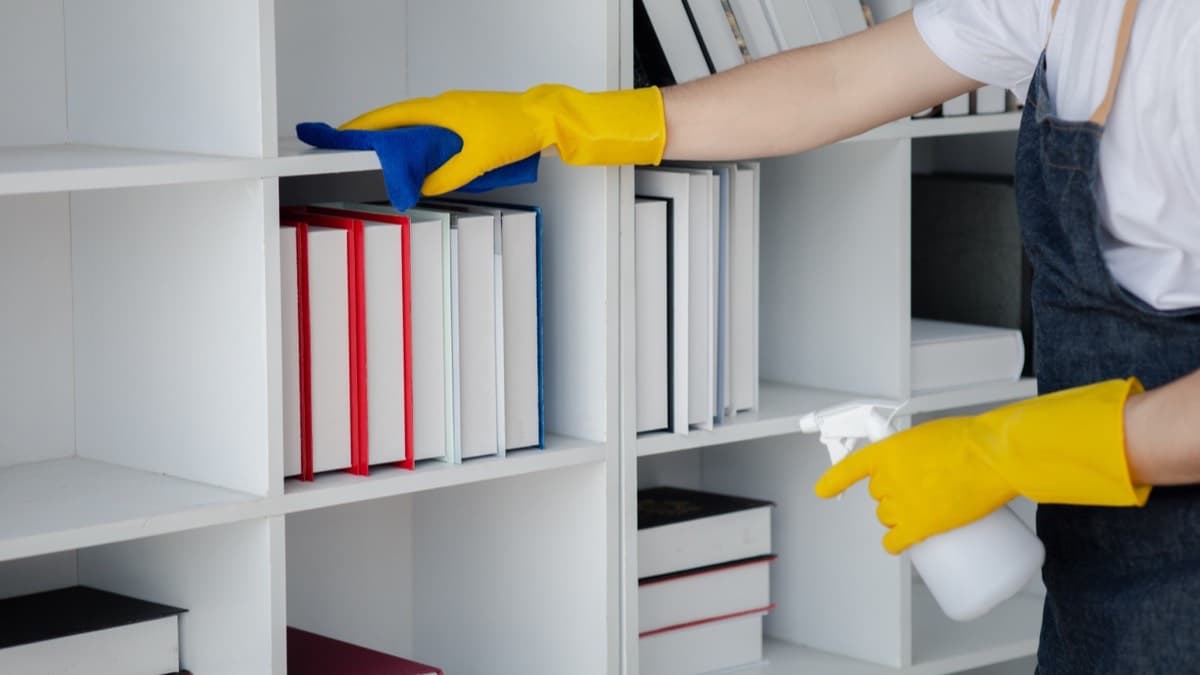
Throw out disposable gloves after each cleaning. Keep reusable ones just for disinfecting.
2 min
- 6
Cap it and put it away
Close the lid tightly and store it out of children's reach.
1 min
- 7
Check the surface is still wet at the end
Look at it as the contact time runs out. A surface that dried early didn't get the full contact time.
1 min
Disinfect the right way
- Check each disinfectant for an EPA registration number
- Store the disinfectants out of children's reach
Air and asthma
Cleaners and other household products can make asthma worse, in children and adults. When you use one, keep children out of the room and open windows or doors, or run an exhaust fan.
Mixing products
Bleach and ammonia react to make a toxic gas. Bleach poured after a caustic or lye drain cleaner can release chlorine gas in the pipe.
Disinfectants and cleaners with safer ingredients
EPA's Safer Choice label marks cleaners, dish soaps, laundry products and other everyday products made with safer ingredients. The Safer Choice site also lists disinfectants certified under EPA's Design for the Environment program. EPA's label for safer cleaning products explains what the label means.
FAQ
How long should a disinfectant stay on a surface?
For the contact time in the directions. The surface has to stay wet that whole time.
Do I need to clean before I disinfect?
Yes, if the surface is visibly dirty or the directions call for it. Wash it with soap and water first.
How do I know a disinfectant is registered?
Look for the EPA registration number on the label.
Sources
Checked October 20, 2026
- U.S. Environmental Protection Agency. Six steps for safe and effective disinfectant use (2020)
- U.S. Environmental Protection Agency, Safer Choice. Safer Choice (2026)
- U.S. Environmental Protection Agency. Asthma triggers, gain control (2026)
- USDA Forest Service, Forest Products Laboratory. Finishes for wood decks (2013)
- Ohio State University Extension. Drain flies (ENT-41) (2026)
- Owner
- Under $100
- Beginner
- Tenant
- DIY