Guide
Wasps, yellowjackets and hornets near the house
Tell a paper wasp nest from a hornet or yellowjacket nest, leave the dangerous ones to a professional, and keep late-summer yellowjackets away from food outdoors.
Satisfy+ Editorial · Updated September 17, 2026 · 4 min read
At a glance
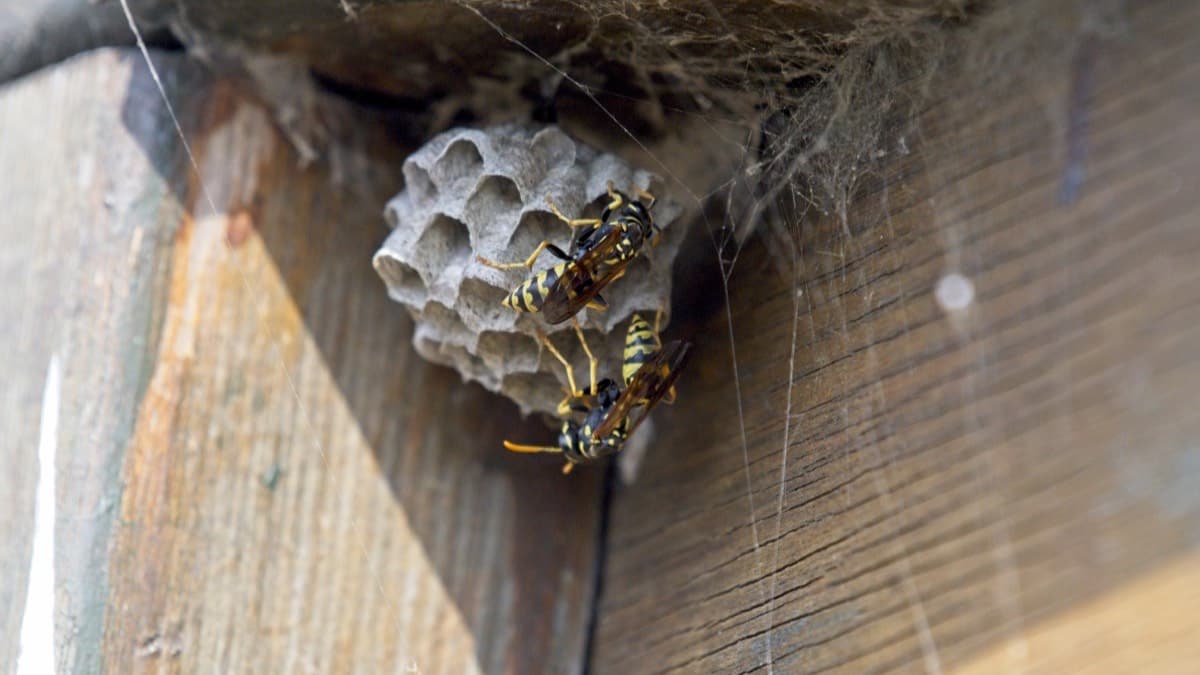
- Paper wasps
- Open, umbrella-shaped nests under eaves
- Hornets
- A gray, football-shaped nest in a tree or bush
- Yellowjackets
- Often nest in the ground
- Late summer
- Yellowjackets swarm food and trash
Paper wasps, hornets and yellowjackets all build nests from a papery mix of chewed wood. They're more dangerous and less predictable than honeybees. A wasp out looking for food seldom attacks, but when a nest is disturbed, the colony can defend it together, and an alarm scent draws more defenders in. Allergic reactions to wasp and hornet stings account for about 225,000 emergency room visits a year in the United States.
Which one is it
Paper wasps
Most are brown or rust-colored, with a very thin waist. One kind, the European paper wasp, is yellow and black like a yellowjacket. Their nests are open and umbrella-shaped, under eaves, gutters and ledges, in attics and sheds, behind shutters, and inside porch lights, grills and mailboxes. Paper wasps aren't very aggressive. Most stings come from bumping a nest no one knew was there.
Hornets
The bald-faced hornet is white and black, larger than a yellowjacket, and builds a large gray nest shaped like a bloated football. It hangs from a tree, a bush or the side of a building, often hidden in the branches. A nest can hold hundreds of hornets that are extremely aggressive when disturbed.
Yellowjackets
Yellowjackets are among the most dangerous stinging insects in the country. They're unpredictable and usually sting when their nest is disturbed. Many nest in the ground, in old rodent burrows or under rocks, splash blocks and landscape timbers. Others nest in stone walls, crawl spaces, attics and behind siding.
Who should handle the nest
A paper wasp nest you can reach is fairly easy to get rid of with a wasp and hornet spray, which reaches up to 20 feet. Night is the best time, when the wasps are in the nest. Don't stand right under it, since sprayed wasps drop at once. Wait a few days to make sure the colony is dead, then knock the nest down.
Dousing a nest with gasoline or a garden hose seldom works and can bring on many stings. A nest far from where people go can also be left alone. In places with cold winters, the colony dies off once the weather turns cold, and the nest isn't used again.
Yellowjackets at the picnic table
In late summer and early fall, yellowjacket colonies are at their biggest, and the workers scavenge for sweets, meat and almost anything people eat.
- Keep food and drinks covered until you eat them, and clean up spills and leftovers right away.
- Use trash cans with tight lids, keep them away from doors and tables, and empty and clean them often.
- Rake up fallen apples, peaches and other fruit.
- Look into a can or a cup before you drink from it. A sting inside the mouth is especially dangerous.
- Don't swat. Most stings happen when a yellowjacket is slapped or trapped against the skin.
- Skip scented soap, shampoo, deodorant and perfume outdoors, since they draw yellowjackets.
Traps catch plenty of yellowjackets, but a late-season nest can hold thousands, so trapping seldom makes a noticeable dent. Set traps around the edge of the area you want to protect, or they may draw more wasps in than they catch.
After a sting
Most stings cause pain, itching, redness and some swelling. An ice pack and an over-the-counter antihistamine help, and washing the spot with soap and water helps prevent infection. About 1% of people are allergic enough to have a life-threatening reaction. Get medical help at once, without waiting to see if it passes, for any of these signs after a sting:
- Hives or itching all over
- Trouble breathing or swallowing
- Swelling of the face, throat or mouth
- Dizziness or a racing pulse
An annotated example
What to do next
Walk around the house and yard in early summer. Look under the eaves, behind shutters, in the grill and mailbox and along the edges of the lawn. Handle a small paper wasp nest you can reach from the ground, and call a professional for hornets, yellowjackets or anything up a ladder.
Deal with the wasps near the house
- Check the eaves, grill and mailbox for paper wasp nests
- Walk the yard for yellowjacket nests before mowing
- Put tight lids on the outdoor trash cans
FAQ
How do I tell a wasp nest from a hornet nest?
Paper wasps build open, umbrella-shaped nests under eaves and ledges. Bald-faced hornets build a closed, gray, football-shaped nest in a tree or bush.
Should I get rid of a yellowjacket nest myself?
Yellowjackets are among the most dangerous stinging insects, and a botched treatment can bring on many stings. A pest control company is the safer choice.
Why are there so many yellowjackets in late summer?
Colonies are at their largest then, and the workers scavenge widely for food, especially sweets.
Sources
Checked October 20, 2026
- University of Kentucky Cooperative Extension. Controlling wasps, hornets and yellowjackets (ENTFACT-620) (2018)
- Owner
- Pests
- Summer
- Tenant
- Either