Checklist
Electrical safety on the jobsite
Check the cords, tools and GFCIs before work, keep ladders 10 feet from overhead lines, and leave live circuits to qualified electricians.
Satisfy+ Editorial · Published May 15, 2026 · 2 min read

At a glance
- Overhead lines
- Stay 10 feet away
- GFCIs
- On every 120-volt temporary outlet
- Cords
- 3-wire, hard-service, never daisy-chained
- Live work
- Qualified electricians only
Most workplace electrical deaths, 74 percent, happen to workers who aren't electricians, among them laborers, roofers, painters, HVAC mechanics and tree trimmers. The usual causes are contact with power lines and missing ground-fault protection. A broken path to ground, tools used the wrong way, and damaged or misused cords cause the rest. Run through this list with the crew at the start of a job and again whenever the site changes.
Power lines
- Look for overhead lines and buried-line markers before work starts
- Keep people, ladders, scaffolding and long tools at least 10 feet from overhead linesTreat every overhead line as live. A shock from one is often fatal, and the burns and falls that follow are hazards too.
- Use wood or fiberglass ladders near power linesBoth are non-conductive.
Cords and outlets
- Use GFCIs on every 120-volt, 15- and 20-amp outlet that isn't part of the building's permanent wiringAn assured equipment grounding conductor program is the alternative.
- Test each GFCI with its test button
- Use factory-made, 3-wire extension cords rated for hard serviceA cord marked "S" holds up better than one marked "SJ," which is junior hard service.
- Match each cord's rating to the tool it powersAn underrated cord can overheat and start a fire.
- Never daisy-chain extension cords or run several tools from one outlet
- Keep the ground prong on every plug
- Unplug a cord by the plug, not the cord
Run the jobsite electrical check
- Test each GFCI with its test button
- Pull any cord or tool with damage out of service
- Mark the overhead lines on the site plan
Tools and equipment
- Look over each tool and cord before usePull anything with a frayed cord, a missing ground prong or a cracked casing out of service.
- Use double-insulated tools, marked as suchGround all exposed metal parts of the other equipment.
- Stay out of wet areas while using power toolsWorking in wet conditions raises the risk of shock.
Live circuits and generators
- Leave work on or near live parts to qualified employeesThey de-energize the circuit, lock and tag it out, and confirm with a voltage tester that it's dead.
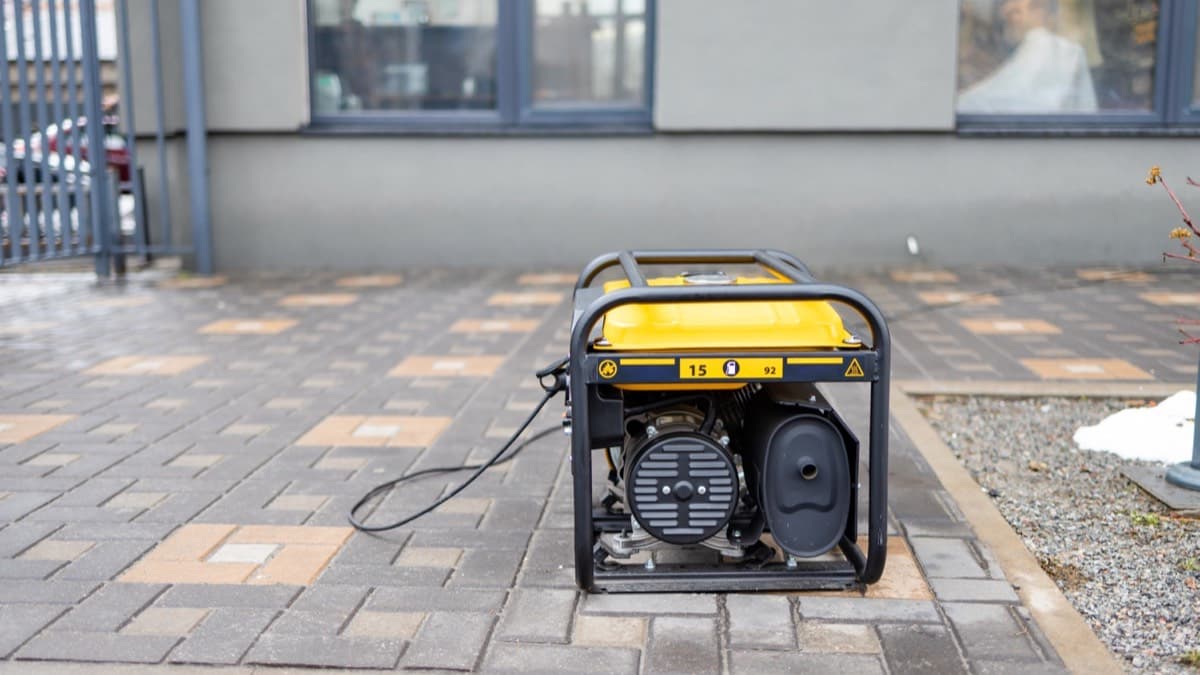
- Run a generator outdoors, where its exhaust can't get into the houseThe exhaust carries carbon monoxide, a gas you can't see or smell. Headache, nausea and tiredness come first, and it can kill.
- Let a generator cool before you refuel it
FAQ
How far should a ladder stay from a power line?
At least 10 feet, and the same goes for scaffolding and long tools.
Which outlets need GFCI protection on a jobsite?
Every 120-volt, single-phase, 15- and 20-amp outlet that isn't part of the building's permanent wiring.
Can extension cords be plugged into each other?
No. Daisy-chained cords can overheat and start a fire.
Sources
Checked October 19, 2026
- Occupational Safety and Health Administration. Toolbox talk: electrical safety in construction (2026)
- Occupational Safety and Health Administration. Working safely with electricity (2018)
- Occupational Safety and Health Administration. Electrical overview (2026)
- Professional
- Electrical
- Renovating