Guide
Jobsite safety basics for falls, ladders and silica dust
Build fall protection, ladder safety and silica dust control into how the crew plans and runs each job.
Satisfy+ Editorial · Published September 3, 2026 · 3 min read
At a glance
- Falls in construction, 2024
- 389 of 1,034 deaths
- Fall protection
- From 6 feet up
- Ladder to a roof
- At least 3 feet above the landing
- Cutting masonry
- Water on the blade
Falls are the leading cause of death in construction. In 2024, 389 of the 1,034 construction deaths were falls to a lower level, and falls from ladders make up nearly a third of fall deaths each year. Anyone working 6 feet or more above a lower level risks serious injury or death from a fall.
Plan it into the job
Decide how each job will be done before it starts, and what safety gear each task needs. Put that gear in the estimate, and have it on the truck when the crew arrives. On a roof, walk the hazards first, such as holes, skylights and the leading edges. Then pick the fall protection that fits, such as a personal fall arrest system, with a harness for each worker who ties off. Check that each harness fits, and inspect it regularly. Train every worker to set up and use the gear and to recognize the hazards on the job.
Ladders
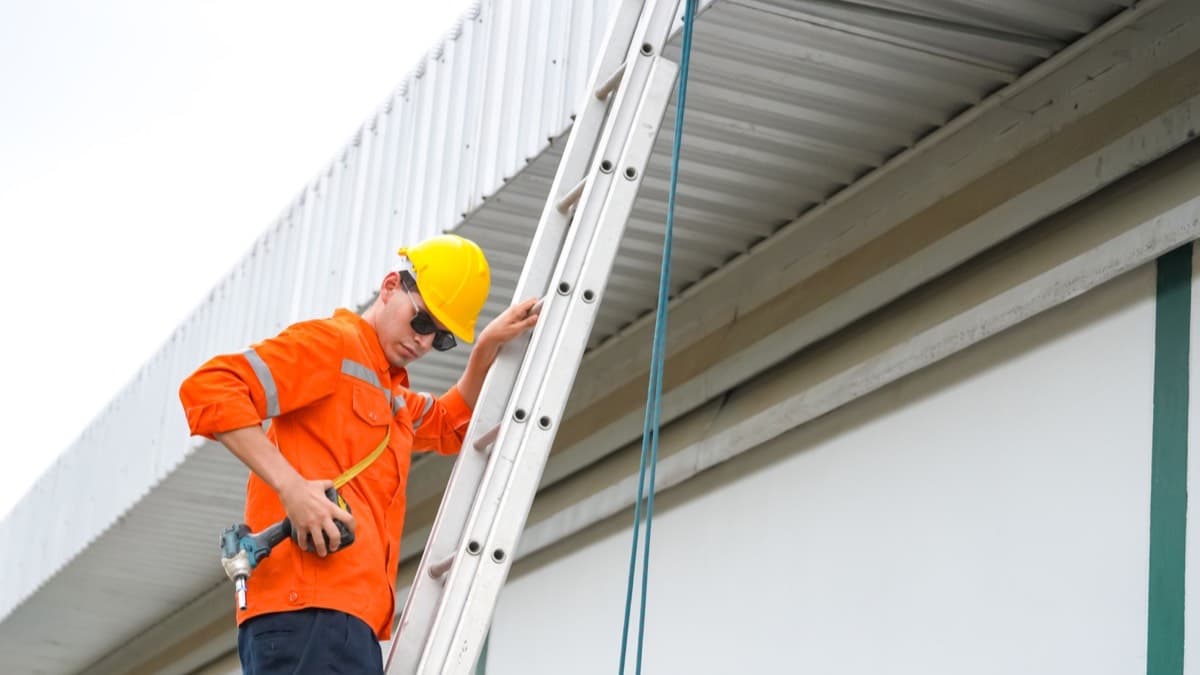
Use a ladder tall enough that nobody stands on the top rung to reach the work. Set it on stable, level ground with the base secured, and extend it fully before starting. A ladder used to reach another level should be secured and run at least 3 feet past the landing, so there's a handhold.
On the ladder, keep three points of contact, carry no tools or materials in your hands, and keep your weight centered between the rails rather than leaning out. Wear flat, non-slip shoes. Keep people from walking under or near the ladder with cones or a spotter, and keep it away from doorways unless the door is locked.
Check each ladder for defects before use, and take out of service any that's bent, missing a step or has spreader bars that won't lock.
Silica dust
Cutting, grinding and drilling stone, rock, concrete, brick and block raises fine crystalline silica dust. Running water onto the saw blade while cutting cuts the amount of dust substantially.
The construction rule for silica calls for a written exposure control plan. It names the dusty tasks, the ways the crew is protected and how access is kept out of high-exposure areas. One competent person runs the plan. The rule also calls for training workers on the dusty tasks and on limiting exposure.
Avoid cleanup methods that raise silica dust where a safer method exists. A worker who has to wear a respirator for 30 or more days a year is offered a medical exam every three years. Keep records of exposure measurements and medical exams.
An annotated example
What to do next
Before the next job, list its fall hazards and the gear for each, and put the gear in the price. Look over every ladder the crew will use. If the crew cuts or grinds masonry, write the silica exposure control plan and name the person who runs it. Electrical safety on the jobsite covers power lines and cords.
Plan the fall and dust safety for each job
- List the fall hazards on the job and the gear for each
- Check each ladder for defects before the job
- Write the silica exposure control plan for the crew
FAQ
At what height does a worker need fall protection?
At 6 feet or more above a lower level in construction.
How far should a ladder extend above a roof edge?
At least 3 feet above the landing point, secured, for a safe handhold.
How do you cut down silica dust when cutting concrete?
Run water onto the saw blade while cutting.
Sources
Checked October 19, 2026
- Occupational Safety and Health Administration. Fall prevention campaign (2026)
- Occupational Safety and Health Administration. Falling off ladders can kill: use them safely (OSHA 3625) (2018)
- Occupational Safety and Health Administration. Silica, crystalline, construction (2026)
- Professional
- Roof