Explainer
Heat pump clothes dryers explained
Learn how a heat pump dryer reuses its own warm air instead of venting it outside, why it uses about 70% less energy than a conventional dryer, and what it needs for drainage.
Satisfy+ Editorial · Published September 29, 2026 · 2 min read
At a glance
- Energy use
- About 70% less than a conventional dryer
- Vent
- None needed
- The water
- Drained away, or emptied from a tank
- Its rating
- All meet ENERGY STAR Most Efficient
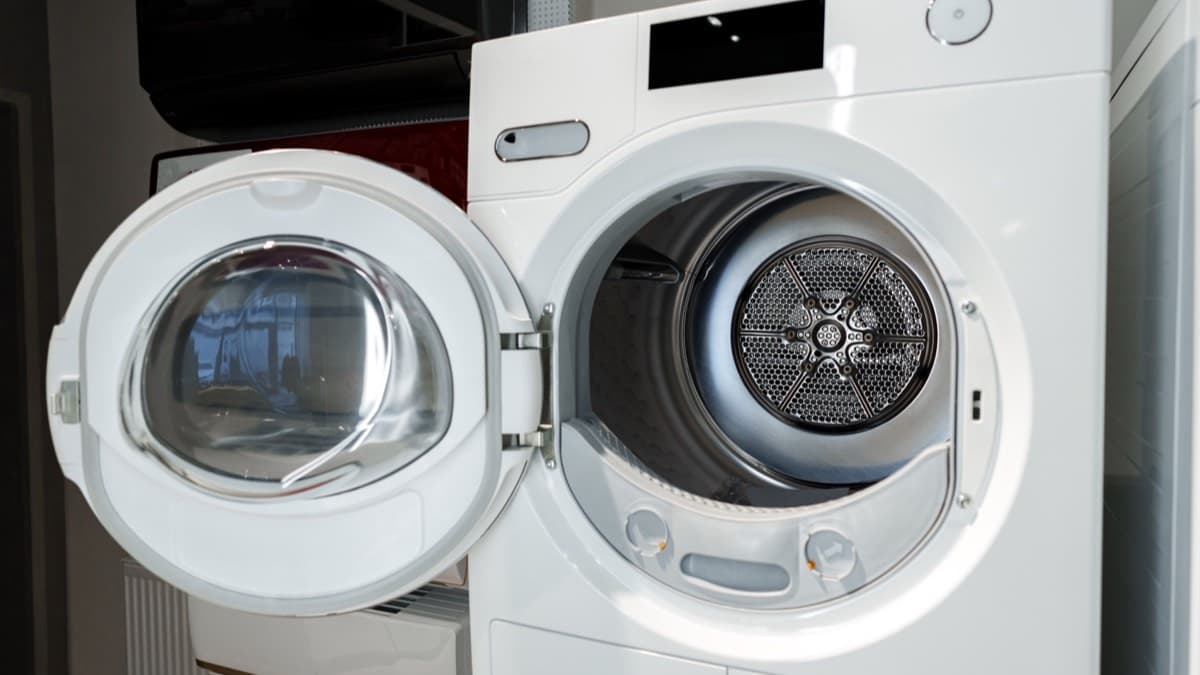
About 80% of American homes have a clothes dryer. A conventional dryer heats air, blows it through the clothes and pushes the hot, damp air outside through a vent. A heat pump dryer keeps its air instead. It works as a closed loop, heating the air, using it to pull moisture from the clothes, then passing that humid air through a condenser that removes the water without losing much of the heat. The same air goes around again.
What that changes
- Energy. Heat pump dryers use around 70% less energy than conventional dryers, and every one meets the criteria for ENERGY STAR Most Efficient.
- No vent. Because no air goes outside, a heat pump dryer doesn't need a dryer vent. In a home without one, that saves the cost of putting a vent in.
- Water to drain. The water the condenser collects has to go somewhere. It either runs to a drain or collects in a tank that has to be emptied. Some models can use the clothes washer's drain.
- Refrigerant. Like any heat pump, it uses a refrigerant. Some, such as R-290, have a much lower global warming potential than others.
Features many efficient dryers share
- Moisture sensors. They stop the dryer when the clothes are dry, which saves energy and cuts the wear that over-drying causes.
- Lower heat. Efficient dryers generally dry at lower temperatures than standard ones.
- Delayed start. It lets the dryer run later, which can lower the cost where a utility charges different rates at different times of day.
Keeping any dryer efficient
- Load size. A load too big takes longer to dry. A load too small wastes energy, since drying one towel for 30 minutes costs about as much as drying a full load for the same time.
- The lint filter. Clean it after every load. It keeps air moving, makes the dryer more efficient and is an important safety step.
- Dryer sheets. They leave a film on the lint filter that cuts airflow. If you use them, scrub the filter with a toothbrush once a month.
An annotated example
What to do next
Clean your dryer's lint filter after every load, whatever kind of dryer it is. If you use dryer sheets, scrub the filter with a toothbrush once a month. Dryer fire safety checklist covers the vent and the rest of dryer safety.
Keep the dryer running efficiently
- Clean the dryer's lint filter after every load
- Clean dryer-sheet film off the lint filter
FAQ
How does a heat pump dryer work?
It heats air, uses it to pull moisture from the clothes, then removes that moisture in a condenser and reuses the same air, instead of venting it outside.
Does a heat pump dryer need a vent?
No. It doesn't release air outside, so it doesn't need a dryer vent. It does need a drain or a tank for the water it collects.
How much energy does a heat pump dryer save?
It uses around 70% less energy than a conventional dryer.
Sources
Checked October 20, 2026
- ENERGY STAR (U.S. Department of Energy and U.S. Environmental Protection Agency). Clothes dryers (2026)
- Appliances
- Owner
- Tenant