Explainer
How rooftop solar panels make electricity
Learn how solar cells turn sunlight into electricity, what the panels, mounts, inverters and batteries in a home system each do, and why heat and reflection cut what the panels produce.
Satisfy+ Editorial · Updated July 24, 2026 · 3 min read
At a glance
- A single cell
- About 1 or 2 watts
- Inverter
- Turns the panels' DC into the house's AC
- Inverters
- Usually replaced at least once in a system's 25 years
- Works best
- Cool and facing the sun
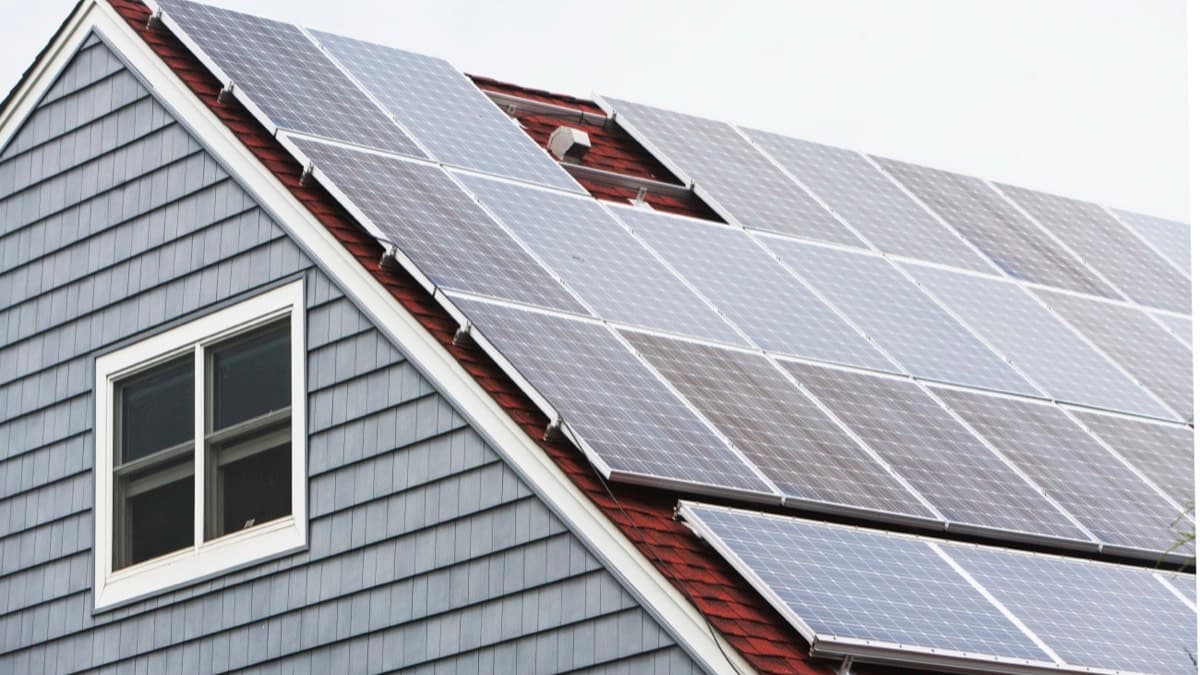
Solar panels turn sunlight straight into electricity. The basic unit is a photovoltaic, or PV, cell, a thin layer of semiconductor material often less than the thickness of four human hairs. When sunlight strikes it, some of the light's energy knocks electrons loose from their atoms, and that flow of electrons is electric current. A single cell is small and makes only about 1 or 2 watts, so cells are wired together and sealed between layers of glass or plastic to form a module, or panel. Panels connect into arrays, and the arrays connect to the house and the electric grid.
The parts of a home system
- Panels. They make the electricity. The more efficient a cell, the darker it usually looks, often deep blue or black.
- Mounts. Racks hold the panels at a fixed angle and have to stand up to wind, rain, hail and corrosion for decades. In the Northern Hemisphere, panels facing due south, tilted at the local latitude, make the most electricity over a year. Ground-mounted systems sometimes use trackers that follow the sun.
- Built-in solar. Some products build solar cells into roofing, windows or walls.
- Inverters. Panels make direct current, or DC, and the house runs on alternating current, or AC. An inverter converts one to the other. A system has either one central inverter or small microinverters on each panel. An inverter will likely need replacing at least once over a system's 25-year life.
- Batteries. Batteries store solar electricity for use at night or on cloudy days.
What cuts the output
- Shade. Microinverters let each panel work on its own, which helps where some panels may be shaded.
- Heat. Solar cells work best when they're cool. Heat lowers their voltage, and extreme heat can shorten their life.
- Reflection. Light bounced off the surface is lost. Anti-reflection coatings and textured surfaces help.
Most of the sunlight that reaches a cell is never turned into electricity. A cell's efficiency is the share of the solar energy striking it that becomes usable power.
Installing a system involves the roof, the wiring and the connection to the grid, so it's a job for a solar professional. Any work on the panels or the roof is too.
An annotated example
What to do next
If your house has solar panels, keep a record of when they were installed and what kind of inverter they use, since the inverter will likely need replacing during the system's life. Watch for trees that have grown to shade the panels, and leave any roof or panel work to a solar professional.
Keep a record of the solar system
- Record the solar system's install date and inverter type
- Note any trees that have grown to shade the panels
FAQ
How do solar panels make electricity?
Sunlight striking a solar cell knocks electrons loose in its semiconductor material, creating an electric current. An inverter converts that DC power into the AC power a house uses.
What does a solar inverter do?
It converts the direct current made by the panels into the alternating current used by home appliances and the grid.
Do solar panels work worse when they're hot?
Yes. Solar cells work best at low temperatures. Heat lowers their voltage and output.
Sources
Checked October 20, 2026
- U.S. Department of Energy, Solar Energy Technologies Office. Solar photovoltaic technology basics (2026)
- U.S. Department of Energy, Solar Energy Technologies Office. Solar photovoltaic system design basics (2022)
- U.S. Department of Energy, Solar Energy Technologies Office. Solar photovoltaic performance and efficiency basics (2026)
- Owner
- Electrical
- Roof