Checklist
Books at home, shelving them and keeping them clean
Shelve books upright among others their size, keep big ones flat, take them out by the middle of the spine, dust them often, and keep tape and leather dressing off them.
Satisfy+ Editorial · Published September 29, 2026 · 2 min read
At a glance
- Temperature
- 70°F or below
- Humidity
- 30 to 55%
- Big books
- Flat, or spine down
- Never on them
- Tape, rubber bands, glue or leather dressing
Good storage, a steady room and careful handling are the cheapest ways to make books last. Heat, humidity, light, dust and rough handling all wear them down. Above 60% humidity, books can warp and grow mold. Below about 30%, they can warp as they dry out.
Where they live
- A cool, fairly dry room70°F or below and 30 to 55% humidity suits most books. Avoid big swings in either.
- Not the attic, basement or garageThose spaces get too hot, too damp or too cold, and they're more likely to leak or flood.
- Away from vents and radiatorsExtreme temperatures there age paper and bindings faster.
- Out of direct lightLight fades covers and spines. Shades, curtains or a box protect the books that matter most.
On the shelf
- Use flat, solid shelvesNo slats, lattices, splinters or nails sticking out.
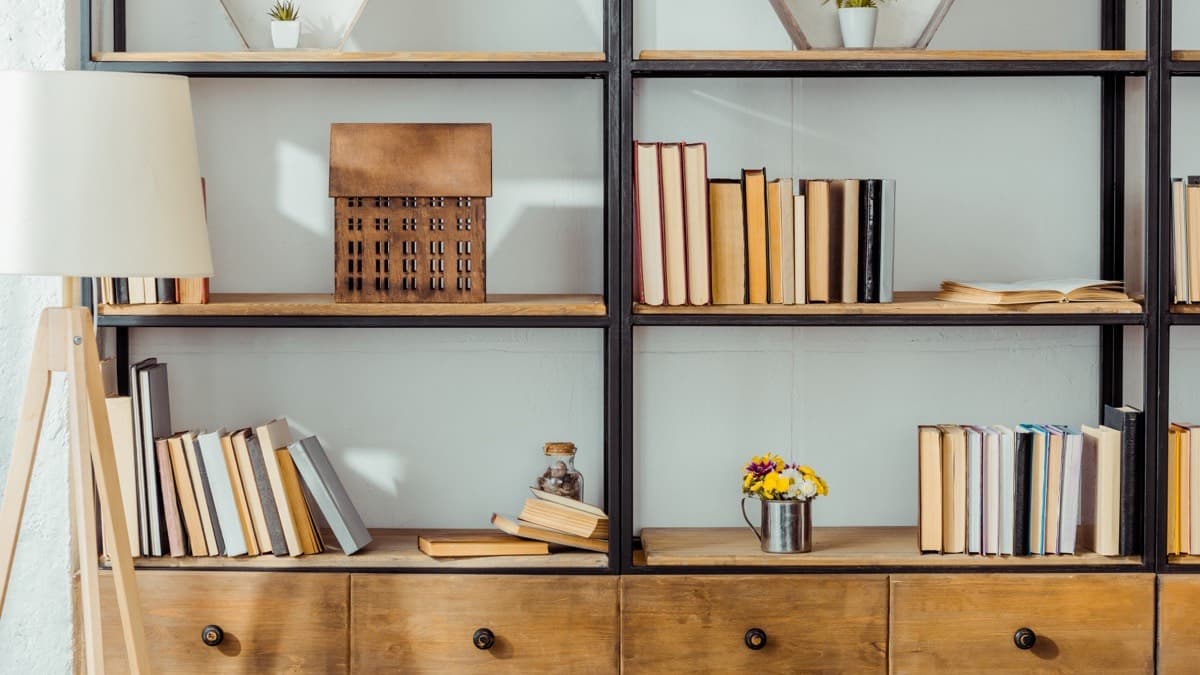
- Shelve books with others their sizeNeighbors of the same height support each other's covers.
- Keep them uprightBooks shouldn't lean or slump. Use bookends if the shelf isn't full.
- Lay oversized books flatA book too tall to stand can lie flat, fully supported. If it has to stand, put it spine down, never spine up.
- Box the fragile onesA flat box or a four-flap wrapper holds a loose or broken book together.
Handling and cleaning
- Start with clean, dry handsWashed hands, without lotion, are safer for most books than gloves, which snag and make pages hard to turn.
- Take a book out by the middle of its spinePush in the books on either side and grip both sides of the spine. Pulling from the top of the spine can damage it.
- Don't force a book flatProp up the covers so it opens to a gentler angle.
- Dust regularlyDust discolors books, draws pests and holds moisture that can grow mold. Use a duster with no fragrance or cleaner in it, or a vacuum with a soft brush on low suction.
What not to do
- No tape, rubber bands or glueTape does serious damage over time, even tape labeled archival.
- No leather dressingDon't oil or wax leather bindings. Crumbling, powdery leather, called red rot, is best boxed so it doesn't spread to other books.
For a valuable book that's damaged, getting worse or hard to use, a book conservator can treat it.
Look after the books on the shelves
- Clean the dust off the bookshelves and books
- Add bookends so the shelved books stand upright
- Move valued books out of the attic, basement or garage
FAQ
Should old books be stored standing up or lying down?
Upright for most books, with neighbors of the same size or bookends to keep them from leaning. Oversized books can lie flat, or stand spine down.
Should I wear gloves to handle old books?
Usually not. Freshly washed, dry hands without lotion are safer, because gloves snag on pages and make them harder to turn.
Should I oil an old leather book?
No. Leather dressings aren't recommended. Box a crumbling leather book so the powder doesn't spread.
Sources
Checked October 20, 2026
- Library of Congress. Preserving your books: storing your books (2026)
- Library of Congress. Preserving your books: handling your books (2026)
- Library of Congress. Preserving your books: repairing your books (2026)
- Owner
- Tenant
- DIY