How-to
How to store and get rid of household chemicals
Keep household chemicals in their labeled containers, store the flammables in a shed and the rest up high, and take what you don't use to a hazardous waste collection.
Satisfy+ Editorial · Published May 15, 2026 · 2 min read · 1 hr to do · Free
At a glance
- Containers
- The original ones, labels on
- Gasoline, paint, propane
- A shed away from the house
- Disposal
- The local hazardous waste collection, not the drain
- Poison control
- 1-800-222-1222, free, around the clock
Leftover paints, cleaners, oils, batteries and pesticides count as household hazardous waste. Under some conditions they can catch fire, react or explode, and some are corrosive or toxic. They often end up under the sink and in the garage.
What you need
- A box or a laundry basket to carry products to one spot
- A marker and tape, for any container whose label is fading
- A high shelf or a cabinet that latches, out of children's reach
Steps
- 1
Gather everything in one place
Collect the cleaners, paints, solvents, pesticides, pool chemicals and automotive fluids from the kitchen, the bathrooms, the laundry room and the garage.
15 min
- 2
Check every container and its label
Keep each product in its original container, and never take the label off. Retape a fading label so you can still read the product's name and warnings. For a container that's corroding, call your local fire department for how to handle it.
10 min
- 3
Move anything stored in a food container
Never store a hazardous product in a food container. Put it back in a labeled container or set it aside for disposal.
5 min
- 4
Keep products apart
Never mix leftovers with other products. Products that don't go together can react, catch fire or explode.
5 min
- 5
Move the flammables out of the house
Store oil, gasoline, paints, propane and varnishes in a shed away from the house. Keep anything that can burn at least 3 feet from the furnace and the water heater.
10 min
- 6
Put the rest up high
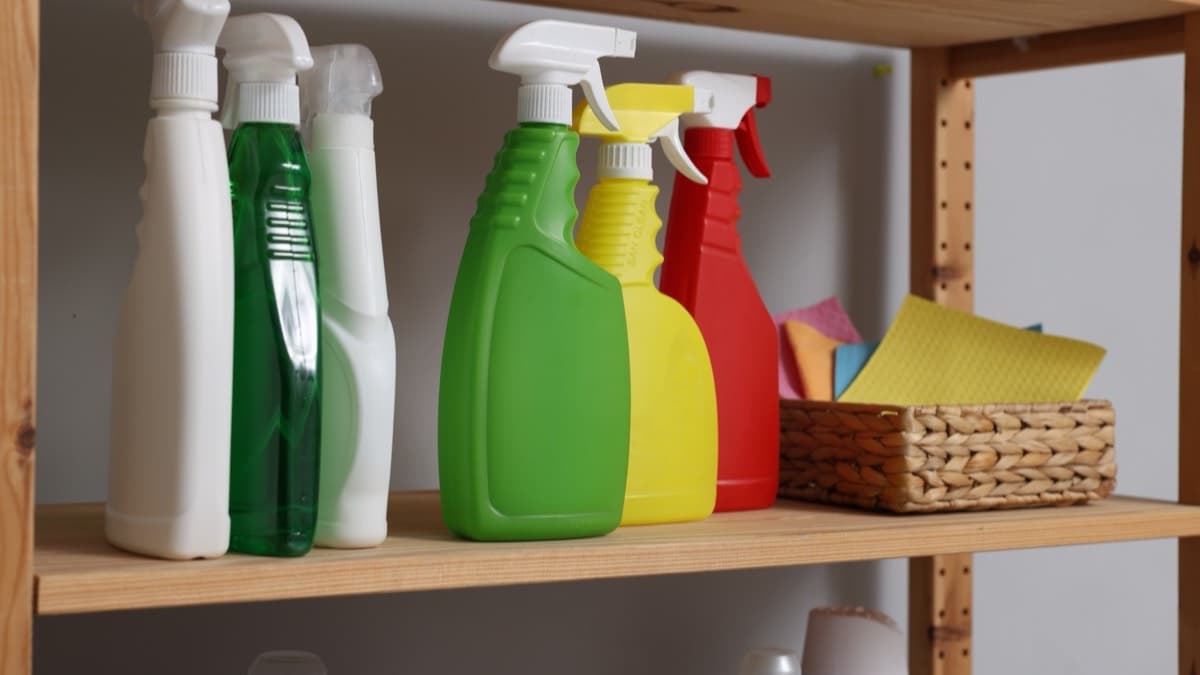
Store the cleaners and pesticides you still use on a high shelf or in a latched cabinet, away from children and pets. Follow the storage directions on each label.
10 min
- 7
Set aside what you no longer use
Box the old paint, the dried-up stain and the pesticide nobody remembers buying, for the hazardous waste collection.
5 min
Sort and store the household chemicals
- Gather the chemicals from every room into one place
- Move the gasoline, paint and propane out of the house
- Find the county's hazardous waste drop-off
- Save the poison control number in every phone
Getting rid of what you don't need
Pouring household hazardous waste down the drain, on the ground or into a storm sewer pollutes the environment and can harm people. Some of it shouldn't go out with the regular trash either. Poured down a drain or toilet, it can contaminate a septic tank or the sewage treatment plant. Read each label for its disposal directions.
Many communities run a year-round drop-off site or set collection days. Your county's solid waste, environmental or health office has the site and the dates, and a search for your county's name with "household hazardous waste" usually finds them. Some auto repair shops take used motor oil for recycling.
Bring products closed, in their original containers. Handle the empty containers with care too, since chemicals stay inside.
If someone swallows or breathes something
Call poison control at 1-800-222-1222. The line is free and confidential, around the clock. Have the container in your hand when you call, so you can read the label. If the person has collapsed, had a seizure, has trouble breathing or can't be woken, call 911 at once.
FAQ
Can I pour old paint down the drain?
No. Take it to a household hazardous waste collection.
Where should gasoline be stored?
In a shed away from the house, along with oil, paints, propane and varnishes.
Sources
Checked October 19, 2026
- U.S. Environmental Protection Agency. Household hazardous waste (HHW) (2026)
- U.S. Fire Administration. Basement and garage fire safety (2023)
- America's Poison Centers. Get help (2026)
- Owner
- Beginner
- Garage
- Tenant
- Free
- Fire
- DIY