How-to
How to clean up a small patch of mold
Clean up a patch of mold smaller than about 10 square feet, and fix the water that let it grow.
Satisfy+ Editorial · Published July 15, 2026 · 2 min read · 1 hr to do · Under $100
At a glance
- Do it yourself
- Under about 10 square feet, roughly 3 feet by 3 feet
- Hard surfaces
- Detergent and water, then dry completely
- Gear
- Gloves, goggles, an N-95 respirator
- Bleach
- Not recommended as a routine practice
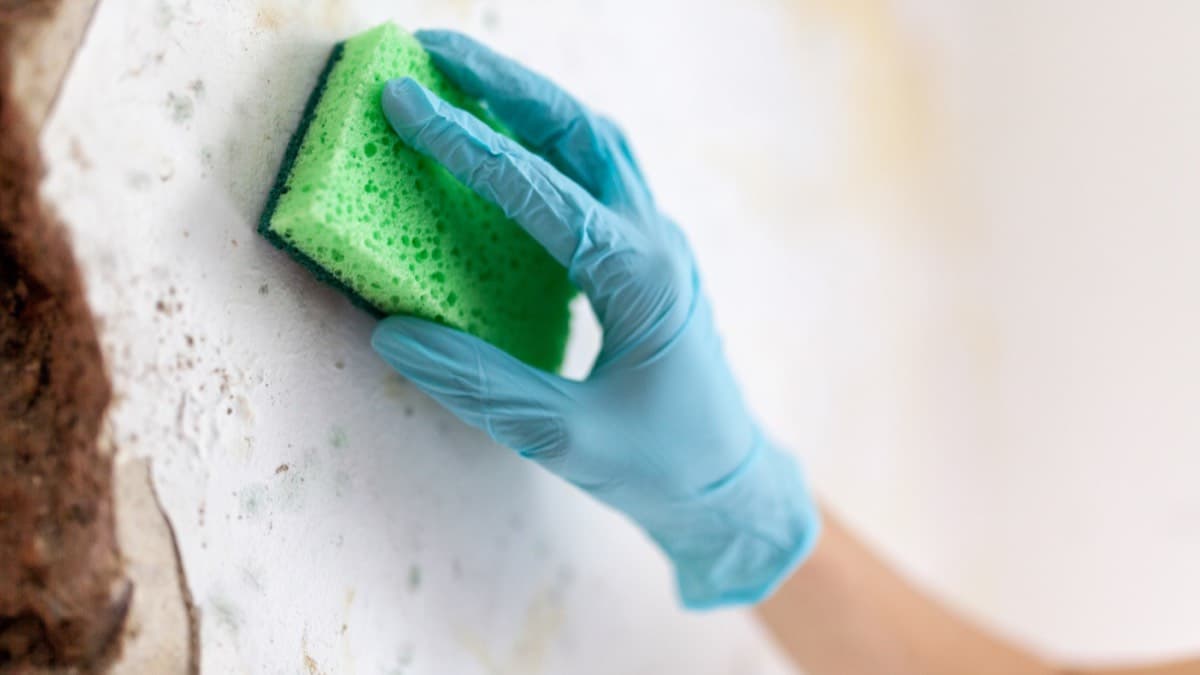
A moldy area smaller than about 10 square feet, roughly a 3-foot by 3-foot patch, is one you can usually clean yourself. Mold can cause allergic reactions and asthma attacks, and it can irritate the eyes, skin, nose, throat and lungs. The cleanup is scrubbing and drying. Mold grows only where there is moisture, so the water that fed it has to be fixed too.
What you need
- Long gloves, goggles without ventilation holes and an N-95 respirator
- Detergent, water and a scrub brush
- Towels or a fan for drying
- Trash bags, for anything porous that has to go
Steps
- 1
Find the water
Look for the leak, the condensation or the damp that fed the mold, and fix plumbing leaks and other water problems as soon as you can.
15 min
- 2
Put on the gear
The gloves, goggles and respirator limit how much mold you breathe in or touch.
2 min
- 3
Scrub the hard surfaces with detergent and water
Bleach and other biocides aren't recommended as a routine practice. If you do use bleach, never mix it with a cleaner that contains ammonia.
20 min
- 4
Dry the area completely
Dry water-damaged areas within 24 to 48 hours to keep mold from growing back.
15 min
- 5
Throw out what can't be cleaned
Absorbent or porous materials, such as ceiling tiles and carpet, may have to go if they become moldy.
5 min
- 6
Leave the surface bare
Don't paint or caulk over a moldy surface. Clean and dry it first.
1 min
- 7
Check the spot a day later
If the mold has come back, look again for the water that feeds it.
2 min
When to call a professional
For a larger job, hire a contractor with experience cleaning up mold, and check references. If the damage came from sewage or other contaminated water, call a professional. If you know or suspect the heating and cooling system is contaminated, don't run it. Mold in the attic, the crawl space or the ducts is work to have done.
Keeping it from coming back
Keep indoor relative humidity below 60 percent, ideally between 30 and 50 percent. A moisture or humidity meter from a hardware store measures it. Condensation on windows, walls or pipes is a sign to dry the surface and cut the source of the moisture quickly. Mold that keeps coming back in a shower usually stops with more ventilation, from a fan or an open window, and more frequent cleaning.
Clean up the mold and stop it coming back
- Fix the leak or damp behind the mold
- Clean the mold off with detergent and water
- Check the indoor humidity
FAQ
Can I paint over mold?
No. Clean and dry the surface first.
Should I use bleach on mold?
Bleach and other biocides aren't recommended as a routine practice. Detergent and water clean hard surfaces.
How big a patch can I clean myself?
Less than about 10 square feet, roughly 3 feet by 3 feet.
Sources
Checked October 19, 2026
- U.S. Environmental Protection Agency. A brief guide to mold, moisture and your home (2026)
- Under $100
- Mold
- Beginner
- DIY