Explainer
Vermiculite insulation in the attic
Recognize the pebble-like, gray-brown or silver-gold insulation that likely carries asbestos, leave it undisturbed, and have an accredited asbestos contractor handle any work that would move it.
Satisfy+ Editorial · Published September 8, 2026 · 3 min read
At a glance
- Looks like
- Pebble-like, pour-in granules, gray-brown or silver-gold
- Assume
- It contains asbestos
- Testing
- Not needed to take precautions
- Removal
- Never yourself; an accredited asbestos contractor
Vermiculite is a natural mineral of shiny flakes that look like mica. Heated, the flakes swell to 8 to 30 times their size into a light, fire-resistant, odorless material that was poured into attics and walls as insulation. A mine near Libby, Montana, supplied more than 70 percent of all the vermiculite sold in the United States from 1919 to 1990. That mine also held a deposit of asbestos, so its vermiculite was contaminated. Most vermiculite insulation in the country came from Libby, often under the brand name Zonolite.
If you have vermiculite insulation, assume it contains asbestos.
How to recognize it
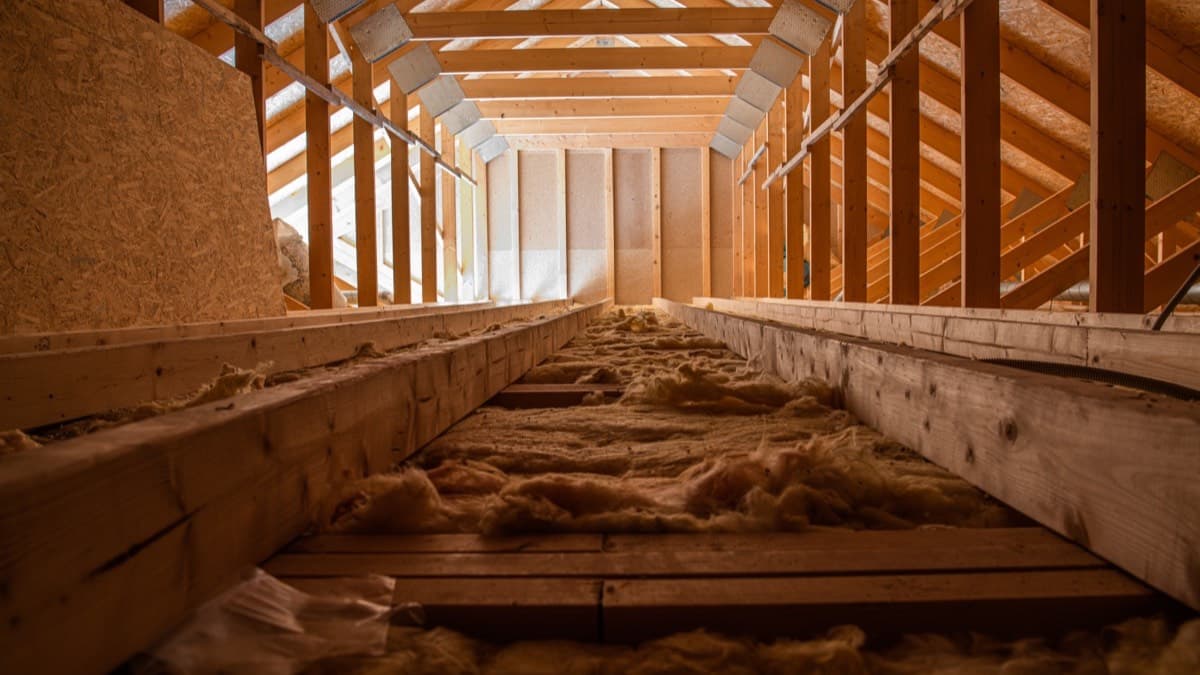
Vermiculite insulation is a loose, pebble-like product that was poured in, usually gray-brown or silver-gold. The pieces range from fine grains to coarse chunks nearly an inch long. Look at it from the attic hatch without touching or stirring it. Don't open walls to check for it.
Testing isn't needed before you take precautions. A test by a trained professional can be expensive, and depending on the method it may give wrong results.
The health risk
Asbestos causes cancer and other diseases, and no level of exposure is known to be safe. The fibers are a risk when they're in the air and breathed in, so disturbing the insulation is what releases them. If no one goes into the attic or handles the insulation, you're not likely to be exposed. Work in the attic by anyone, including a contractor, can carry fibers into other parts of the house.
Exposure raises the risk of asbestosis, lung cancer and mesothelioma, sometimes decades later. The risk grows with how much, how long and how often someone was exposed, and smoking makes it worse.
Living with it
- Leave the insulation undisturbed in the attic and the walls.
- If you have to go into the attic, make as few trips as you can and keep them short.
- Don't store boxes or anything else in an attic with vermiculite.
- Don't let children play in it.
- Never try to remove it yourself.
When work would disturb it
Before a remodel or any renovation that would disturb the attic or the walls, hire a professional asbestos contractor to handle or remove the vermiculite safely. Removal should be done by a trained and accredited asbestos abatement contractor. That contractor should be separate and independent from the company that assessed the insulation, to avoid a conflict of interest.
If someone in the family has already removed or handled the insulation, talk to your doctor. A lung specialist, called a pulmonologist, can help with concerns about exposure.
An annotated example
What to do next
If you think your attic has vermiculite, look from the hatch without going in. Stop storing things there and keep children out. Before any project that would disturb the attic or the walls, book an accredited asbestos contractor, separate from whoever assessed the material. Asbestos in an older home covers other materials that may contain asbestos.
Leave the vermiculite alone
- Keep new boxes and storage out of the vermiculite attic
- Book an accredited asbestos contractor before attic work
FAQ
Does vermiculite insulation have asbestos?
Assume it does. Most of it came from a mine in Libby, Montana, that was contaminated with asbestos.
Should I remove vermiculite insulation?
Not yourself. Left undisturbed it's unlikely to expose you. If work would disturb it, have an accredited asbestos contractor remove it.
Do I need to test vermiculite insulation?
No. You can take precautions without testing, and testing can be expensive and give wrong results.
Sources
Checked October 20, 2026
- U.S. Environmental Protection Agency. Protect your family from asbestos-contaminated vermiculite insulation (2026)
- U.S. Environmental Protection Agency. My attic has vermiculite insulation in it. Am I at risk? Should I take it out? (2026)
- Hire
- Owner
- Older home
- Insulation