Guide
Grass for a shady yard, and what goes where it won't grow
Count the hours of direct sun, grow a shade-tolerant grass like fine fescue where there's enough, and mulch or plant a groundcover where there isn't.
Satisfy+ Editorial · Published July 24, 2026 · 4 min read
At a glance
- Most lawn grass
- Grows best with 6 hours of direct sun
- Fine fescue
- 2 hours at a bare minimum
- Tall fescue
- At least 4 hours
- Less than that
- Mulch or a shade-tolerant groundcover
Lawn grasses are full-sun plants that grow best with at least 6 hours of direct sun a day. Under trees, they get less light and compete with tree roots for water and nutrients. Grass in shade makes less energy, so it handles heat, cold, drought, disease and foot traffic poorly, and it tends to thin out over a few years. Shade-tolerant grasses help, but all grasses do better in sun.
How much sun the spot gets
Watch the shady area through a summer day and add up the hours of direct sun, not dappled light.
- 6 hours or more. Most lawn grasses grow well.
- 4 to 6 hours. Turf-type tall fescue can grow with at least 4 hours.
- 2 to 4 hours. Fine fescues need 2 hours at a bare minimum. A lawn with that little light will be thin, and more sun makes a better lawn.
- Under 2 hours. Too shady even for the most shade-tolerant grass.
The grasses that take shade
- Fine fescues. Hard fescue, creeping red fescue, Chewings fescue and sheep fescue have the best shade tolerance of the cool-season grasses, and hard fescue performs best of the group. They have very narrow leaves, need little fertilizer or water, and don't handle foot traffic or wet soil well.
- Tall fescue. A coarser cool-season grass that needs more light than the fine fescues.
- St. Augustinegrass. The most shade-tolerant warm-season grass.
- Zoysiagrass. Takes light to moderate shade, better than centipedegrass, but neither survives heavy shade.
- Bermudagrass. Has extremely poor shade tolerance.
Caring for grass in shade
- Mow higher. Set the mower to at least 3 inches, or half an inch to an inch above your usual height, so the grass has more leaf to catch light. Take off no more than a third of the blade at a time.
- Fertilize less. Shady grass needs about half to two-thirds as much nitrogen as grass in full sun, and too much does harm. Fertilize once a year in the fall.
- Water deeply and seldom. Shady areas need less water than sunny ones. Light, frequent watering grows shallow roots and more disease.
- Keep traffic off it. Shady grass recovers from foot traffic poorly.
- Clear the leaves. In the fall, rake, blow or bag the leaves so they don't smother the grass. Seed cool-season grass early enough in the fall to grow in before the leaves drop.
- Test the soil. If it hasn't been tested in the last 3 years, test it and lime and fertilize to the results.
- Overseed in fall. A shady lawn may need overseeding every fall to stay thick.
Weeds like ground ivy and nimblewill move in as shade grass thins. Moss doesn't kill grass, but it grows where grass is already thin.
More light from the trees
A certified arborist can remove select branches and thin the canopy to let more sun reach the grass. No more than a quarter of the leafy branches should come off at one time. Trees with open canopies and deep roots, such as sycamores, many oaks and most elms, are easier to grow grass under than ash, willow, poplar and some maples. Trees near the house, and when to call an arborist covers hiring one.
Where grass won't grow
A shade lawn often comes up healthy from seed and then declines quickly for lack of light. When that keeps happening, the spot needs something other than grass.
- Mulch under the tree. Trees grow best with mulch beneath them rather than grass. Spread 2 to 3 inches of wood chips or bark out to the drip line, and keep about 6 inches around the trunk clear. The mulch also keeps mowers and string trimmers off the trunk and roots.
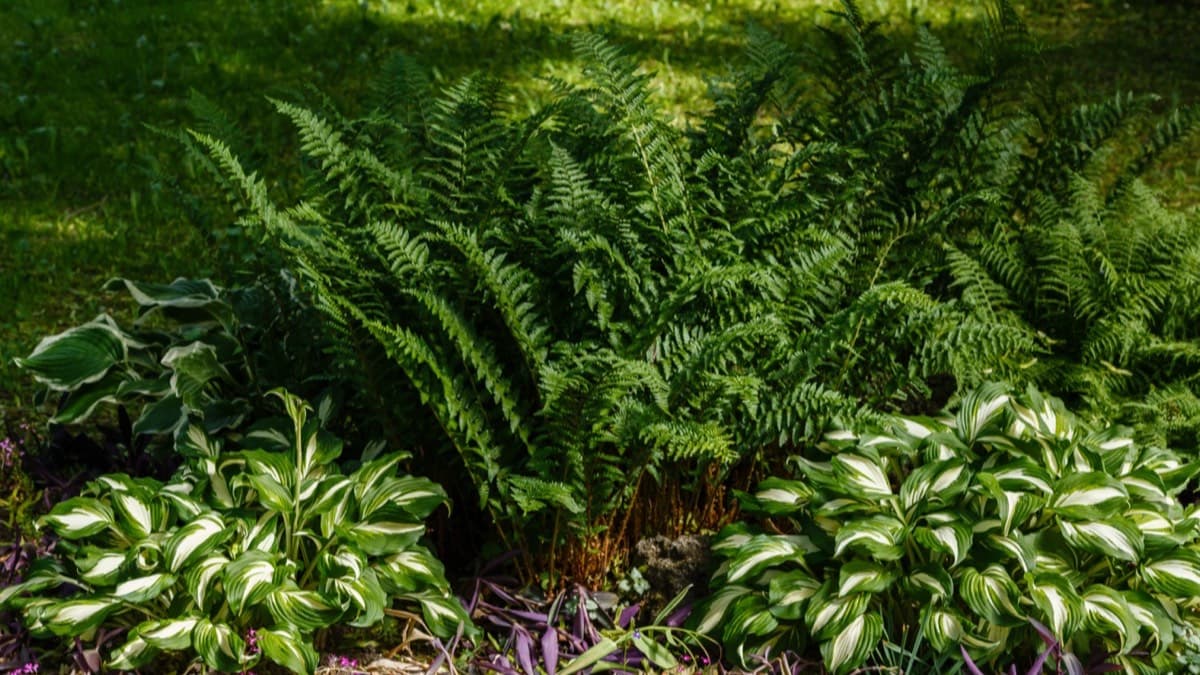
- A shade-tolerant groundcover. Plant it where the grass won't grow, alone or with ferns and other woodland plants. Avoid English ivy, creeping euonymus and vinca, which are invasive.
- Containers. Pots of shade-tolerant annuals add color to a shady bed.
An annotated example
What to do next
Count the hours of direct sun on the shady part of the lawn on a clear summer day. Where it's 2 hours or more, overseed with a shade-tolerant grass in the fall and raise the mower. Where it's less, mulch or plant a shade-tolerant groundcover.
Care for the shady part of the lawn
- Count the hours of direct sun on the shady part of the lawn
- Raise the mower to 3 inches for the shady areas
- Clear the leaves off the shady lawn
- Put fertilizer on the shady lawn once in the fall
- Put down grass seed on the thin shady areas in the fall
FAQ
What grass grows best in shade?
Fine fescues, especially hard fescue, for cool-season lawns. In the South, St. Augustinegrass is the most shade-tolerant warm-season grass.
How much sun does grass need?
Most lawn grasses grow best with 6 hours of direct sun. Tall fescue needs at least 4, and fine fescues need a bare minimum of 2.
What can I put where grass won't grow under a tree?
Wood chip or bark mulch out to the drip line, kept off the trunk, or a shade-tolerant groundcover with ferns or woodland plants.
Sources
Checked October 20, 2026
- University of Maryland Extension. Growing grass in the shade (2024)
- University of Illinois Extension. Managing shady lawns (2024)
- Clemson Cooperative Extension, Home and Garden Information Center. Growing grass in shade (HGIC 1202) (1999)
- Purdue University Extension. Fine fescues: maintenance calendar for fine fescue lawns (TURF-13-W) (2021)
- Yard
- Owner
- DIY