Guide
How to keep houseplants alive
Water when the top inch of soil is dry, set the plant close to a bright window, and keep the room near 68 to 70 degrees.
Satisfy+ Editorial · Published June 17, 2026 · 2 min read
At a glance
- When to water
- When the top inch of soil feels dry
- Never
- Standing water in the tray
- Light
- Too little is more common than too much
- Comfort
- 68 to 70°F and humidity near 50 percent
Overwatering causes more houseplant problems than underwatering, and too little light is far more common at home than too much.
Water by the soil, not the calendar
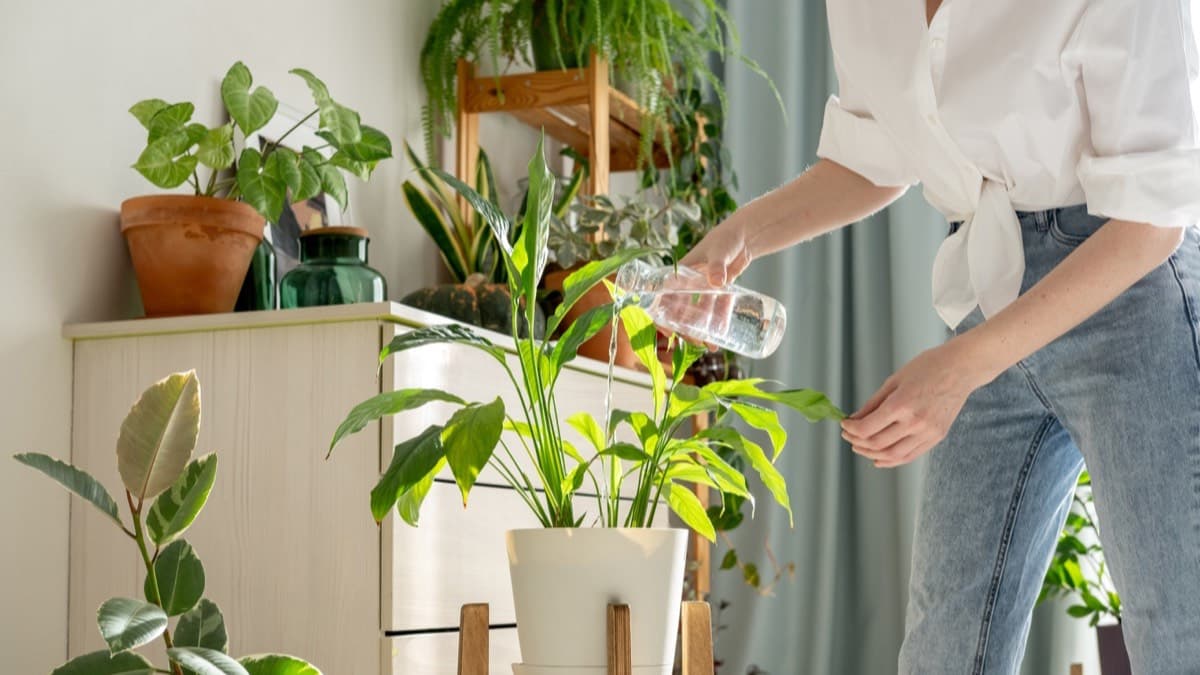
No set schedule suits every plant. Water most plants when the top inch of soil feels dry. Push a finger into the soil to the first knuckle. If it's dry there, water until it runs out of the drainage hole. If it's damp, wait and check again in a few days. Let the soil of cacti and succulents dry out completely between waterings.
Overwatering and poor drainage cut off the air in the soil, and the roots die or stop taking up water and nutrients. The signs are brown leaf tips or edges, yellowing, dropped leaves, wilting of the whole plant and little new growth. Empty the saucer after watering, so the pot never stands in water.
Underwatering usually comes from frequent, light watering. Water enough each time to wet the whole root ball and drain out the bottom.
Give it more light
Long, weak stems with big gaps between the leaves are a common sign of too little light. So are yellowing, dropped older leaves and new leaves smaller than normal. Move the plant closer to a bright window, but not straight into full sun. A sudden jump in light can damage even a sun-loving plant.
Temperature, humidity and food
Most foliage plants grow best at 68 to 70°F and a relative humidity near 50 percent. Brown leaf tips and edges can mean the air is too dry. Misting doesn't keep the humidity high enough to help. A humidifier raises it, but too much humidity in a house can lead to mold.
Too much fertilizer injures the roots, with symptoms much like overwatering. Follow the directions on the label for the amount.
Roots and repotting
When the roots form a tight mass around the root ball, the plant is root-bound and hard to water and feed, and its leaves yellow. Move it to a pot 2 to 4 inches wider. Give a new plant a week or two to settle in before you repot it. Healthy roots are firm and white. Brown, mushy or soft roots are a sign of root rot.
An annotated example
What to do next
Check each plant's soil once a week, and water only the ones that are dry an inch down.
Check the houseplants' soil
- Check the houseplants' soil
FAQ
How often should I water?
When the top inch of soil is dry, not on a fixed schedule.
Why are the leaf tips brown?
Overwatering and low humidity both cause brown tips and edges. Check the soil first, then the air.
Sources
Checked October 19, 2026
- University of Maine Cooperative Extension. Tips for growing houseplants in Maine: dealing with houseplant problems (Bulletin 2612) (2021)
- Beginner
- Free
- DIY