How-to
How to repot a houseplant
Repot in spring when the roots circle the pot, move up one size into fresh potting mix, and leave an inch at the top for water.
Satisfy+ Editorial · Published May 19, 2026 · 3 min read · 30 min to do · Under $100
At a glance
- When
- Spring, as new growth starts
- New pot
- One size larger, with a drainage hole
- Mix
- Soilless potting mix, moistened first
- Headroom
- About 1 inch below the rim
A houseplant needs a bigger pot when its roots fill the one it has. The first sign is potting mix that dries out very quickly, even in cool weather. Roots grow out of the drainage hole, and growth slows or stops through spring and summer. Spring is the best time to repot, because the plant is starting its season of growth and its roots will spread into the new mix.
Is it time
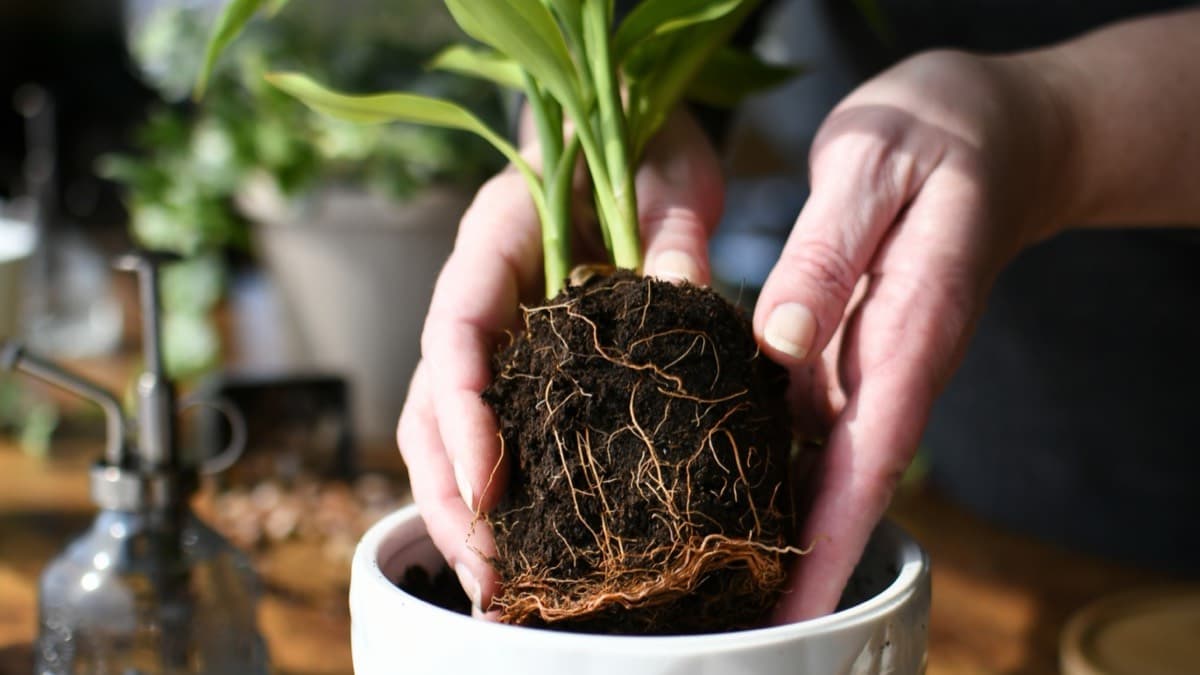
Slide the plant out of its pot and look at the root ball. If the roots circle around the outside, or are so dense you can't see potting mix in the bottom third, it's time to repot.
If you'd rather keep the plant at its current size, it can go back into the same pot. Trim off the outer layer of roots, add some fresh mix, and cut back some of the top growth. The size of the pot and the root ball limits the size of the plant.
What you need
- A pot slightly larger than the current one, with a drainage hole
- Soilless potting mix made for container plants
- A small square of window screen to cover the drainage hole
- Household bleach, if you're reusing an old pot
- A saucer or drip tray
Steps
- 1
Water the plant and wait an hour
Water it in its old pot, then let it sit for an hour before you start.
60 min
- 2
Clean the new pot
Wash a used pot and sanitize it in a solution of one part bleach to nine parts water. Soak a new unglazed clay pot in water overnight, or it will pull moisture out of the fresh mix.
10 min
- 3
Moisten the potting mix
Wetting the mix before you pot helps it absorb water evenly afterward. Garden soil brings disease and pest problems indoors, so use mix made for containers.
5 min
- 4
Cover the drainage hole
A square of screen over the hole lets water drain while keeping the mix in the pot.
1 min
- 5
Loosen the roots
Lift the plant out and gently tease the roots apart so they no longer circle the root ball or form a dense mat.
5 min
- 6
Set the plant at the right height
Put enough mix in the bottom that the top of the root ball sits about 1 inch below the rim of the new pot.
5 min
- 7
Fill in around the root ball
Add mix around the sides and firm the top layer gently. Packed too hard, the mix stops water and air from moving through the pot. Leave about 1 inch between the mix and the rim for watering and new growth.
5 min
- 8
Water it through and check the drainage
Water thoroughly, then let the pot drain. Water should run out of the hole, and the mix should still sit about 1 inch below the rim.
5 min
Check the houseplants for repotting
- Check each houseplant's roots for crowding
Choosing the pot
The new pot should be only slightly larger than the old one, since a much bigger pot looks out of balance with the plant. Whatever the material, it needs a drainage hole. Without one, the mix becomes waterlogged, which can lead to disease.
A decorative pot with no hole can still hold the plant as an outer pot, also called a cachepot. Pot the plant in a plain pot with a hole and set it inside. Leave space at the bottom for water to drain, and empty that water after each watering.
The material changes how often you'll water:
- Unglazed clay is porous. It pulls water and salts out of the mix, so plants in clay need watering more often. It suits succulents.
- Plastic and fiberglass are light and durable, and plastic holds moisture for plants that like to stay damp.
- Glazed ceramic and terracotta break more easily than plastic.
- Stone and concrete are heavy, which keeps a top-heavy plant from tipping over.
Potting mix
Bagged potting mixes are blends of ingredients such as perlite, vermiculite, peat moss and coir, and some include fertilizer. Read the ingredients, since some plants don't need added fertilizer. Specialty mixes are sold for African violets, orchids, cacti and succulents, and acid-loving plants such as citrus.
FAQ
When is the best time to repot a houseplant?
In spring, when the plant starts its season of growth and the roots can spread into the new mix.
How much bigger should the new pot be?
Only slightly larger than the current one, with a drainage hole.
Can I use soil from the garden?
No. Garden soil in an indoor pot can lead to disease and pest problems, so use a soilless potting mix.
Sources
Checked October 19, 2026
- Penn State Extension. Repotting houseplants (2026)
- Owner
- Spring
- Under $100
- Beginner
- Tenant
- DIY