How-to
Overwatering or underwatering a houseplant, and how to tell
Tell from the soil and the leaves whether a houseplant gets too much water or too little, and water it the right way.
Satisfy+ Editorial · Published May 5, 2026 · 2 min read · 10 min to do · Free
At a glance
- Before watering
- Check the soil's color and feel
- How much
- The whole root ball, until it drains
- After an hour
- Empty the saucer
- Too wet
- Sticky, slimy soil and brown roots
You can judge the soil's moisture by its color and feel. Soil kept too moist turns sticky and slimy and can lead to root rot, while soil left too dry cracks and pulls away from the sides of the pot.
What you need
- A watering can
- A pencil or a stick, to clear a drainage hole
- Pots with drainage holes, and saucers under them
Steps
- 1
Look at the soil and feel it
Soil turns lighter in color as it dries. Water only when the plant needs it, because no one schedule fits every houseplant. Pot size, light, temperature and humidity all change how fast the soil dries.
1 min
- 2
Read the signs of too much water
Soil kept too moist becomes sticky and slimy, which can lead to root rot and other disease. An overwatered plant may show yellowing or dropping leaves, and roots that turn brown.
2 min
- 3
Read the signs of too little water
Under continued drying, the soil cracks and pulls away from the sides of the pot, and severe drying damages the roots. Wilting is a warning sign, and a plant shouldn't be left to wilt.
1 min
- 4
Water the whole root ball
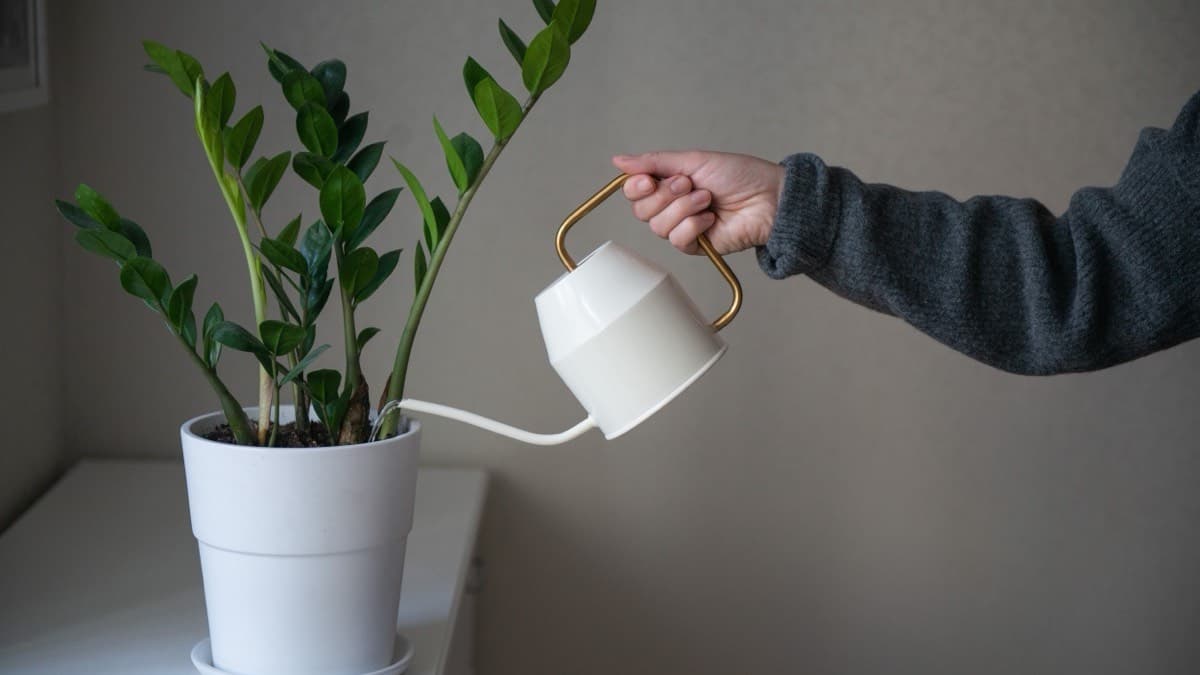
When it's time, wet the entire soil mass, not just the top inch, adding water until it comes out of the drainage hole.
2 min
- 5
Clear a blocked drainage hole
If water doesn't come through, check the hole with a finger, a stick or a pencil. A decorative pot cover can hold standing water underneath, so check inside it too.
2 min
- 6
Empty the saucer after an hour
Pour out any water still under the pot an hour after watering.
1 min
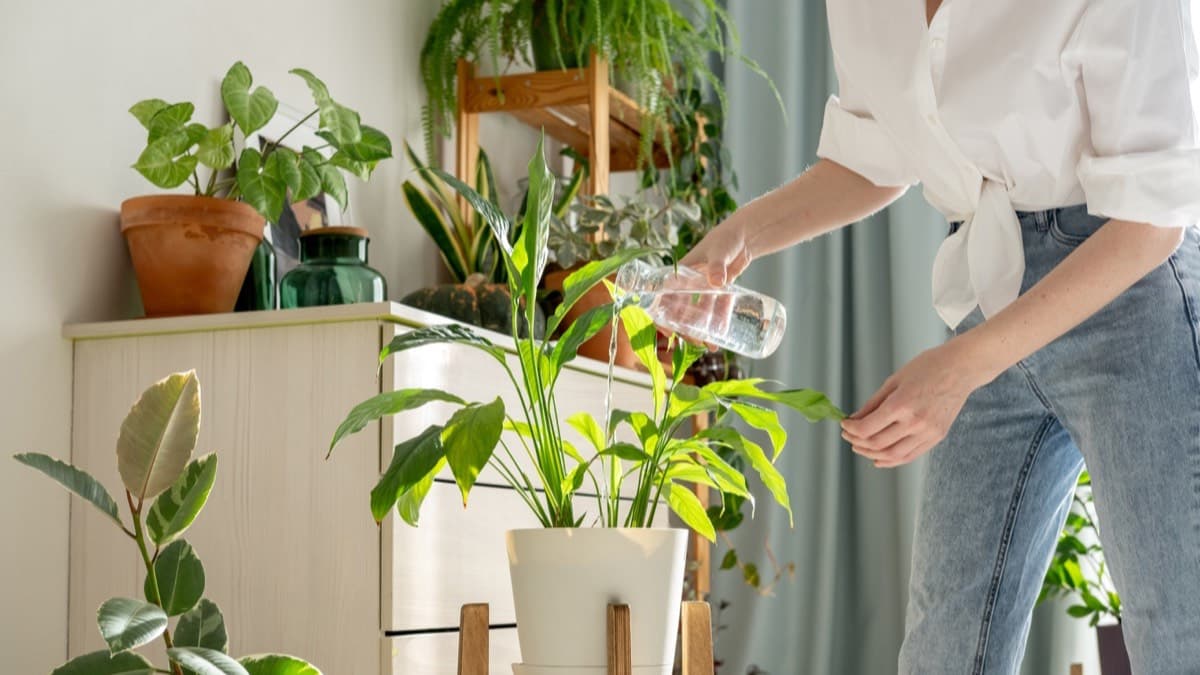
Water the houseplants the right way
- Check the houseplants' soil before watering
- Check each pot has a clear drainage hole
The water itself
Ordinary tap or well water is usually fine for plants, and rainwater and melted snow are excellent. Softened water shouldn't be used continuously. Watering from the bottom, by setting the pot in water until the surface is moist, works too, with an occasional watering from the top to flush out salt buildup.
Through the year
Flowering plants need more water than foliage plants of the same size. Air in most homes is very dry in winter, and the ideal humidity for houseplants is 40 to 60 percent. A tray of moist sand or gravel under the pot helps. Plants don't need fertilizer in winter when no new growth shows.
If something goes wrong
FAQ
How do I know if I'm overwatering a houseplant?
Soil kept too moist becomes sticky and slimy, and an overwatered plant may show yellowing or dropping leaves and brown roots.
Should I empty the saucer under a houseplant?
Yes. Pour out any water still under the pot an hour after watering.
Sources
Checked October 19, 2026
- University of Missouri Extension. Caring for houseplants (G6510) (2017)
- Owner
- Beginner
- Tenant
- Free
- DIY