How-to
Watering the lawn, how much, how often and when
Time your sprinkler with the tuna-can test, water about an inch a week but not in the middle of the day, and check where the water lands.
Satisfy+ Editorial · Published May 11, 2026 · 2 min read · 30 min to do · Free
At a glance
- How much
- About an inch a week, rain included
- How often
- Start with twice a week
- When
- Not the middle of the day
- Clock-timer systems
- About 50 percent more water outdoors
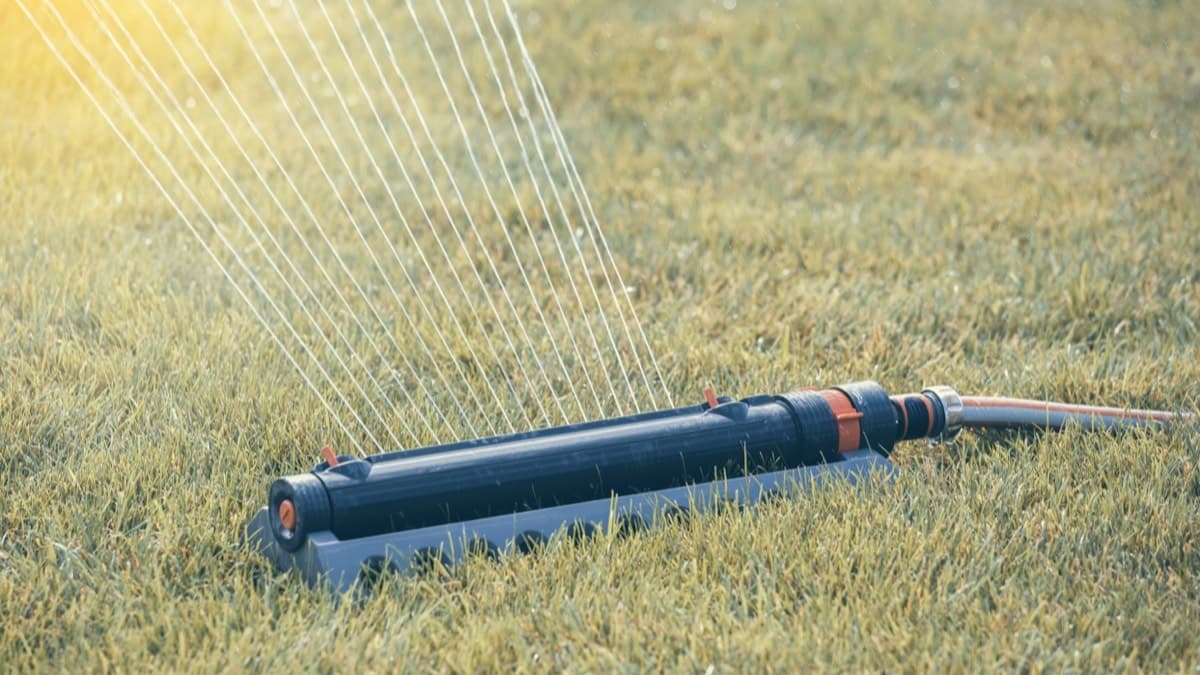
A lawn typically needs about an inch of water a week, counting the rain. Your climate, the recent weather and what's planted all change that amount. Watering too often can drown plants or leave the grass with shallow roots. The tuna-can test below tells you how long your own sprinkler takes to put down the water.
What you need
- A few empty tuna cans, or other short straight-sided cans
- A ruler
- A timer, or the clock on your phone
Steps
- 1
Ask your water utility first
It can tell you how much to water and when.
5 min
- 2
Set out the cans
Place a few empty tuna cans around the lawn, in the sprinkler's path.
5 min
- 3
Time the half inch
Turn the sprinkler on and time how long it takes to fill the cans to half an inch. Check with the ruler.
30 min
- 4
Water that long, twice a week
Watch how the lawn responds, and adjust for the weather.
1 min
- 5
Skip the middle of the day
In the middle of the day, the hot sun evaporates much of the water before the grass gets it.
1 min
- 6
Stop when it pools
Turn the sprinkler off as soon as water starts to pool. On clay soil or a slope, run the sprinkler in short bursts with breaks between, called cycle-and-soak, so the water has time to sink in.
1 min
- 7
Check where it lands
Watch one full run. Turn any sprinkler that sprays the driveway, sidewalk or house back toward the lawn.
5 min
Set the summer watering schedule
- Run the tuna-can test to time the sprinkler
- Check the sprinklers for broken heads and overspray
With an in-ground system
Homes with clock-timer irrigation systems use about 50 percent more water outdoors than homes without them. Check the system once a month while it runs:
- Heads that tilt or don't pop up fully. They spray the wrong spot.
- Broken heads. Put a flag beside each one so you can find it for the repair.
- Pooling between runs. It can be a sign of an underground leak.
- Gaps in coverage. The spray from each head should reach the next one, called head-to-head coverage.
A certified irrigation professional can run the same check. Change the schedule with the seasons. A WaterSense labeled controller does this on its own, using the local weather or the moisture in the soil. Fall lawn care covers the lawn once the watering season ends.
FAQ
How much water does a lawn need?
About an inch a week, including rain.
When is the best time to water?
Any time but the middle of the day, when the sun evaporates much of the water first.
How long should I run the sprinkler?
As long as it takes to fill a tuna can to half an inch, twice a week.
Sources
Checked October 19, 2026
- U.S. Environmental Protection Agency, WaterSense. Watering tips (2026)
- U.S. Environmental Protection Agency, WaterSense. Sprinkler spruce-up (2026)
- Yard
- Owner
- Summer
- Beginner
- Free
- DIY