How-to
Starting vegetable seeds indoors
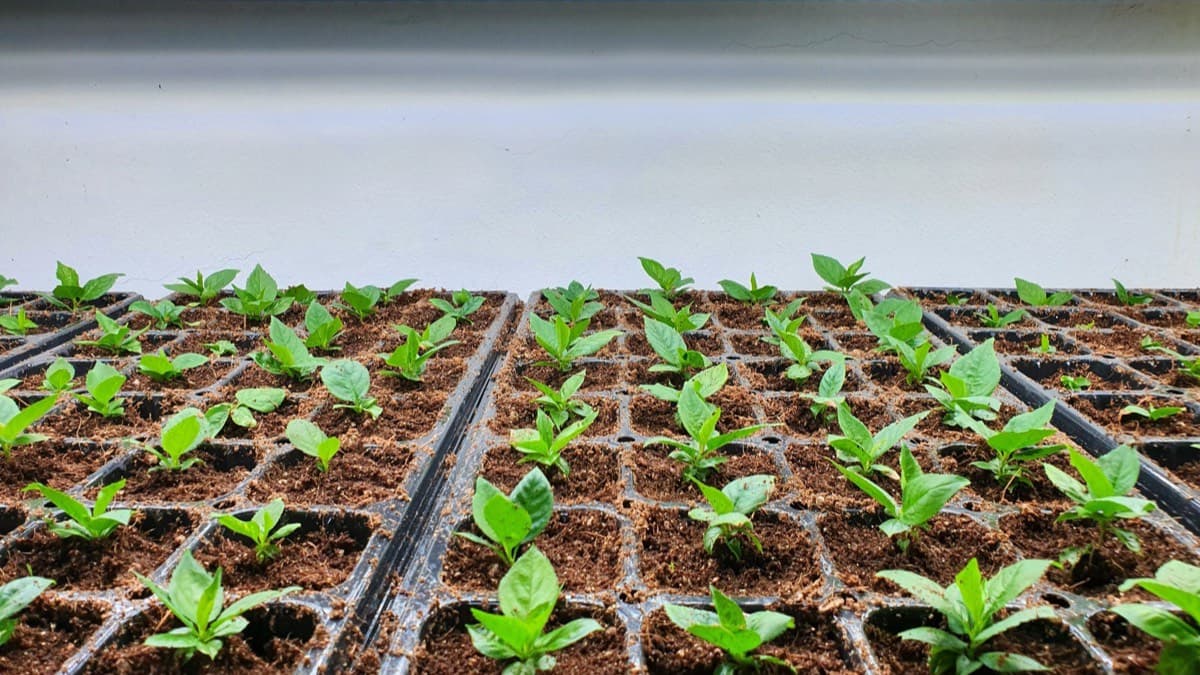
Sow in a sterile seed-starting mix, keep it warm and moist, hang lights 2 to 4 inches above the seedlings for 12 to 16 hours a day, and harden the plants off over two weeks before they go outside.
Satisfy+ Editorial · Published September 18, 2026 · 3 min read · 1 hr to do · Under $100
At a glance
- Mix
- Sterile seed-starting mix, not garden soil
- Lights
- 2 to 4 inches above the seedlings, 12 to 16 hours a day
- Feed
- Quarter-strength fertilizer once a week, after true leaves
- Harden off
- Over two weeks before planting out
Starting seeds indoors gives you more varieties than you'll find as plants, and a head start on long-season crops like tomatoes, peppers and eggplant. Broccoli, cabbage, kale, lettuce and onions also transplant easily. Beans, corn and carrots don't, so sow them straight into the garden.
When to sow
Count back from the date you'll plant outside. Each seed packet gives its own timing. These are typical weeks indoors before planting out:
| Crop | Weeks indoors |
|---|---|
| Onions and leeks | 14 to 15 |
| Celery | 12 to 13 |
| Broccoli, Brussels sprouts, cabbage, cauliflower, head lettuce | 10 to 11 |
| Peppers, eggplant, okra | 9 |
| Tomatoes | 5 to 6 |
What you need
- Cell flats or small pots with drainage holes, in a tray
- Sterile seed-starting mix
- Fluorescent or LED lights on chains, and a timer
- A spray bottle
- Plant tags and a permanent marker
- A clear plastic dome or plastic wrap
- Water-soluble fertilizer
Steps
- 1
Pick a spot
Choose somewhere out of traffic and drafts, near an outlet, where the air stays above 60°F. A windowsill is a poor choice. It's cold at night, hot by day, and gives too little light, so seedlings grow tall and spindly.
10 min
- 2
Fill and wet the cells
Use a sterile seed-starting mix, not bagged topsoil, garden mix or potting mix. It's free of weed seeds and the soil fungi that cause damping off. Water it, then top it up if it settles more than half an inch below the rim. Wash reused containers and soak them in disinfectant for 30 minutes.
10 min
- 3
Sow one seed per cell
Plant each seed about twice as deep as it is wide, or as the packet says. Sow two in a cell if the seed is old, and snip the weaker seedling off at the soil line later. Tag every row.
15 min
- 4
Cover and keep warm
Put a clear dome or plastic wrap over the tray to hold moisture, and take it off when the seedlings sprout. A seed-starting heat mat under the tray speeds germination, since the mix can run 5°F cooler than the room.
5 min
- 5
Hang the lights low
Keep the lights 2 to 4 inches above the tops of the seedlings, raising them as the plants grow. Run them 12 to 16 hours a day on a timer, with a dark period each night. Too little light is the main cause of long, skinny stems.
10 min
- 6
Water and feed gently
Mist the surface or water from below by setting the tray in an inch or two of water, then pour off what's left. Once seedlings have several sets of true leaves, feed them a water-soluble fertilizer at a quarter strength once a week, with plain water between.
5 min
- 7
Move up to bigger pots as needed
Shift seedlings that outgrow their cells into pots 1 to 2 inches wider. Lift each by its root ball or a leaf, never by the stem.
15 min
- 8
Harden them off
Two weeks before planting out, set the seedlings outside for a few hours in afternoon shade, out of the wind, and bring them in before the evening cools. Leave them out longer, in more sun, each day.
15 min
- 9
Check that the seedlings are stocky
A good transplant is about as wide as it is tall, with a thick stem. Tall, floppy seedlings need the lights lower.
2 min
Start the vegetable seeds indoors
- Count back from planting-out day to each crop's sowing week
- Set the grow lights on a timer for 12 to 16 hours a day
- Water the seedlings with quarter-strength fertilizer
- Start hardening off the seedlings outdoors
Planting out
Plant hardened seedlings on a cloudy day or in the late afternoon. They may wilt in full sun at first and usually recover in a day or so. With peat or paper pots, tear the rim down to the soil line so it doesn't wick water away from the roots, and tear holes in the bottom.
Cucumbers and squash don't like their roots disturbed. Start them in pots that break down in the soil and plant pot and all.
FAQ
How far should grow lights be from seedlings?
2 to 4 inches above the tops of the seedlings, raised as they grow.
How many hours of light do seedlings need?
12 to 16 hours a day, on a timer, with a dark period each night.
When should I start tomato seeds indoors?
About 5 to 6 weeks before you plan to plant them outside.
Sources
Checked October 20, 2026
- University of Minnesota Extension. Starting seeds indoors (2026)
- Clemson Cooperative Extension, Home and Garden Information Center. Starting seeds indoors (HGIC 1259) (2020)
- University of Maryland Extension. Starting seeds indoors (2024)
- Yard
- Owner
- Spring
- Under $100
- Beginner
- Tenant
- DIY